Training· 3 min read
Standing machine calf raise: setup, technique and progression
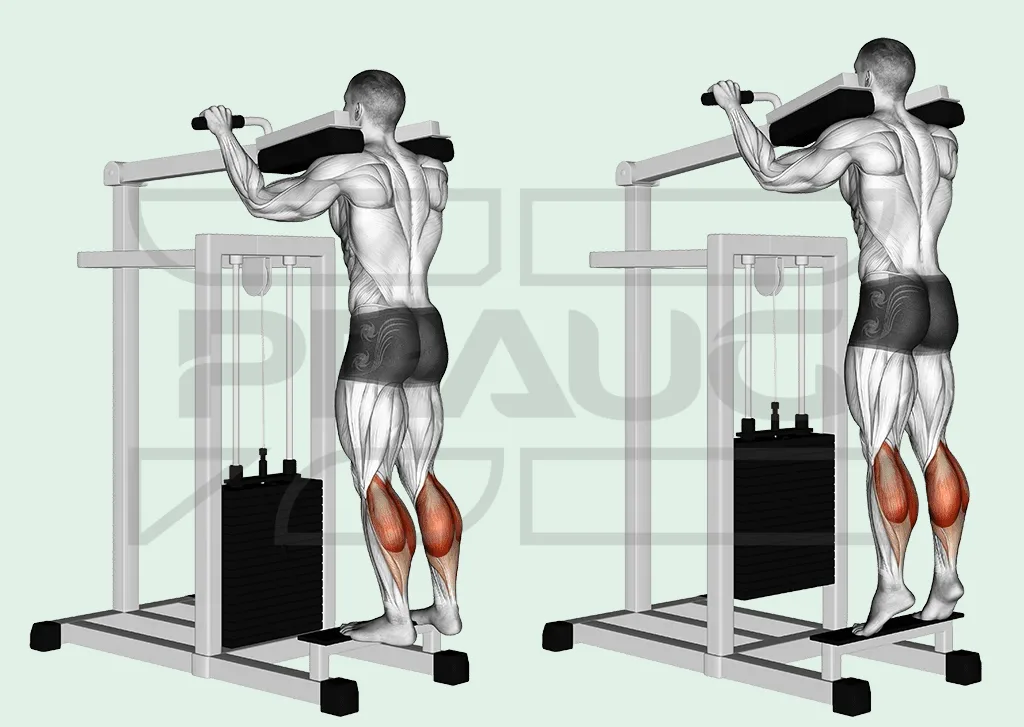
A standing machine calf raise moves the ankles with the shoulders under pads and the forefeet supported. A relatively extended knee changes the gastrocnemius position. Choose a controlled ankle range rather than maximum heel depth or a compulsory heavy load.

Certified fitness coach · CQP Instructeur Fitness
Published on
The essentials before you start.
- Practise the setup, support and return before adding demand.
- Keep the intended range and movement repeatable.
- The cited outcomes apply to particular tasks and populations.
- Choose the workload within the whole week.
Exercise facts
- Main muscles
- Gastrocnemius
- Secondary muscles
- Soleus, Tibialis posterior, Toe flexors
- Equipment
- Standing calf-raise machine
What the movement trains
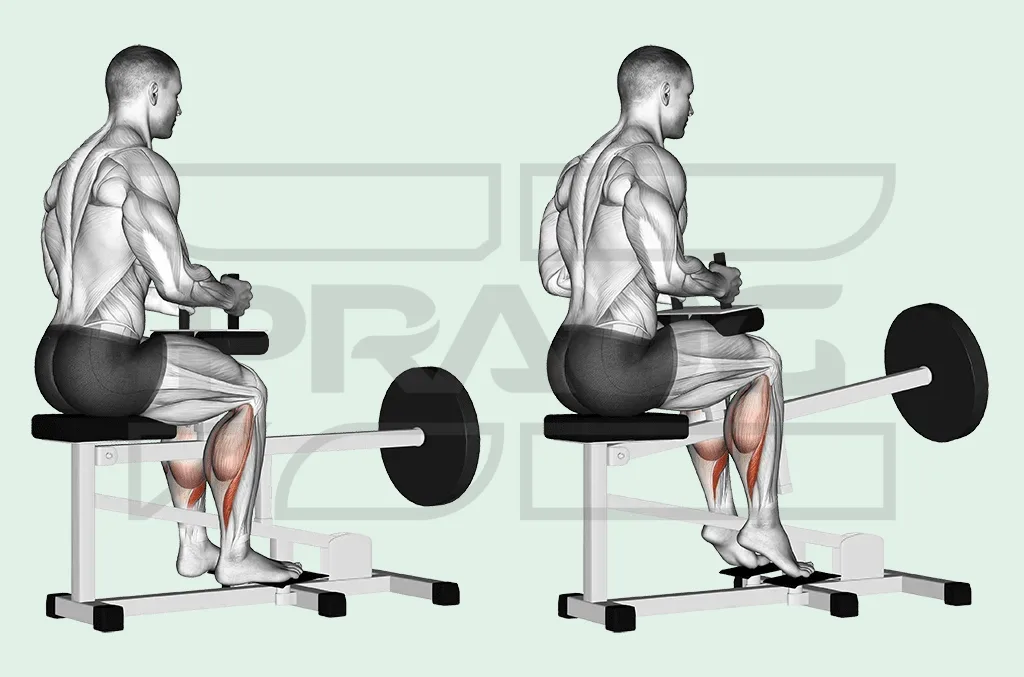
The gastrocnemius and soleus contribute to plantarflexion while the trunk and legs maintain support. Knee position, machine fit and ankle range matter; a pause does not remove all tendon contribution.
Set up and perform the movement
- Check the machine, shoulder-pad adjustment and intended release and return method.
- Set sufficient secure forefoot support and comfortable heel clearance.
- Position the shoulder pads clear of the neck and establish a steady torso and knee position.
- Release the load under control, lower through a manageable ankle range and raise smoothly.
- Avoid bouncing or repeatedly bending the knees to lift the pads.
- Return the machine to its support before stepping away.
Range, support and control
A controlled straightening of the knee is different from a forceful end-range snap. A short pause can help retain control, but no one-second pause or deepest possible stretch is mandatory. Use less range or load if support changes.
What the cited research supports
The twelve-week trial favoured standing over seated for gastrocnemius growth, with similar soleus changes. The range trial used a horizontal leg press and produced muscle-head-specific results. It did not directly test every standing machine or prove that all heel depth and pause choices are equivalent.
Variations and alternatives
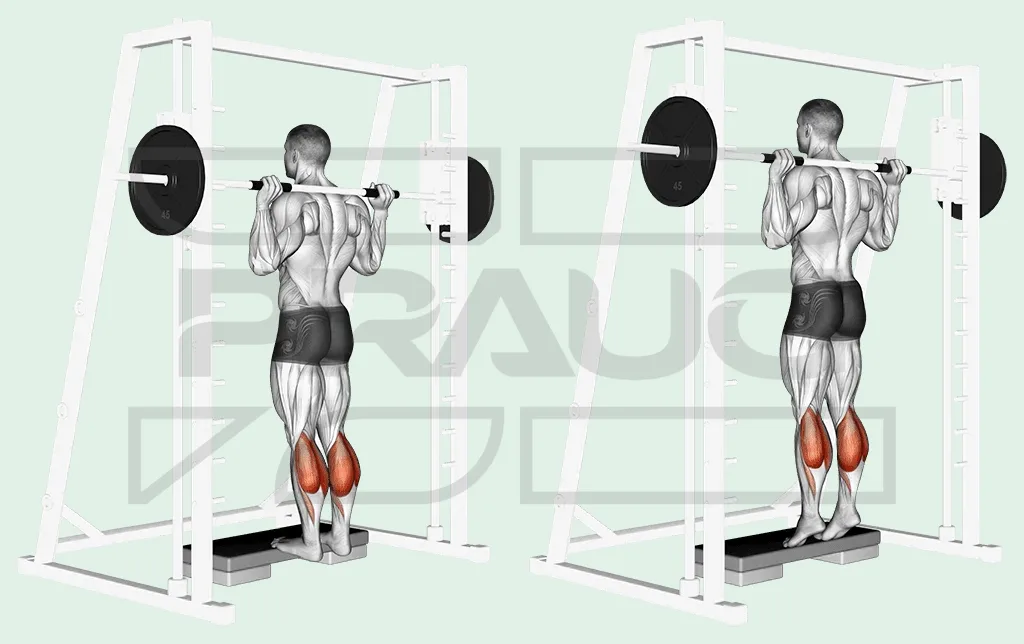
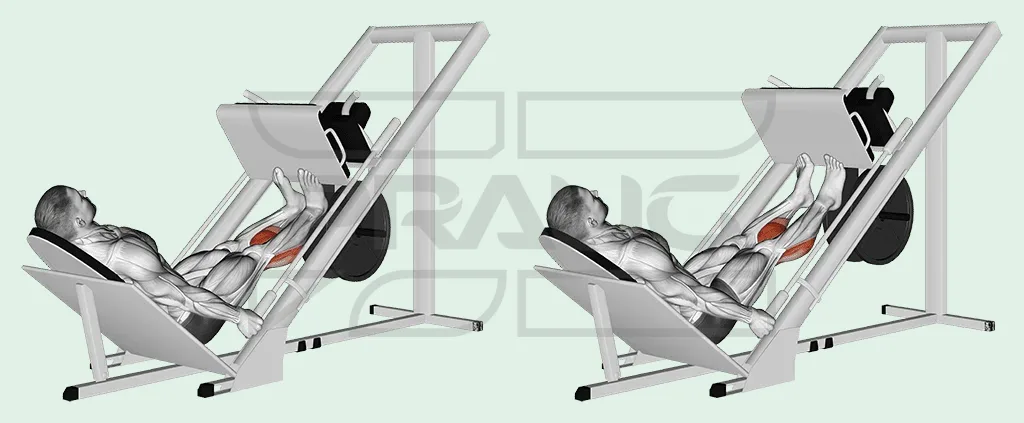
A Smith calf raise, leg-press raise or step raise needs its own setup and load.
Sets, progression and tracking
One coaching example is 2–4 sets of 10–15 repetitions with adequate rest. Record machine, knee position, range and effort. Frequency should fit the total chosen weekly work, rather than an assumption that calves always recover quickly.
Frequently asked questions
Does a pause eliminate the Achilles tendon’s role?
No. A pause can reduce visible bouncing, but it does not remove the tendon from force transmission or prove a special growth effect.
When should I add demand?
When the setup, range and effort are repeatable and the next change is manageable. Log changed support or assistance rather than comparing different tasks as if they were identical.
Sources and limitations
Sources support the passages that cite them. Practical suggestions are coaching choices to adapt to your own situation.
- Kinoshita et al. · 2023 · Twelve-week standing versus seated calf-raise trial in fourteen untrained adults, measured by MRI. ↗
Standing favoured gastrocnemius and total growth; soleus changes were similar. No required combined routine or universal dose tested.
- Kassiano et al. · 2023 · Eight-week horizontal leg-press calf-range trial in forty-two young women. ↗
Longer-length partials favoured medial growth over full range; lateral change was not clearly different from full range. Not every machine or bodyweight variant.
This general information does not replace individual advice. Zepraug’s limitations.