Training· 3 min read
Spider curl: setup, technique and progression
Other names: Chest-supported curl
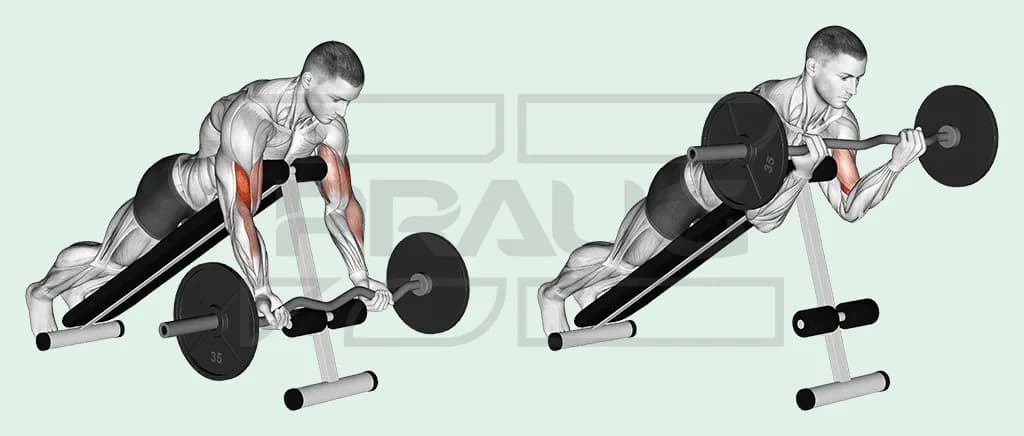
A spider curl uses chest support on an inclined bench, with the arms hanging in front of the torso. It reduces some torso movement but does not make assistance or shoulder movement impossible. Plan how to pick up and return the weights before loading the exercise.

Certified fitness coach · CQP Instructeur Fitness
Published on
The essentials before you start.
- Use secure support and practise the pickup and return.
- Keep the intended arm path and range repeatable.
- Research results apply to specific tasks and measured outcomes.
- Choose the workload within the whole week.
Exercise facts
- Main muscles
- Biceps brachii, Brachialis
- Secondary muscles
- Brachioradialis, Shoulder stabilisers
- Equipment
- Adjustable exercise bench, EZ bar or dumbbells
What the movement trains
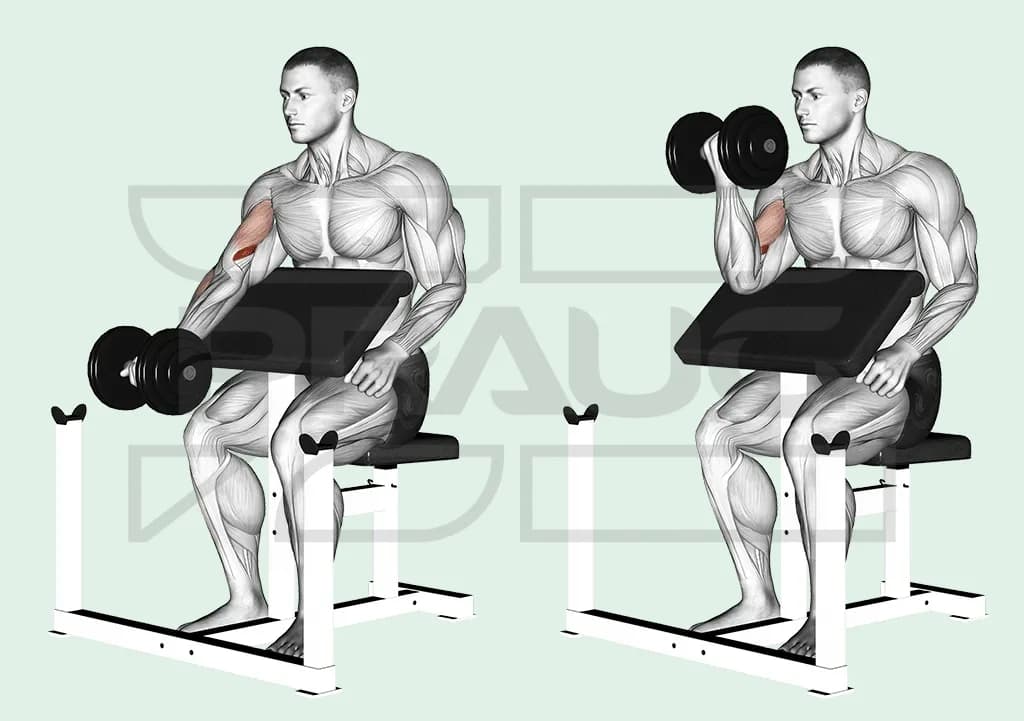
The elbow flexors bend the arms while the bench supports the torso. The upper arms are not supported as they are in a preacher curl. That difference changes handling and resistance rather than isolating one biceps head.
Set up and perform the movement
- Secure an adjustable exercise bench with enough clearance for the arms and weights. Avoid loose blocks or improvised bench elevation.
- Plan the pickup and return with light weights or suitable assistance before lying chest-down.
- Set the chest on the inclined pad and keep the feet supported. Around 45–60 degrees can be a starting example.
- Let the arms hang securely in front of the torso with a comfortable grip. Keep the neck in a manageable position.
- Bend the elbows without lifting the shoulders or peeling the chest from the support.
- Lower smoothly through the chosen range, then return the weights securely before leaving the bench.
Range, support and control
Check that the bar or dumbbells cannot collide with the bench or floor. A shared bar and separate dumbbells need different clearance and wrist positions. A supported torso can still move; reducing load is useful when the intended elbow task changes.
What the cited research supports
The cited twelve-week growth trial compared incline and preacher curls, not spider curls. It did not measure separate biceps heads or validate this bench angle, a compulsory finishing role or the superiority of combining the three exercises.
Variations and alternatives
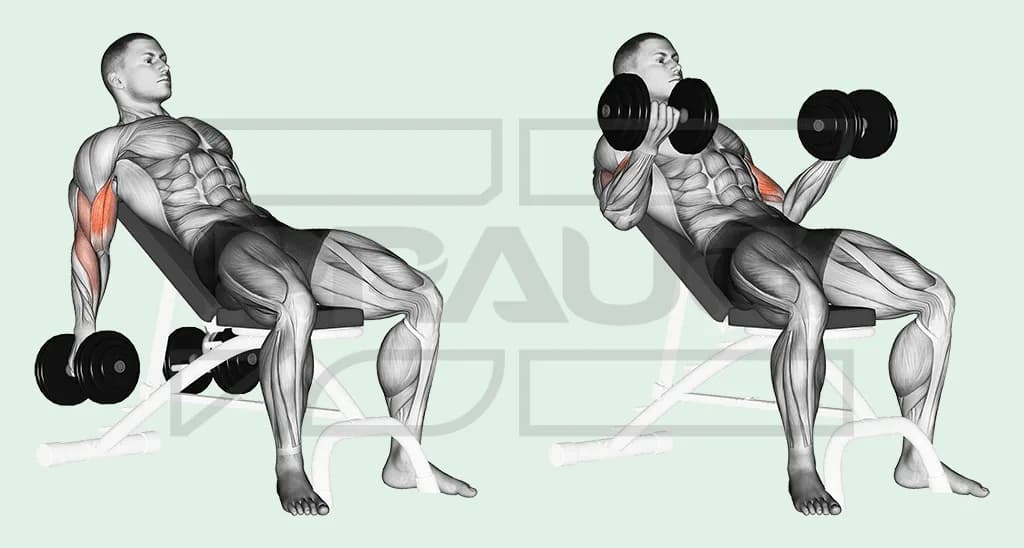
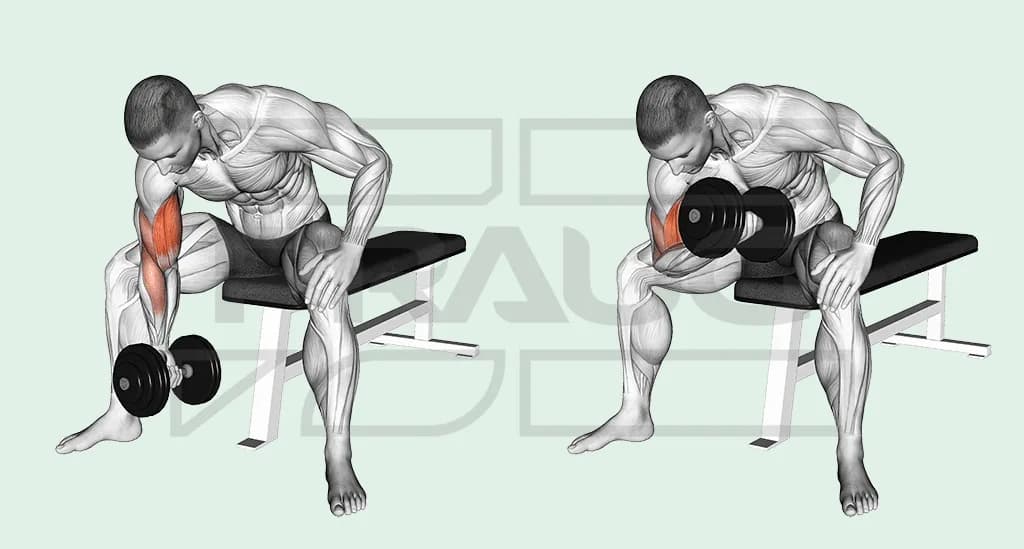
A preacher curl supports the upper arms, while a seated dumbbell curl places them nearer the torso. Choose a setup with secure access rather than treating chest support as automatically better.
Sets, progression and tracking
An optional example is 2–3 sets of 10–15 repetitions. Keep support, elbow range, implement and effort comparable. It can replace another curl within the chosen weekly amount instead of always adding more direct work.
Frequently asked questions
Is a spider curl the same as a preacher curl?
No. Chest support and upper-arm support are different arrangements. Evidence from a preacher curl cannot establish identical spider-curl outcomes.
When should I add demand?
When the chosen setup, range and effort are repeatable and the next increment is manageable. Record changes rather than comparing different tasks as if they were identical.
Sources and limitations
Sources support the passages that cite them. Practical suggestions are coaching choices to adapt to your own situation.
- Kobayashi et al. · 2026 · Twelve-week incline versus preacher dumbbell-curl comparison with MRI in twenty-one untrained adults. ↗
Different individual muscle changes, without a clear total elbow-flexor difference; no separate biceps-head or spider-curl measurement.
This general information does not replace individual advice. Zepraug’s limitations.