Training· 3 min read
Concentration curl: setup, technique and progression
Other names: Supported concentration curl
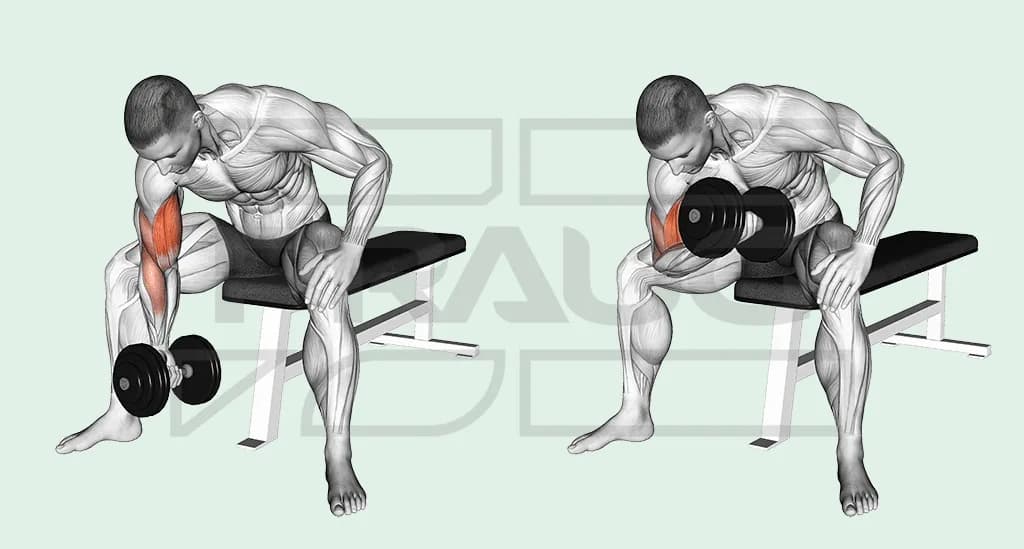
A concentration curl uses one dumbbell with the working upper arm supported against the inner thigh. The support helps make the task repeatable, but does not isolate a particular biceps head or guarantee a change in the muscle’s peak.

Certified fitness coach · CQP Instructeur Fitness
Published on
The essentials before you start.
- Use secure support and practise the pickup and return.
- Keep the intended arm path and range repeatable.
- Research results apply to specific tasks and measured outcomes.
- Choose the workload within the whole week.
Exercise facts
- Main muscles
- Biceps brachii
- Secondary muscles
- Brachialis, Brachioradialis
- Equipment
- Dumbbell, Stable exercise bench
What the movement trains
The biceps, brachialis and brachioradialis contribute to bending the elbow. The thigh supports the upper arm; it should not become a hard pressure point directly beneath the elbow joint.
Set up and perform the movement
- Sit on a stable exercise bench with supported feet and room for the dumbbell.
- Lean forwards from the hips within a manageable position. Rest the back of the upper arm against the inner thigh, above the elbow.
- Use the free hand for suitable support and grip the dumbbell securely with the palm upwards.
- Bend the elbow without pulling the shoulder up or twisting the torso to lift the weight.
- Lower smoothly through a range that retains the arm support. Do not drop into a forced straight elbow.
- Put the dumbbell down securely and use comparable support, range and load on the other side.
Range, support and control
The wrist can remain aligned with the forearm without being rigidly forced. A lighter load is appropriate if thigh pressure, torso movement or a shrinking range changes the task. Support does not make assistance from other muscles impossible.
What the cited research supports
The 2026 acute comparison found the highest group-average biceps activity in its concentration-curl condition, but individual exercise rankings were not consistently reliable. It did not measure later growth, biceps-head isolation or changes in peak shape.
Variations and alternatives
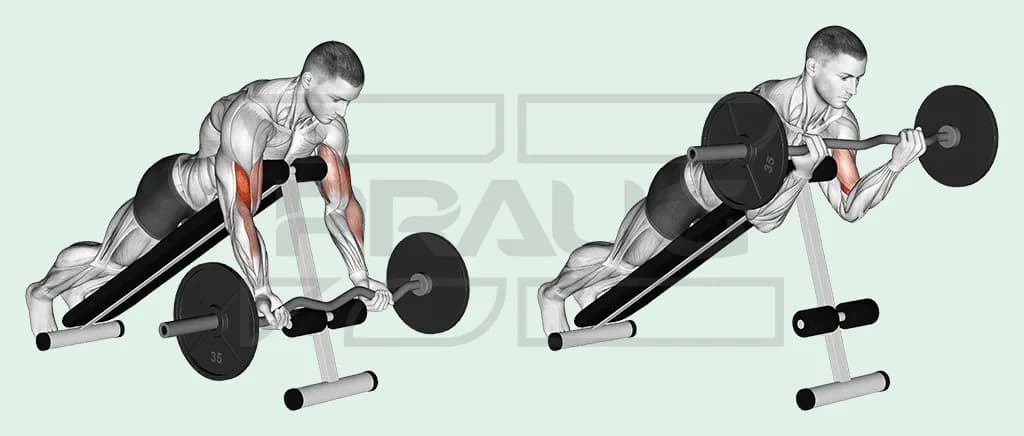
A preacher curl supports the upper arms on equipment, while a spider curl supports the chest. Their shoulder positions and resistance profiles are not identical.
Sets, progression and tracking
One optional example is 2–3 sets of 10–15 repetitions per arm. Three sets on each side gives each arm three sets, not six. It need not be a mandatory finisher; choose the amount after accounting for other curls and pulling.
Frequently asked questions
Does high muscle activity prove this is the best curl?
No. A brief group-average electrical measurement is not a growth trial or a reliable ranking for every individual.
When should I add demand?
When the chosen setup, range and effort are repeatable and the next increment is manageable. Record changes rather than comparing different tasks as if they were identical.
Sources and limitations
Sources support the passages that cite them. Practical suggestions are coaching choices to adapt to your own situation.
- Croskery et al. · 2026 · Acute comparison of four curl exercises in fifteen adults. ↗
Biceps electrical activity and variable individual rankings; not later growth, brachialis measurement or peak shape.
This general information does not replace individual advice. Zepraug’s limitations.