Training· 3 min read
Barbell curl: setup, technique and progression
Other names: EZ-bar curl
A barbell curl bends the elbows while both hands hold a straight or EZ bar in front of the body. Choose a secure grip and a repeatable arm path rather than assuming the heaviest bar or a particular handle shape suits everyone.

Certified fitness coach · CQP Instructeur Fitness
Published on
The essentials before you start.
- Use secure support and practise the pickup and return.
- Keep the intended arm path and range repeatable.
- Research results apply to specific tasks and measured outcomes.
- Choose the workload within the whole week.
Exercise facts
- Main muscles
- Biceps brachii
- Secondary muscles
- Brachialis, Brachioradialis, Wrist flexors
- Equipment
- Straight or EZ bar
What the movement trains
The biceps brachii, brachialis and brachioradialis contribute to elbow flexion. Forearm muscles maintain the grip. A bar connects the hands; it does not make the arms contribute equally or isolate one biceps head.
Set up and perform the movement
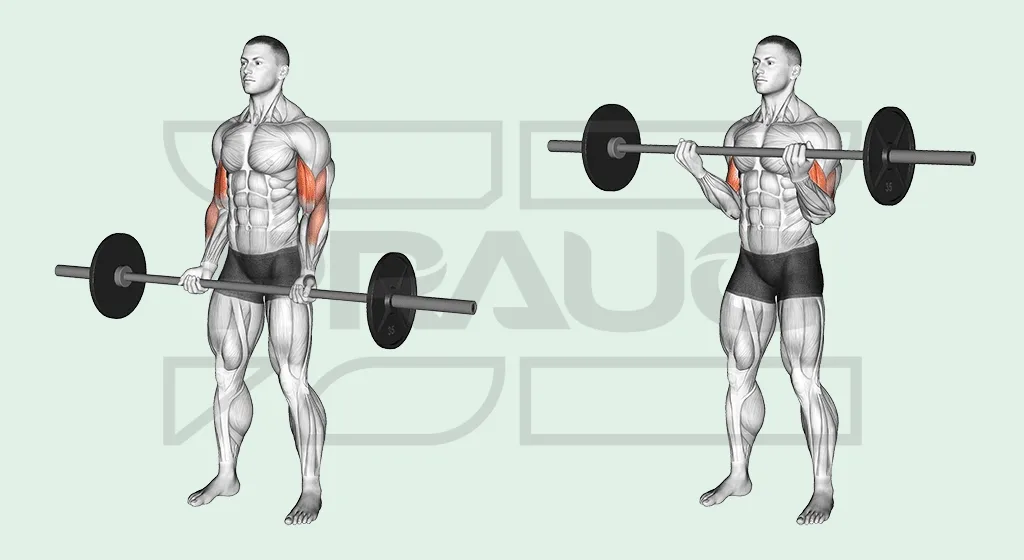
- Use a bar you can pick up and return securely. Check collars and a clear lifting area.
- Stand with stable feet, knees comfortable and a full grip. Choose hand spacing that permits a controlled wrist and elbow position.
- Begin with the upper arms near the sides and the elbows extended through a manageable range.
- Bend the elbows to raise the bar without throwing the hips forwards or leaning back to finish.
- Lower smoothly through the chosen range, retaining the grip and a repeatable upper-arm position.
- Return the bar securely before fatigue makes handling uncertain.
Range, support and control
A small natural movement is different from deliberately turning the curl into a whole-body lift. Keep the intended task consistent. An EZ bar changes the grip; it is not proven to prevent wrist symptoms. Avoid bouncing into the bottom or forcing the wrists to stay at an uncomfortable angle.
What the cited research supports
The eight-week curl-versus-row trial used unilateral dumbbells in ten untrained men, not barbell curls or curls added on top of a full rowing programme. The ten-week range study found greater strength gains with full-range training; both groups increased measured thickness, without establishing a clear between-group growth advantage. Neither ranks straight and EZ bars.
Variations and alternatives
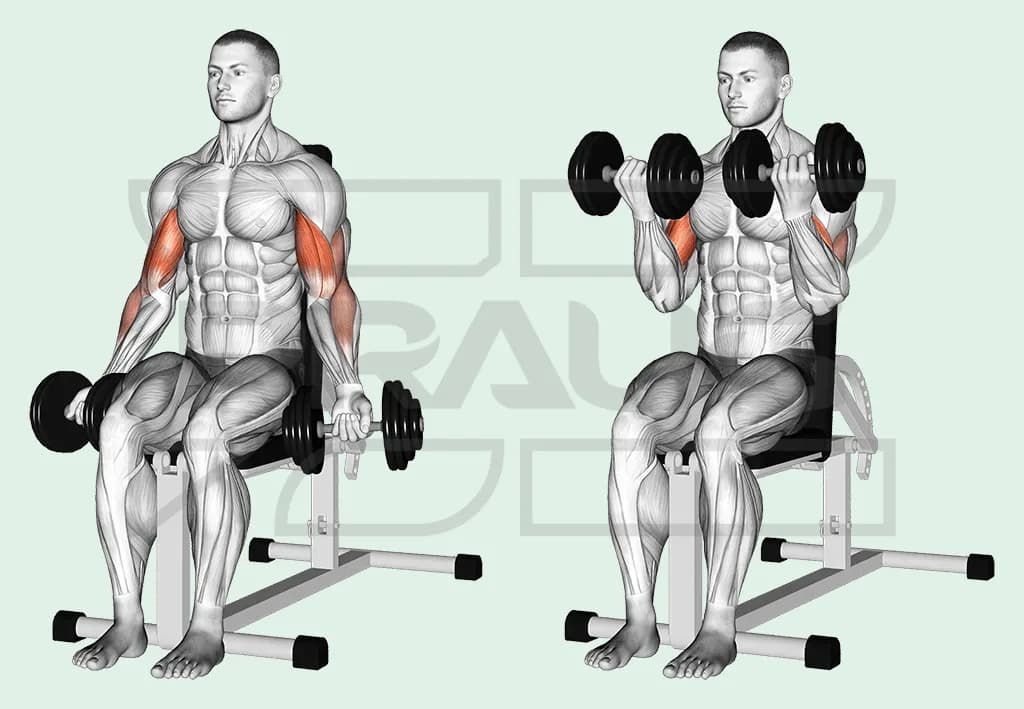
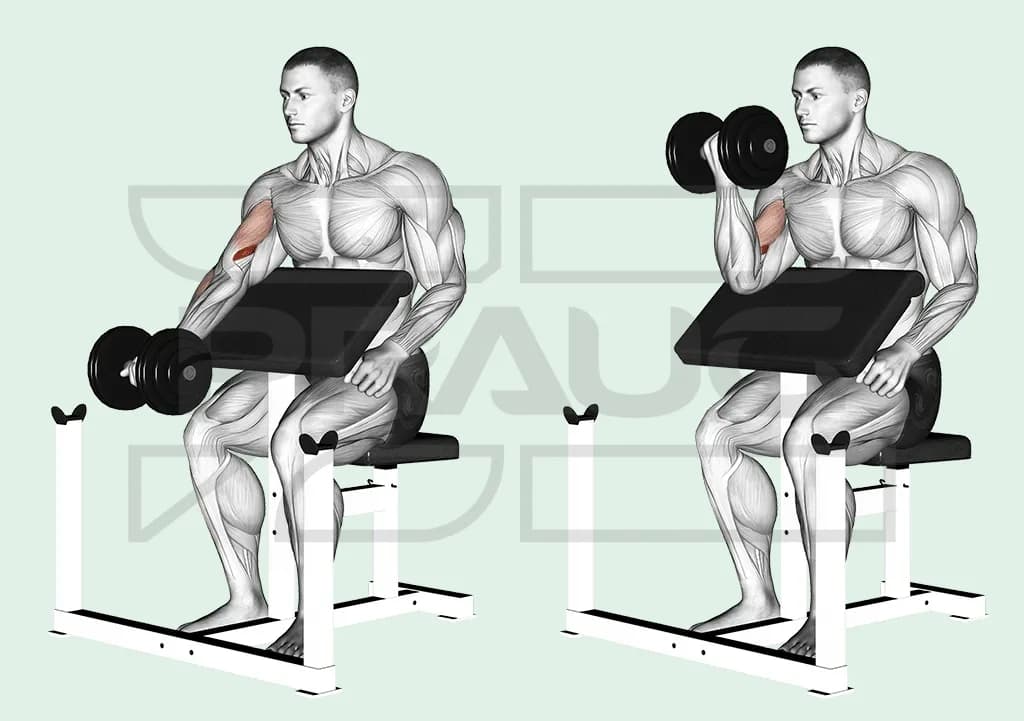
A seated dumbbell curl gives each hand its own implement. A preacher curl supports the upper arms and changes the loading profile. Choose an appropriate variation rather than a compulsory heavy-first sequence.
Sets, progression and tracking
One adjustable example is 2–4 sets of 8–12 repetitions, with enough rest to retain the intended range. Log bar type, total load, grip, range and effort. Count direct curls alongside pulling work across the week.
Frequently asked questions
Is the EZ bar always easier on the wrists?
It offers a different grip angle. The cited studies do not establish individual comfort or injury prevention; use a manageable position and seek advice for persistent symptoms.
When should I add demand?
When the chosen setup, range and effort are repeatable and the next increment is manageable. Record changes rather than comparing different tasks as if they were identical.
Sources and limitations
Sources support the passages that cite them. Practical suggestions are coaching choices to adapt to your own situation.
- Mannarino et al. · 2021 · Eight-week unilateral dumbbell-curl versus row trial in ten untrained men. ↗
Measured elbow-flexor thickness and task-specific strength; not barbell curls or extra curls added to an otherwise identical rowing programme.
- Pinto et al. · 2012 · Ten-week full versus partial curl-range training study. ↗
Full range produced greater strength gains; both groups increased measured thickness. No clear between-group growth advantage or bar-type comparison established.
This general information does not replace individual advice. Zepraug’s limitations.