Training· 3 min read
Seated dumbbell curl: setup, technique and progression
Other names: Seated biceps curl
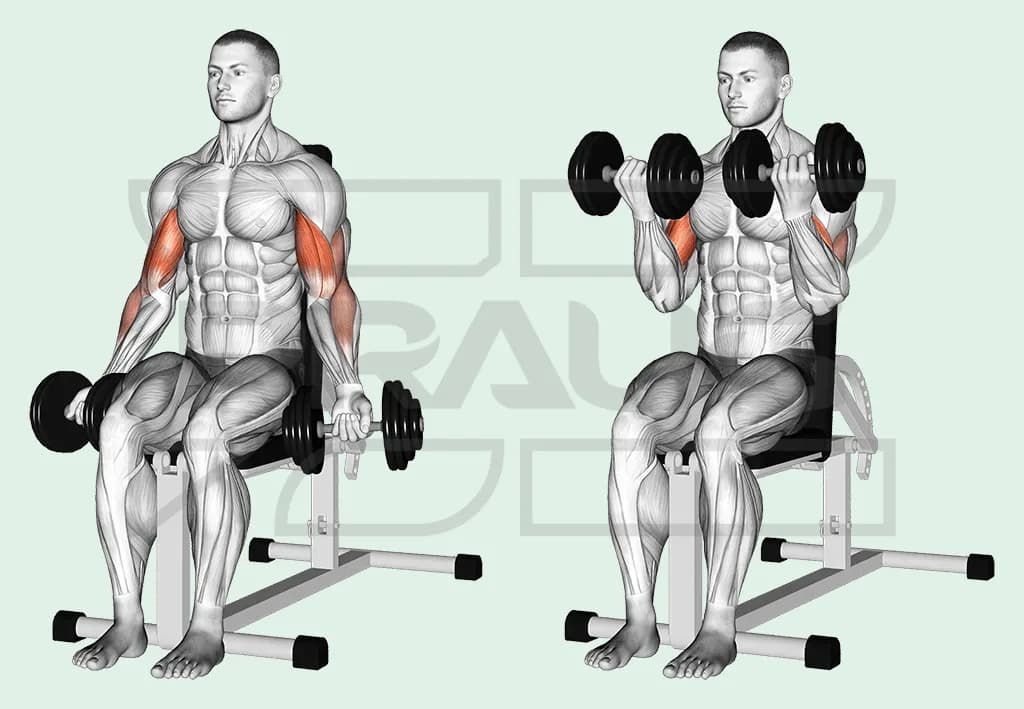
A seated dumbbell curl bends the elbows with the torso supported or held upright and the arms near the sides. Dumbbells allow independent hand paths and optional forearm rotation. Sitting reduces some balance demands, but does not make swinging impossible.

Certified fitness coach · CQP Instructeur Fitness
Published on
The essentials before you start.
- Use secure support and practise the pickup and return.
- Keep the intended arm path and range repeatable.
- Research results apply to specific tasks and measured outcomes.
- Choose the workload within the whole week.
Exercise facts
- Main muscles
- Biceps brachii
- Secondary muscles
- Brachialis, Brachioradialis
- Equipment
- Dumbbells, Exercise bench with near-upright backrest
What the movement trains
The elbow flexors share the task. Turning the palms upwards adds forearm supination, a function of the biceps. Support and hand orientation change the movement without selectively switching off the other flexors.
Set up and perform the movement
- Choose a stable exercise bench, optionally with a near-upright backrest, and put the weights within controlled reach.
- Sit with supported feet and a steady torso. Let the arms hang beside the body without forcing the shoulders back.
- Hold the dumbbells securely with palms upwards or begin neutral and turn gradually if comfortable.
- Bend the elbows, together or alternately, without lifting the upper arms forwards to complete a missed repetition.
- Lower through a controlled elbow range, keeping the chosen forearm rotation repeatable.
- Rest the weights securely before standing or putting them away.
Range, support and control
A backrest does not prevent rib movement, shoulder swing or loss of control. Alternating arms changes rest between repetitions; record whether eight repetitions means eight per arm or eight in total. Avoid forcing extra supination against an uncomfortable wrist position.
What the cited research supports
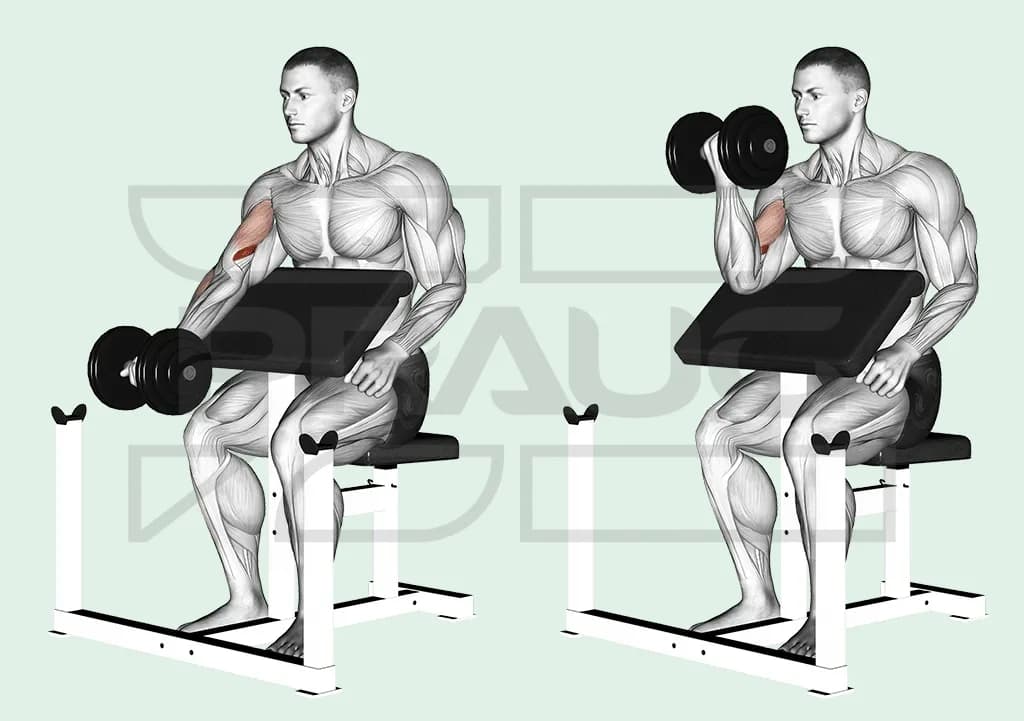
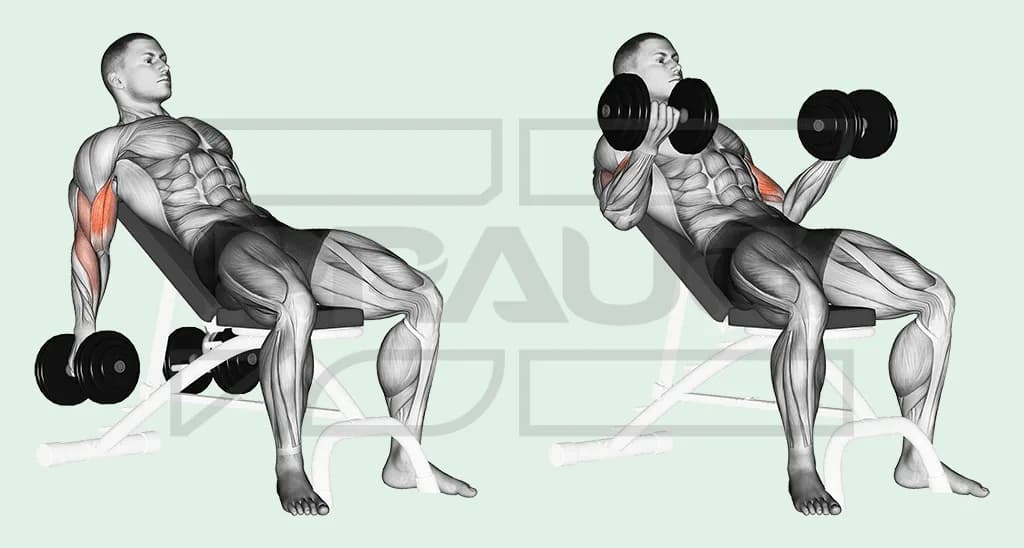
The cited acute study compared standing, incline and preacher dumbbell curls, measuring long-head activity during a single cycle. It did not test this upright seated setup or later muscle growth. Similar movement features are an indirect comparison, not proof of identical results.
Variations and alternatives
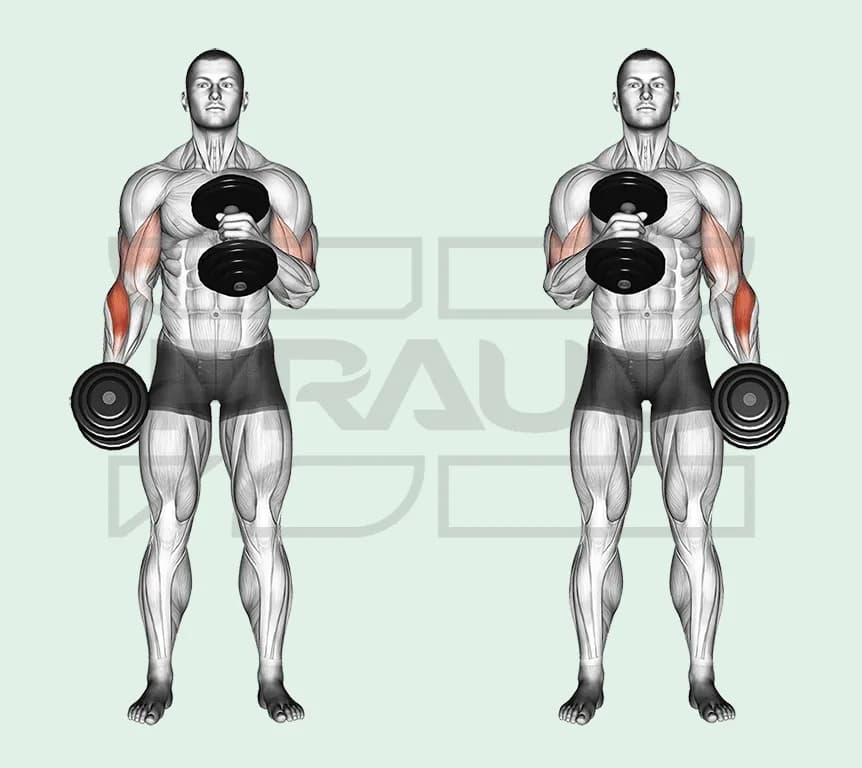
A barbell curl connects the hands. An incline curl changes shoulder position, while a hammer curl retains a neutral grip. They are options within a programme.
Sets, progression and tracking
An example is 2–4 sets of 8–15 repetitions per arm. Rest long enough to keep the torso and range steady. Record the weight per dumbbell, backrest, alternating or simultaneous rhythm, repetitions per arm and effort.
Frequently asked questions
Does the bench remove all momentum?
No. Support changes the setup; the torso and shoulders can still move. Choose a load that preserves the intended elbow-flexion task.
When should I add demand?
When the chosen setup, range and effort are repeatable and the next increment is manageable. Record changes rather than comparing different tasks as if they were identical.
Sources and limitations
Sources support the passages that cite them. Practical suggestions are coaching choices to adapt to your own situation.
- Oliveira et al. · 2009 · Acute long-head activity comparison of standing, incline and preacher dumbbell curls in twenty-two men. ↗
A single cycle at a submaximal load; not upright seated curls or later growth.
This general information does not replace individual advice. Zepraug’s limitations.