Training· 3 min read
Incline dumbbell curl: setup, technique and progression
Other names: Incline curl
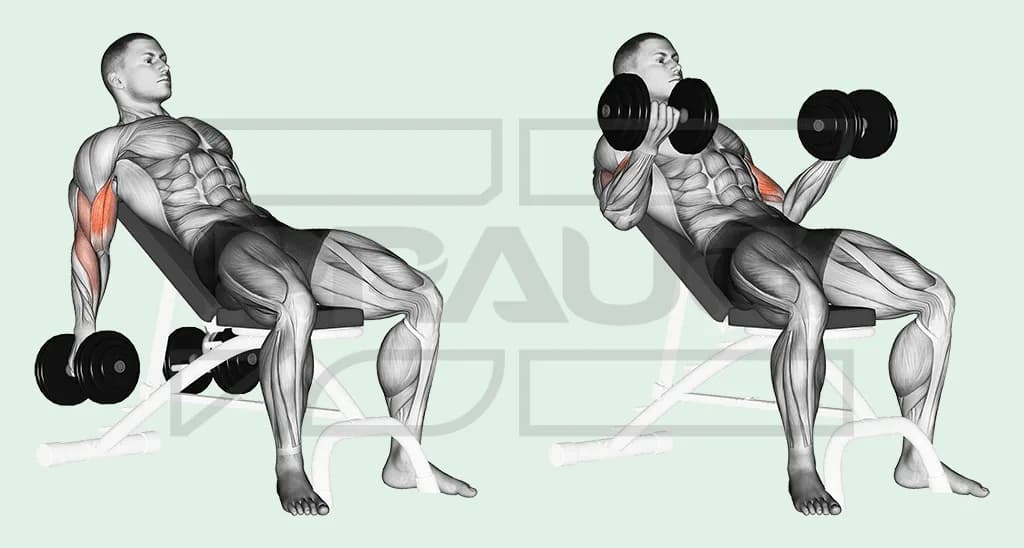
An incline dumbbell curl is performed with the back supported on an inclined bench and the arms hanging behind the torso. It changes shoulder position and the resistance profile relative to other curls. Choose a manageable position rather than seeking the greatest possible stretch.

Certified fitness coach · CQP Instructeur Fitness
Published on
The essentials before you start.
- Use secure support and practise the pickup and return.
- Keep the intended arm path and range repeatable.
- Research results apply to specific tasks and measured outcomes.
- Choose the workload within the whole week.
Exercise facts
- Main muscles
- Biceps brachii
- Secondary muscles
- Brachialis, Brachioradialis, Wrist flexors
- Equipment
- Dumbbells, Adjustable exercise bench
What the movement trains
The biceps crosses the shoulder as well as the elbow. Moving the upper arm behind the torso changes its length, while the brachialis and brachioradialis still assist elbow flexion. This does not establish isolated long-head growth.
Set up and perform the movement
- Secure an adjustable exercise bench and plan a controlled pickup and return. Begin with light weights.
- Use an incline that lets the back remain supported and the arms hang comfortably. Around 45–60 degrees is an example, not an optimum proved for everyone.
- Hold the dumbbells with a secure supinated grip, without forcing the shoulders into maximum extension.
- Bend the elbows while keeping the upper-arm position reasonably repeatable. Avoid throwing the elbows forwards at the top.
- Lower smoothly through the elbow range you can retain without a forceful stretch or shoulder roll.
- Bring the weights back to a secure position before sitting up and putting them away.
Range, support and control
Changing the backrest changes the task. More shoulder extension is not automatically better, and an unsupported deep bottom position is not required. If the setup is uncomfortable, reduce demand or choose a different curl.
What the cited research supports
The twelve-week MRI comparison in twenty-one untrained adults found somewhat more biceps growth with incline than preacher curls, but more brachialis and brachioradialis growth with preacher curls and no clear difference in total elbow-flexor growth. It did not measure the two biceps heads separately. A separate ten-week cable study matched the resistance profile and found similar growth with neutral versus extended shoulder positions. These are different questions; the dumbbell comparison does not isolate shoulder angle as the sole cause.
Variations and alternatives
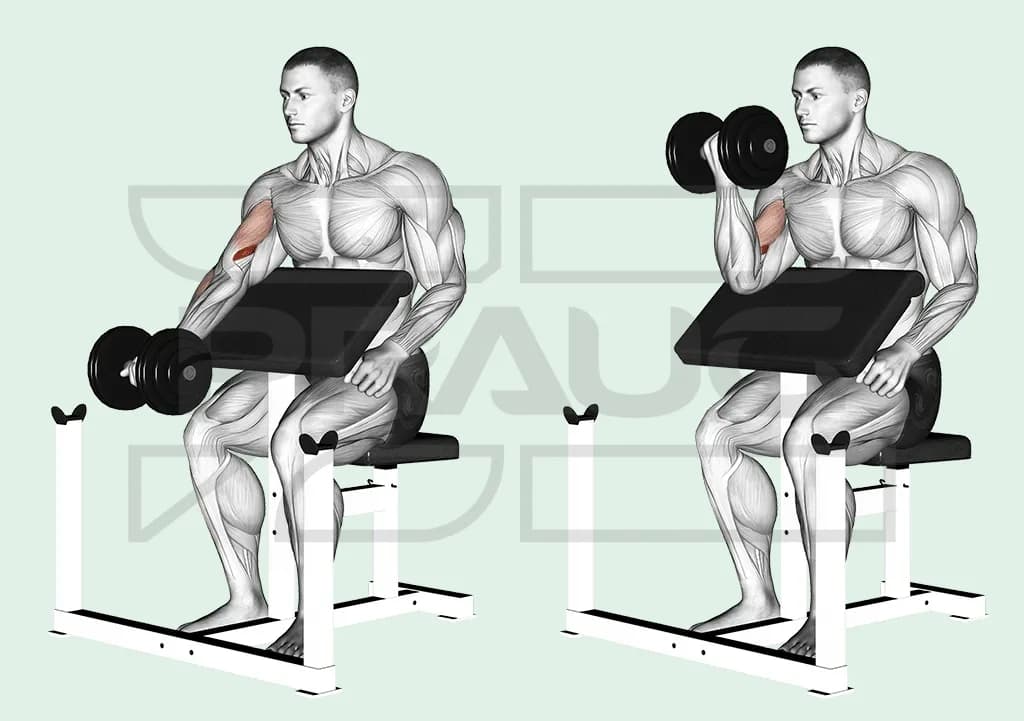
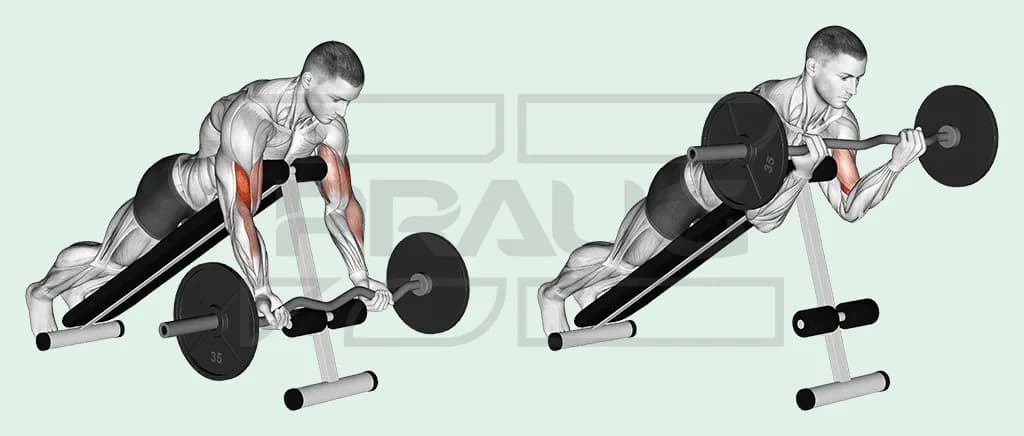
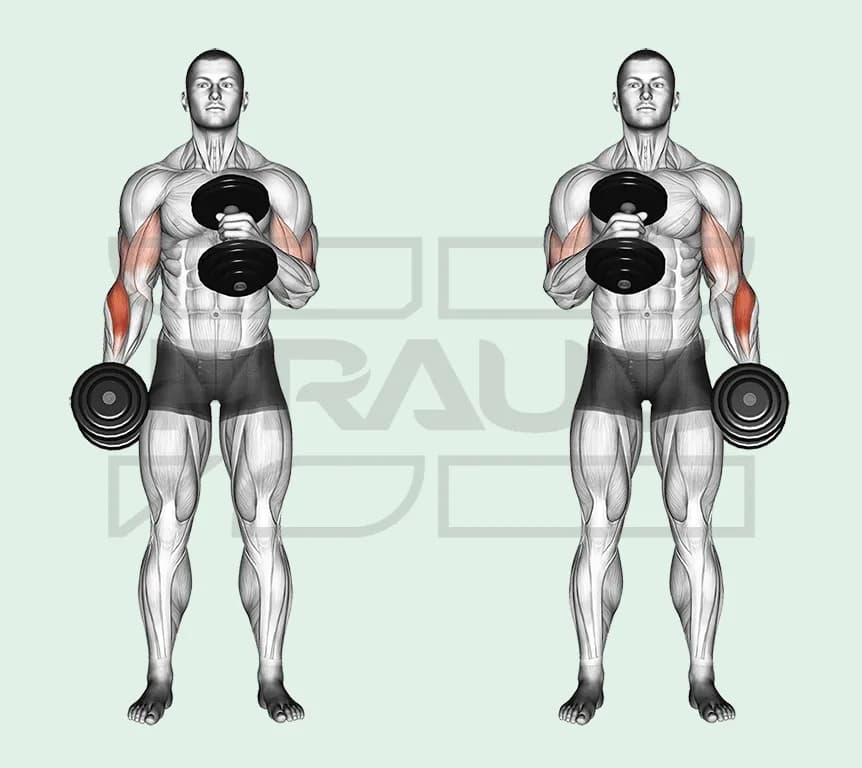
A seated curl keeps the arms nearer the torso. A preacher curl changes support and loading. There is no requirement to combine both to obtain a complete session.
Sets, progression and tracking
One example is 2–3 sets of 8–15 controlled repetitions, with sufficient rest to retain the starting position. Record incline, weight per hand, elbow range and effort. Avoid increasing shoulder extension and weight at the same time and calling it the same task.
Frequently asked questions
Does this specifically grow the long head or peak?
The cited growth trial did not separately measure the two heads or peak shape. The shoulder position changes the task without proving selective growth.
When should I add demand?
When the chosen setup, range and effort are repeatable and the next increment is manageable. Record changes rather than comparing different tasks as if they were identical.
Sources and limitations
Sources support the passages that cite them. Practical suggestions are coaching choices to adapt to your own situation.
- Kobayashi et al. · 2026 · Twelve-week incline versus preacher dumbbell-curl comparison with MRI in twenty-one untrained adults. ↗
Different individual muscle changes, without a clear total elbow-flexor difference; no separate biceps-head or spider-curl measurement.
- Oliveira et al. · 2009 · Acute long-head activity comparison of standing, incline and preacher dumbbell curls in twenty-two men. ↗
A single cycle at a submaximal load; not upright seated curls or later growth.
- Larsen et al. · 2026 · Ten-week cable-curl comparison of shoulder positions with matched resistance profile. ↗
Twenty-four untrained men completed; similar growth at the measured sites. Not a test of every dumbbell setup or an individual maximum-stretch prescription.
This general information does not replace individual advice. Zepraug’s limitations.