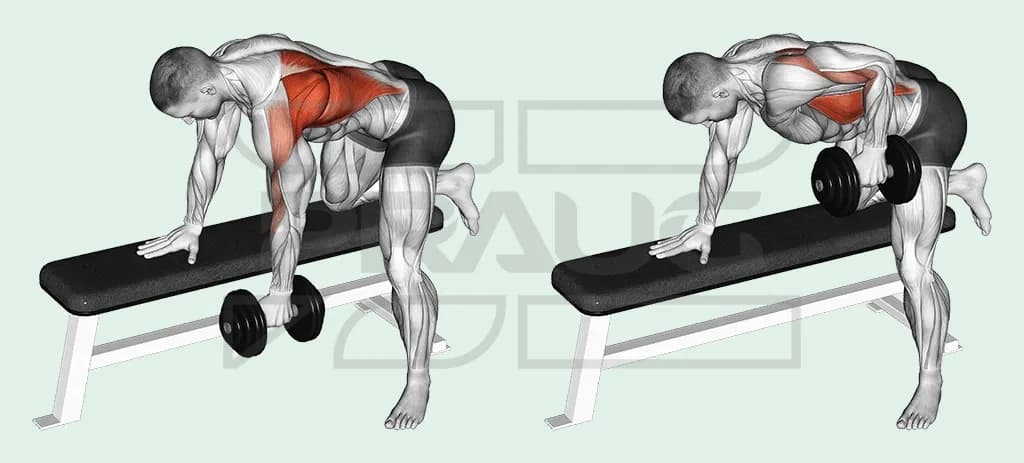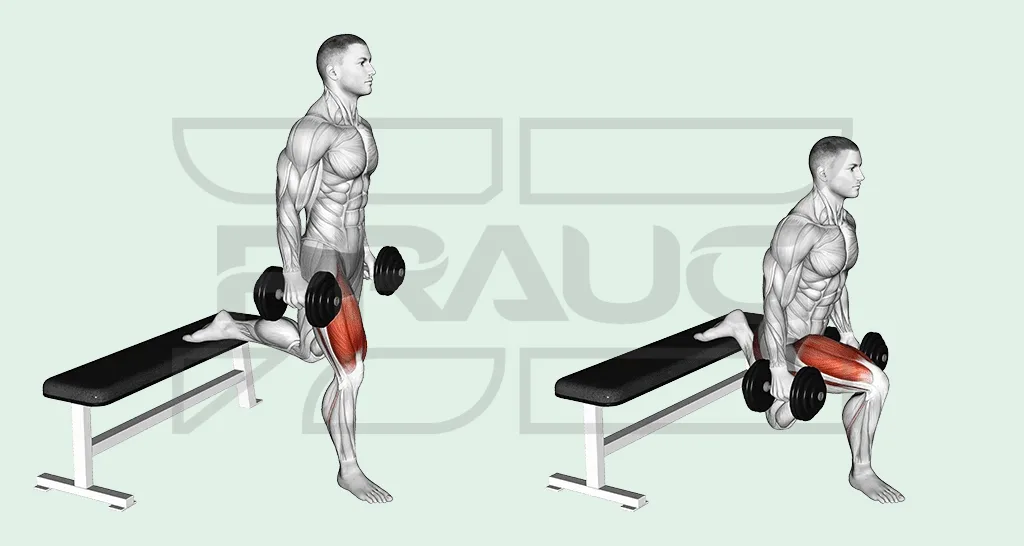


training2 min read
Unilateral or bilateral training: which should you choose?
Training one side at a time or both together does not always meet the same constraints. Instead of seeking a universal winner, choose the option that serves your session and goals.

Certified fitness coach · CQP Instructeur Fitness
Published on

The essentials before you start.
- Strength gains remain related to the movement trained.
- Unilateral and bilateral work can coexist according to need.
- Compare sides under consistent conditions before changing the workload.
What the studies compare
Training one side can help practise a movement and organise a session. It does not automatically make it superior for growth.
A review of nine studies found no clear hypertrophy difference. Strength gains mainly favoured the type of movement trained.
Reference: Kassiano W et al. · 2025 ↗
Equipment, stability and organisation
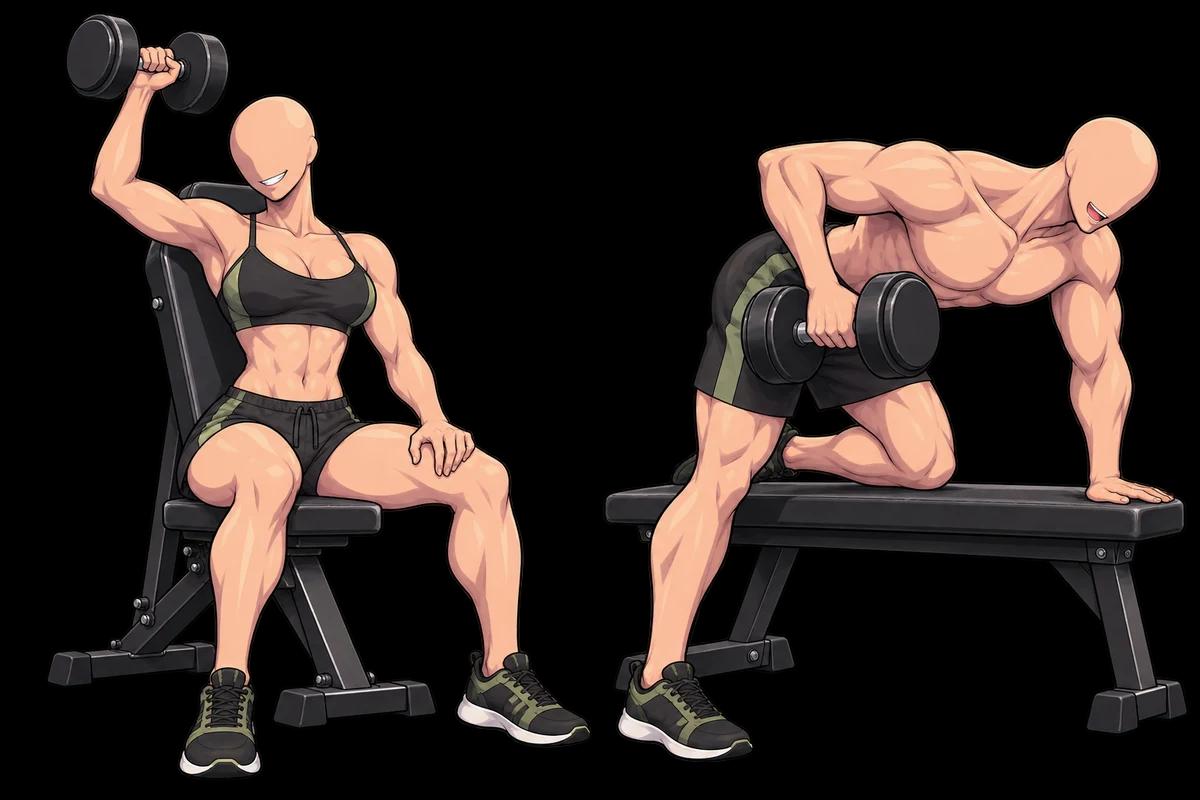
In this row, the bench supports the position and the dumbbell uses a neutral grip. Support does not make the movement less worthwhile.
- Which movement do you want to improve?
- What equipment is available?
- What organisation can you sustain?
Observe differences between sides
Before drawing conclusions about a side-to-side difference, compare repetitions with the same support, range of motion and similar technique. Record observations across sessions rather than relying on one attempt.
Log load per side, repetitions and effort within the context of the training week. Do not automatically give the apparently weaker side twice as much work. The weight used in a bilateral exercise cannot be directly compared with its unilateral variation.
A practical way to use this
Consider available time, equipment and stability. When switching to a unilateral variation, record each side and avoid directly comparing the load with the previous movement. Describe differences under comparable conditions before treating them as evidence of an imbalance.
Context and limits
Our choice: keep useful movements, unilateral or bilateral. Seek assessment for pain or a troublesome functional difference.
Evidence is limited, uncertainty intervals are wide and risk of bias is moderate. No clear difference does not prove perfect equivalence.
Reference: Kassiano W et al. · 2025 ↗
From the post to your practice
Explore the carousel.
Explore the visual version of this topic on @zepraug.

Unilateral or bilateral training: which should you choose?
The carousel is coming to Instagram. Scheduled for 7 December 2026.
Sources and limitations
Sources support the passages that cite them. Practical suggestions are coaching choices to adapt to your own situation.
- Kassiano W et al. · 2025 · Comparison of Muscle Growth and Dynamic Strength Adaptations Induced by Unilateral and Bilateral Resistance Training: A Systematic Review and Meta-analysis. ↗
Nine-study meta-analysis: strength gains favoured the type of task trained, without a clear hypertrophy difference. Wide uncertainty and moderate risk of bias preclude a claim of perfect equivalence.
This general information does not replace individual advice. Zepraug’s limitations.