Training· 5 min read
Cluster sets: short rests, repetition quality and practical use
A cluster set divides a planned set into repetitions or small blocks separated by short rests. It changes when rest occurs. It can help preserve performance during a set, but it is not a guaranteed route to more muscle or strength.

Certified fitness coach · CQP Instructeur Fitness
Published on
The essentials before you start.
- Record the whole structure: repetitions, blocks, load and both kinds of rest.
- Short intra-set rests and longer between-set rests serve different roles.
- An average absence of a clear difference is not proof of identical results.
- Each pause needs a secure unloading and restart procedure.
What a cluster set changes
A continuous set groups repetitions together before the longer rest. A cluster inserts rests between single repetitions or small groups. Adding extra rest and redistributing the same total rest are different comparisons.
For example, 3 + 3 + 3 with twenty seconds between blocks is nine repetitions with two short pauses, totalling forty seconds of intra-set rest. The longer rest after the last block is recorded separately.
| Feature | Continuous set | Cluster example |
|---|---|---|
| Repetitions | Nine together | Three blocks of three |
| Rest within the set | No planned unloading pause | 20 s after block one and block two |
| Rest after the set | Chosen between-set rest | Chosen between-set rest, recorded separately |
| Timing comparison | Depends on repetitions and rest | Longer if short rests are added rather than redistributed |
| Fatigue and speed | May change through the set | Short rests may help retain repetition performance |
What the research does and does not show
The acute review generally favoured maintaining velocity and power. The longer-term comparison did not find clear average differences in the adaptations tested. Neither establishes identical outcomes for every person, exercise or rest structure.
The small bench-press trial used four sets of five at 85% 1RM, with different rest structures, and found one regional thickness result favouring traditional sets. That protocol is a study condition, not a starting prescription.
Count the set and the pauses
One illustrative cluster could use three blocks of two manageable repetitions: 2 + 2 + 2, with two short rests. Repeating it three times gives eighteen repetitions across three clusters, not eighteen separate sets. Log both clusters and mini-blocks so weekly comparisons remain meaningful.
For five single repetitions there are four rests between repetitions. At thirty seconds each, that is two minutes of intra-set rest per cluster. Do not count another intra-set pause after the final repetition as well as the longer between-set rest.
Choose an exercise with a secure reset
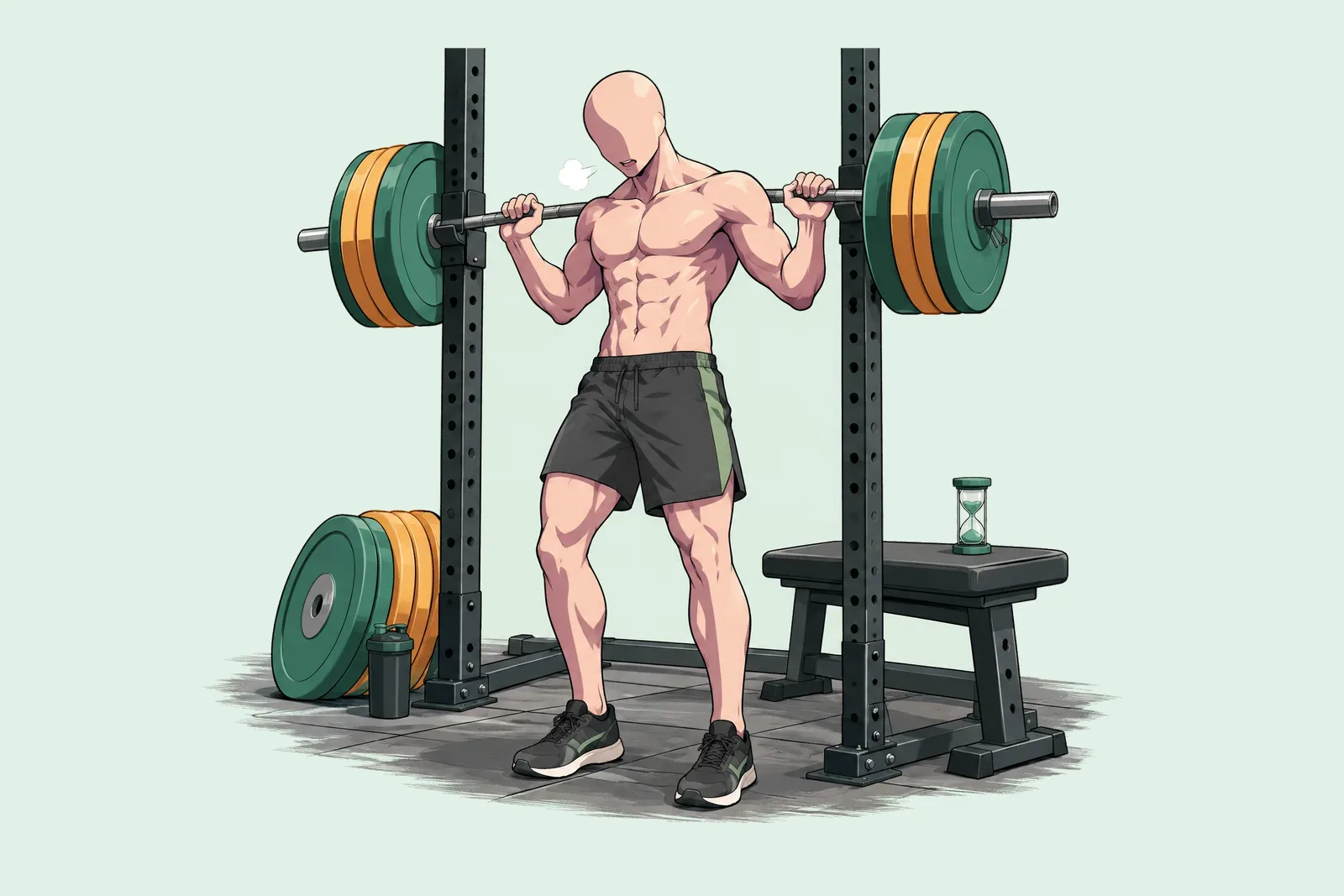
A squat, bench press or deadlift needs a practised start, finish and unloading procedure. A rack pause requires suitable hooks, safeties and support. Repeated dumbbell pickups can add substantial handling work.
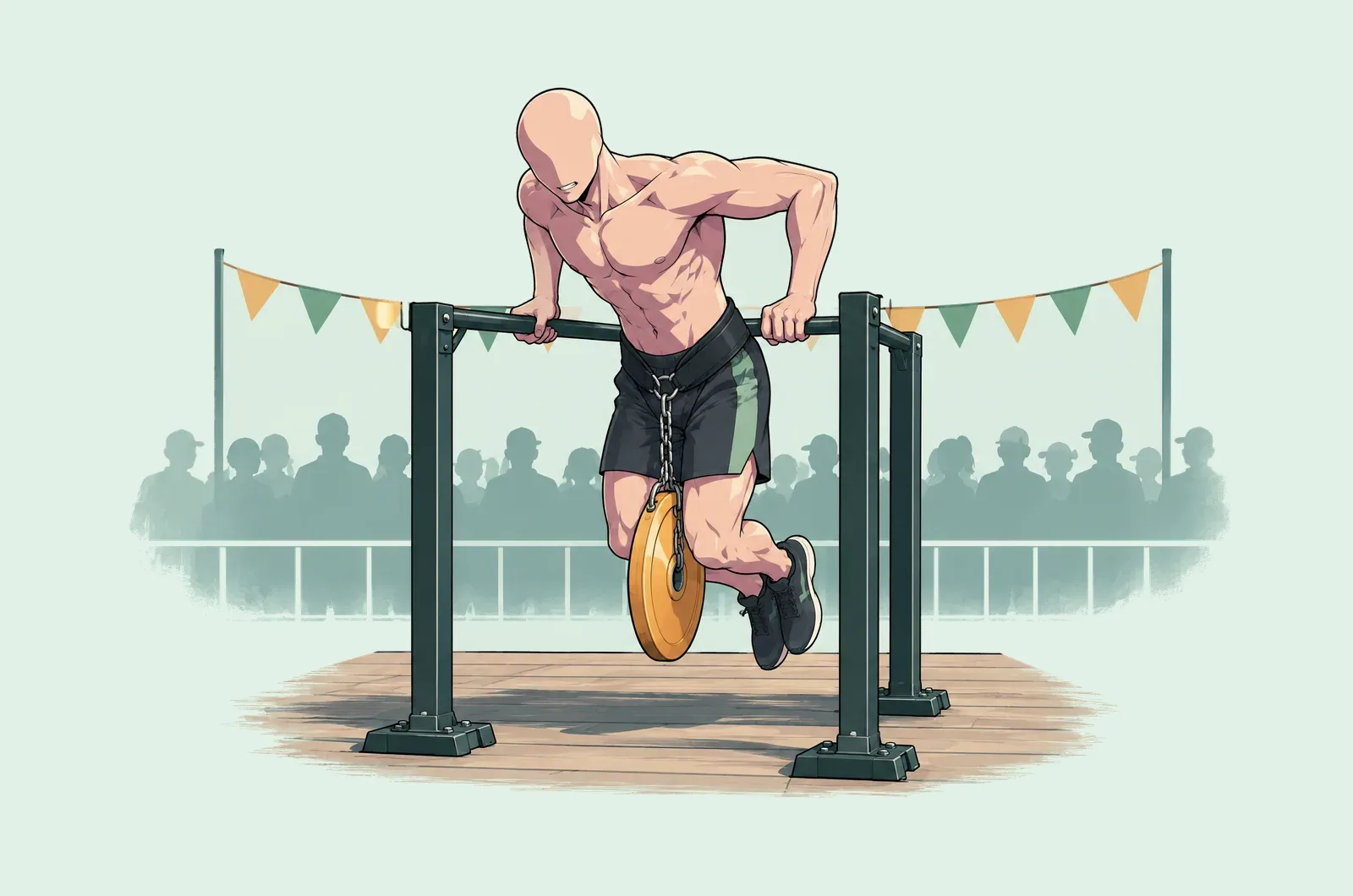
A pause while still supporting a demanding load is not the same as the unloaded rest used in another protocol. Do not rush a rerack, move a loaded bar onto unsuitable supports or assume a weighted pull-up or dip can be reset in the same way.
- Choose one familiar task and a manageable load.
- Decide the repetitions per block, blocks per cluster and number of clusters.
- Plan where the load rests and rehearse the unloading and restart.
- Time intra-set and between-set rests separately.
- End or reduce the work when setup or movement control deteriorates.
Load and progression remain individual
A load that allows eight continuous repetitions does not guarantee twelve repetitions in four blocks while always staying far from failure. Rest changes capacity, but does not make later blocks automatically easy.
A modest practice option is one or two clusters of 2 + 2 + 2 with around twenty seconds between blocks, or more as needed, then sufficient rest before another cluster. Use less when learning the reset. This is a coaching example, not an evidence-established universal dose.
The RPE guide helps record effort. Compare like-for-like structures before changing load. More weight, more blocks and shorter pauses need not increase together.
When a simpler set may suit the goal
Continuous sets may be easier to organise and track. Clusters may be useful when preserving repetition speed is a deliberate goal, but the clock and setup can add complexity. Neither requires every block to reach failure.
A beginner programme, full-body plan or the streetlifting guide provides wider context. A cluster structure alone does not prepare someone for a maximum attempt.
Frequently asked questions
What is a cluster set?
A planned set split by rests between individual repetitions or small blocks. Record the full structure rather than treating every short block as an equivalent traditional set.
Are cluster sets proven to grow more muscle?
The cited longer-term comparisons did not establish a general advantage. Their findings do not prove that every configuration produces exactly the same outcome.
Is rest-pause the same method?
Terminology varies. Rest-pause often describes extra work after a demanding initial block, whereas a cluster may plan rests before marked fatigue. Record the actual structure and effort.
Must I use 85% of my maximum?
No. That was a study condition. The complete movement, reset and amount determine a manageable practice load.
Sources and limitations
Sources support the passages that cite them. Practical suggestions are coaching choices to adapt to your own situation.
- Davies et al. · 2022 · Bench-press set structure over eight weeks ↗
Twenty-one trained adults used matched repetitions and load with different rest structures; one regional thickness result favoured traditional sets. Not universal equivalence.
- Davies et al. · 2021 · Longer-term cluster and traditional set comparisons ↗
Twenty-nine studies found no clear average adaptation differences. Heterogeneous protocols and uncertain estimates do not prove identical individual outcomes.
- Latella et al. · 2019 · Immediate performance during cluster sets ↗
Twenty-five acute studies generally favoured retaining velocity and power; this does not establish long-term growth or every exercise’s response.
This general information does not replace individual advice. Zepraug’s limitations.