Training· 3 min read
Single-leg glute bridge: setup, technique and progression
Other names: One-leg bridge
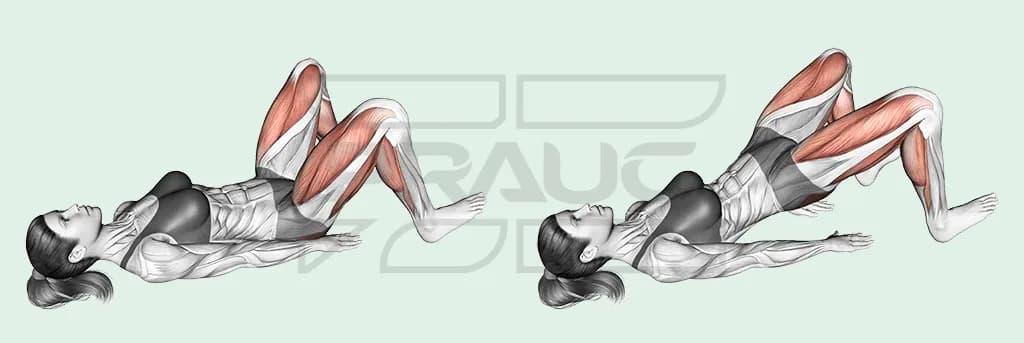
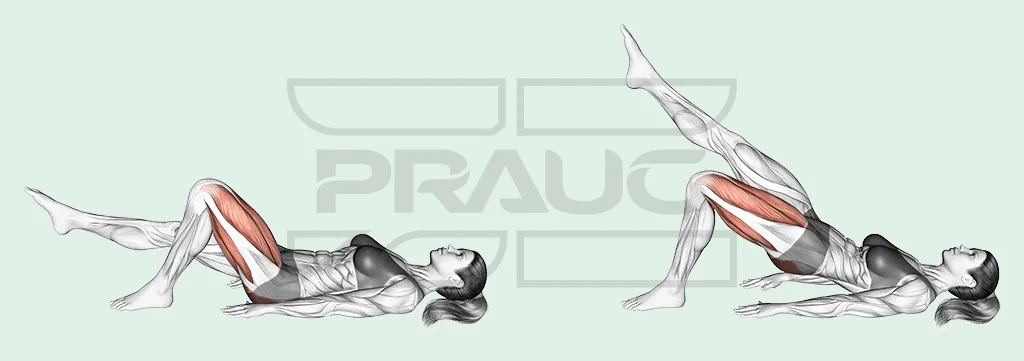
A single-leg glute bridge lifts the pelvis with one foot supporting the lower body. The free leg and arms change balance and leverage. One-foot support does not guarantee exactly twice the load of a two-leg bridge.

Certified fitness coach · CQP Instructeur Fitness
Published on
The essentials before you start.
- Practise the setup, support and return before adding demand.
- Keep the intended range and movement repeatable.
- The cited outcomes apply to particular tasks and populations.
- Choose the workload within the whole week.
Exercise facts
- Main muscles
- Gluteus maximus, Gluteus medius
- Secondary muscles
- Hamstrings, Lower-back muscles, Abdominals
- Equipment
- Bodyweight, Exercise mat
What the movement trains
The gluteals, hamstrings and other trunk and hip muscles contribute to hip extension and pelvic control. Foot distance and the free-leg position affect the task.
Set up and perform the movement
- Lie on a comfortable mat with the head and upper back supported and arms in a manageable position.
- Set one foot securely on the floor with a comfortable knee bend; begin with the other knee bent if useful.
- Lift the pelvis through hip extension without throwing the ribs up or forcing a back arch.
- Use a height that retains the intended pelvic position rather than chasing a fixed line at any cost.
- Lower smoothly and regain support before changing sides.
- Use comparable foot distance, free-leg position and range on the other side.
Range, support and control
A free straight leg, a closer foot, elevation or an external load changes the task. A cramped hamstring is a reason to pause and adjust, not a command to force the same position. Secure pickup and return are necessary for any added load.
What the cited research supports
The twenty-eight-person activity comparison found less hamstring activity at a more flexed support-knee position while gluteal activity stayed similarly high. The ten-person MRI study measured immediate activation-related changes after exercise, not later muscle growth. Neither establishes a universal angle or injury-prevention result.
Variations and alternatives
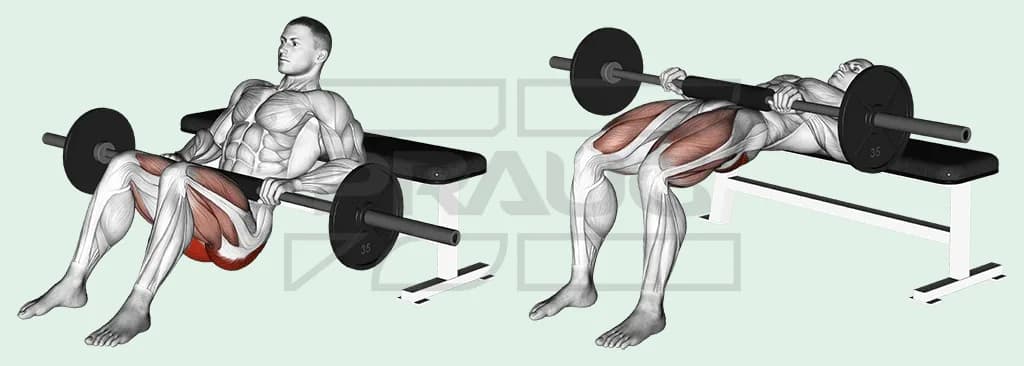
A two-leg bridge changes support. A hip thrust uses different upper-body support. Neither is a compulsory stage before the other.
Sets, progression and tracking
One example is 2–3 sets of 8–15 controlled repetitions per side with adequate rest. Three sets per side gives each side three sets. Record knee bend, free leg, arms, range and effort.
Frequently asked questions
Is a closer support foot proven to grow more glute muscle?
The cited position experiment measured acute activity, not growth. It does not establish a universal foot distance or training outcome.
When should I add demand?
When the setup, range and effort are repeatable and the next change is manageable. Log changed support or assistance rather than comparing different tasks as if they were identical.
Sources and limitations
Sources support the passages that cite them. Practical suggestions are coaching choices to adapt to your own situation.
- Lehecka et al. · 2017 · Activity during five single-leg bridge positions in twenty-eight adults. ↗
More support-knee flexion reduced hamstring activity while gluteal activity remained high; no later growth or universal foot distance.
- Kim et al. · 2026 · Immediate functional-MRI changes after four gluteal exercise tasks in ten active adults. ↗
One forty-repetition set per task; activation-related changes, not later muscle growth or strength.
This general information does not replace individual advice. Zepraug’s limitations.