Training· 3 min read
Cable glute kickback: setup, technique and progression
Other names: Glute kickback
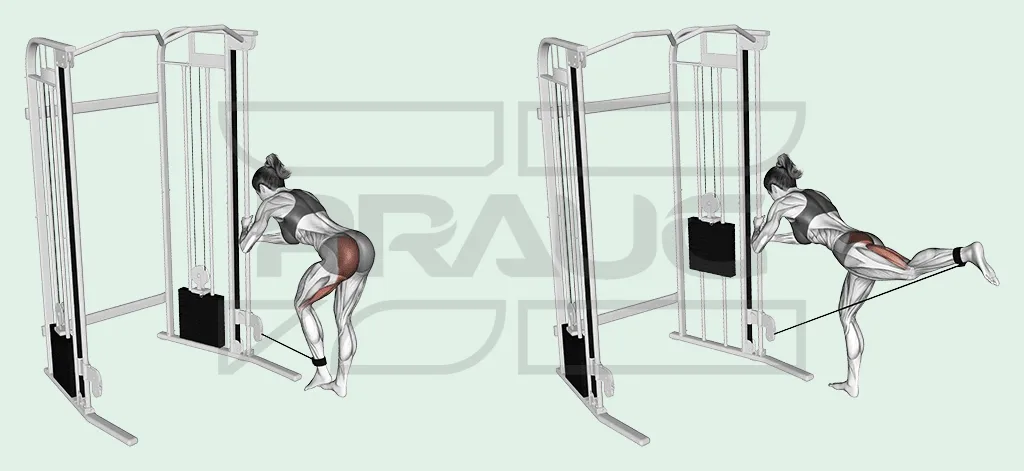
A cable glute kickback extends the hip against a low cable attached through a suitable ankle cuff. Keep the torso and stance controlled rather than swinging the leg backwards or arching to create extra height.

Certified fitness coach · CQP Instructeur Fitness
Published on
The essentials before you start.
- Practise the setup, support and return before adding demand.
- Keep the intended range and movement repeatable.
- The cited outcomes apply to particular tasks and populations.
- Choose the workload within the whole week.
Exercise facts
- Main muscles
- Gluteus maximus
- Secondary muscles
- Hamstrings, Stance-side gluteus medius, Abdominals
- Equipment
- Low cable pulley, Suitable ankle cuff
What the movement trains
The gluteus maximus contributes to hip extension with other muscles, while the stance hip and trunk maintain support. Knee angle, cable direction and range change demand; this is not a pure single-muscle action.
Set up and perform the movement
- Check a suitable low pulley, secure ankle cuff and attachment, and clear the cable route.
- Attach the cuff with the stack settled and take a stable supported stance.
- Use secure hand support and a manageable torso incline, keeping the stance knee comfortable.
- Move the working thigh backwards through hip extension without throwing the pelvis into a large back arch.
- Return smoothly through the chosen range without letting the cable pull the stance out of balance.
- Settle the stack and regain foot support before changing sides or removing the cuff.
Range, support and control
A bent knee and a straighter knee are different variants; neither requires maximum backward reach. A pad or handle used for support must be intended for that purpose. Avoid a compulsory low-load finisher rule.
What the cited research supports
The ten-week cable comparison found more overall gluteus-maximus growth with hip extension and different regional changes with abduction. It did not compare this task with hip thrusts, bent versus straight knees, or a compulsory combined routine.
Variations and alternatives
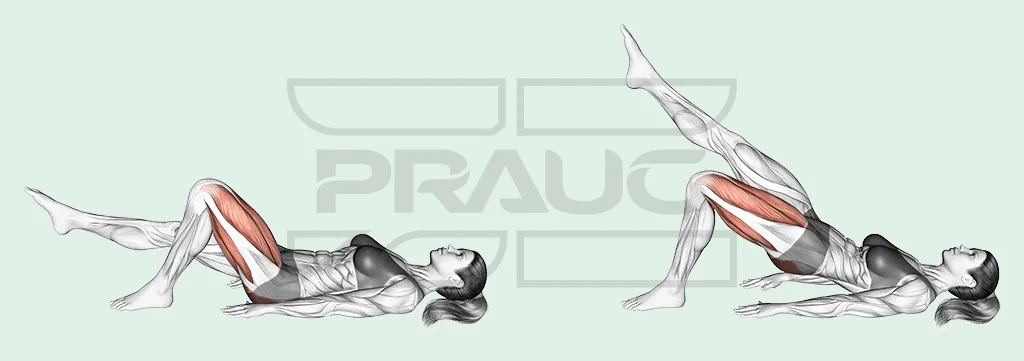
A single-leg bridge changes support and resistance. A band kickback needs an intact band and secure intended anchor; a floor donkey kick is not an equivalent cable load.
Sets, progression and tracking
An example is 2–4 sets of 10–20 repetitions per side with adequate rest. Three sets per side gives each leg three sets. Log cuff, cable, stance, knee angle, range and effort alongside other hip-extension work.
Frequently asked questions
Does the trial prove I must combine kickbacks and abduction?
It compared tasks on separate legs. It did not establish the superiority of adding both to every session.
When should I add demand?
When the setup, range and effort are repeatable and the next change is manageable. Log changed support or assistance rather than comparing different tasks as if they were identical.
Sources and limitations
Sources support the passages that cite them. Practical suggestions are coaching choices to adapt to your own situation.
- Attarieh et al. · 2026 · Ten-week unilateral cable hip-extension versus abduction trial in seventeen adults, with MRI size measurements. ↗
Task-specific and regional differences; not a seated-machine lean comparison, bent-knee ranking or proof of a superior combined routine.
This general information does not replace individual advice. Zepraug’s limitations.