Training· 4 min read
Suspension row: setup, technique and progression
Other names: TRX row, Suspension inverted row
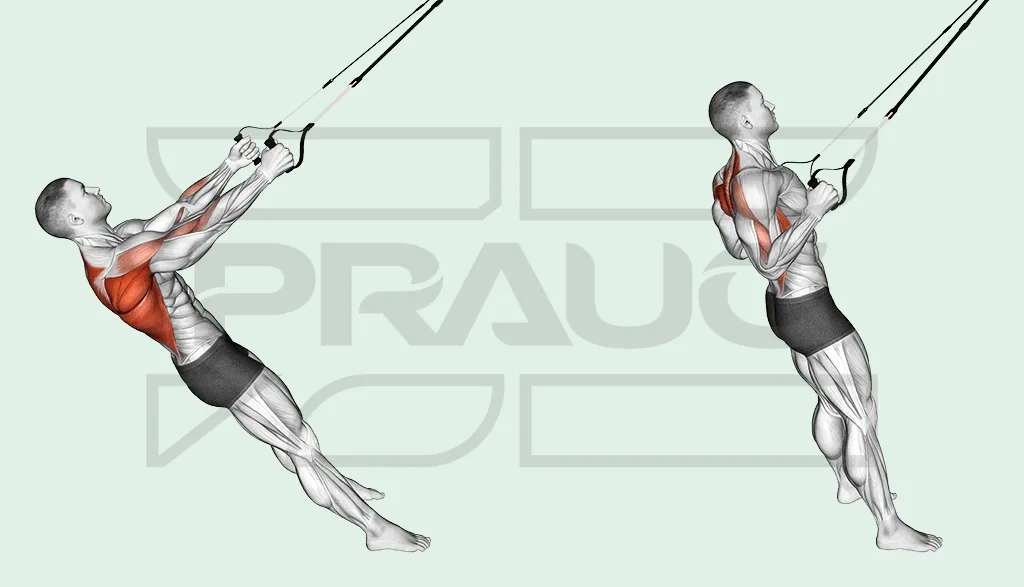
A suspension row pulls the chest towards handles while the feet stay on the floor and the body leans back. Body angle and strap setup adjust the demand without adding a weight stack. Use a system and anchor intended to support the exercise; instability is a change in the task, not automatic extra benefit.

Certified fitness coach · CQP Instructeur Fitness
Published on
The essentials before you start.
- Use a secure setup and a load or assistance you can control.
- Keep the intended support, range and effort comparable between sessions.
- Variations change the task; acute activity does not rank long-term growth.
- Adapt the example workload to other training and recovery.
Exercise facts
- Main muscles
- Latissimus dorsi, Rhomboids, Middle and lower trapezius, Rear deltoids
- Secondary muscles
- Biceps, Brachialis, Teres major, Abdominals, Glutes
- Equipment
- Rated suspension system
What the movement trains
The lats, rear shoulder, muscles around the shoulder blades and elbow flexors contribute to pulling. The trunk and hips help maintain the intended body line. Higher-elbow and T-shaped rows change shoulder movement and muscle activity; they do not establish a universal better row.
Set up and perform the movement
- Inspect the straps, handles and load-bearing anchor according to the manufacturer’s instructions. Check the floor and clear the area behind you.
- Set both straps to a suitable, equal length and take a full grip, usually with palms facing each other.
- Lean back under control with supported feet and a body angle you can hold. A more upright position is generally a useful easier starting option.
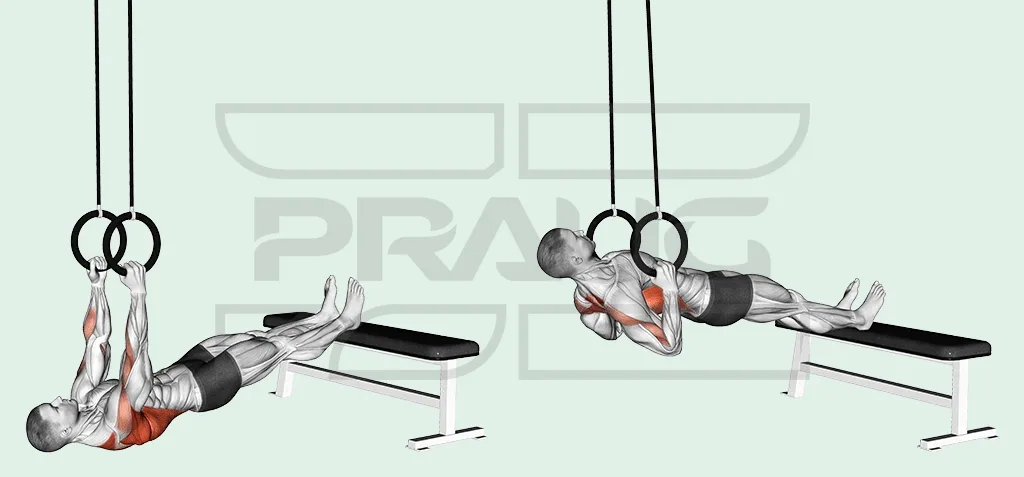
- Keep a steady line through the trunk and hips as you bend the elbows and bring the chest towards the handles. Let the shoulder blades move with the arms.
- Finish without thrusting the hips forwards or throwing the head back to reach the handles.
- Lower smoothly to the same starting reach. Step back to a secure upright position before releasing the handles.
What the cited research does and does not show
The laboratory row comparison used a few repetitions in twenty-eight adults. The suspension review found variable electrical activity across studies. Neither establishes long-term growth superiority or treatment effects for a particular shoulder condition, even when clinical uses are discussed.
Variations and alternatives
Change foot placement and body angle gradually while recording the setup. Bent-knee support is another adjustment. One-arm, raised-foot, high-elbow, T and Y versions are separate tasks with different balance and shoulder demands. Rings allow independent turning handles; they need a suitable anchor and are not a compulsory advanced stage.
Sets, progression and tracking
One example is 2–4 sets of 8–15 repetitions, with a more upright angle if the body line or return changes. Record strap length, foot marks, support and range. Progress repetitions or angle deliberately; comparing different inclinations as if the resistance stayed fixed can hide a task change.
When to reduce the demand or change the setup
A change in range, support, body angle or assistance changes the comparison. Reduce the demand or finish the set when you cannot retain the movement you intended. An equipment label or a beginner/advanced category does not establish individual suitability.
Stop for sharp pain and seek appropriate individual advice for persistent symptoms. A new handle, support or variation does not diagnose or treat the cause.
Browse the back collection for other pulling and trunk tasks, or the back programme to choose work within a whole week rather than adding every guide together.
Illustrated positions and options
These show example positions and equipment. An illustration is not a required range, individual loading instruction or validation of a particular support.
Illustrated option 1
Frequently asked questions
How can I make the row easier?
A more upright body angle or another suitable support adjustment can reduce demand. Record the actual strap and foot setup.
Are unstable handles always better?
No. They change the task, and the cited activity studies do not establish long-term superiority or treatment effects.
When should I progress?
When the chosen movement and effort are repeatable. Change one demand deliberately and log any setup change.
Can this treat back or shoulder pain?
The guide and its cited activity studies do not establish an individual treatment. Persistent symptoms need suitable assessment.
Sources and limitations
Sources support the passages that cite them. Practical suggestions are coaching choices to adapt to your own situation.
- Youdas and al. · 2021 · Laboratory comparison of three suspension-row arm paths. ↗
Twenty-eight adults and a few repetitions; no longitudinal treatment or growth outcome.
- Aguilera-Castells and al. · 2020 · Review of electrical activity in suspension exercises. ↗
Varied acute studies; not proof of long-term superiority over every stable counterpart.
This general information does not replace individual advice. Zepraug’s limitations.