Training· 3 min read
Side bend on a back-extension bench: setup, technique and progression
Other names: Roman-chair side bend
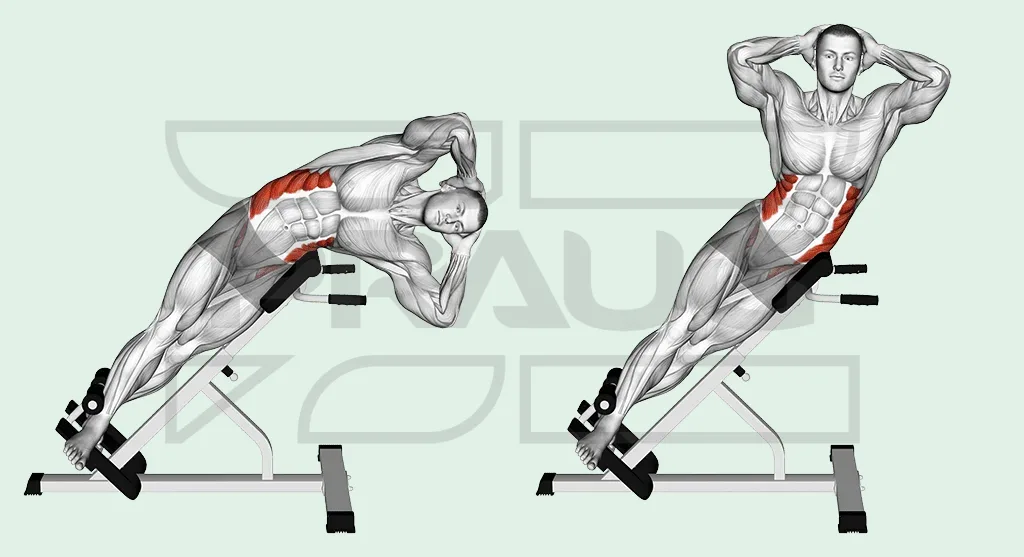
A side bend on a suitable back-extension bench lowers and raises the torso sideways while the hips and feet are supported. The intended task is side bending, with the torso facing sideways throughout the movement.

Certified fitness coach · CQP Instructeur Fitness
Published on
The essentials before you start.
- Choose secure support and a manageable starting demand.
- Describe the intended trunk, hip and pelvic movement.
- Record lever, range and counting method consistently.
- Research measurements do not establish every variation or a local-fat-loss promise.
Exercise facts
- Main muscles
- External and internal obliques, Quadratus lumborum
- Secondary muscles
- Spinal erectors, Rectus abdominis, Transversus abdominis
- Equipment
- Back-extension bench explicitly suitable for side-lying work
What the movement trains
The obliques, quadratus lumborum and other trunk muscles contribute to side bending and support. The side facing upwards has a different demand from the side against the pad. Equipment fit and foot restraint are essential to the setup.
Set up and perform the movement
- Use a bench explicitly suitable for side-lying work, checking its locks, pads and foot restraints. Do not assume every back-extension bench permits this use.
- Practise getting on and off with assistance or nearby secure support if needed.
- Position the hip on the pad with the waist free to move, and secure the feet as instructed for that equipment.
- Keep the torso facing sideways and lower through a small controllable side-bending range.
- Raise towards the intended body alignment without twisting towards the floor or forcing a large bend beyond it.
- End while a secure supported exit remains possible, then use comparable conditions on the other side.
Range, support and control
A fixed foot arrangement copied from another bench may not fit this machine. Arms crossed, hands near the temples, overhead arms and a securely held plate change the lever. None is a required progression and the neck should not be pulled.
What the cited research supports
The cited experiments mapped isometric trunk activity and recorded deep-muscle activity during varied tasks. They did not directly compare this bench side bend with a side plank, or measure its later growth, comfort or injury outcomes.
Variations and alternatives
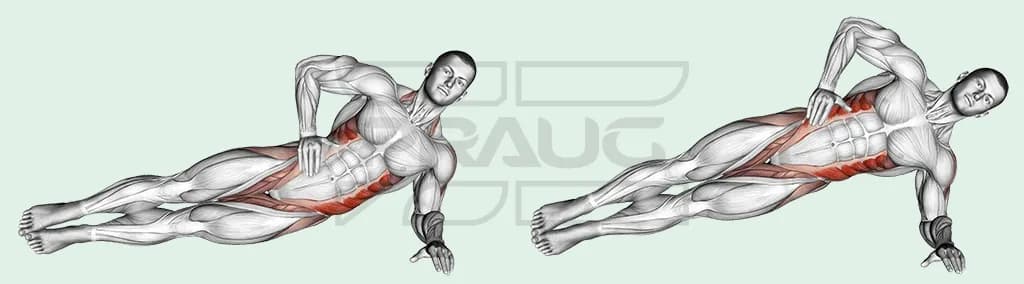
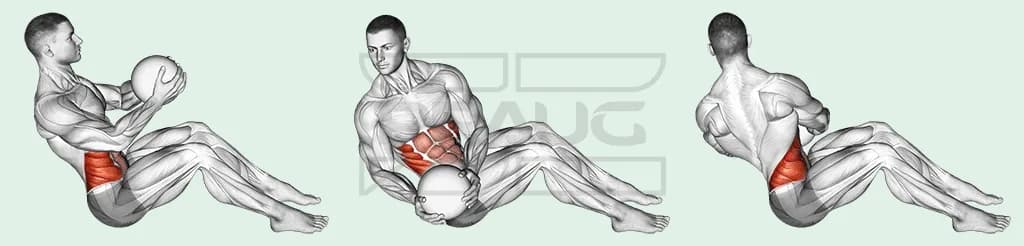
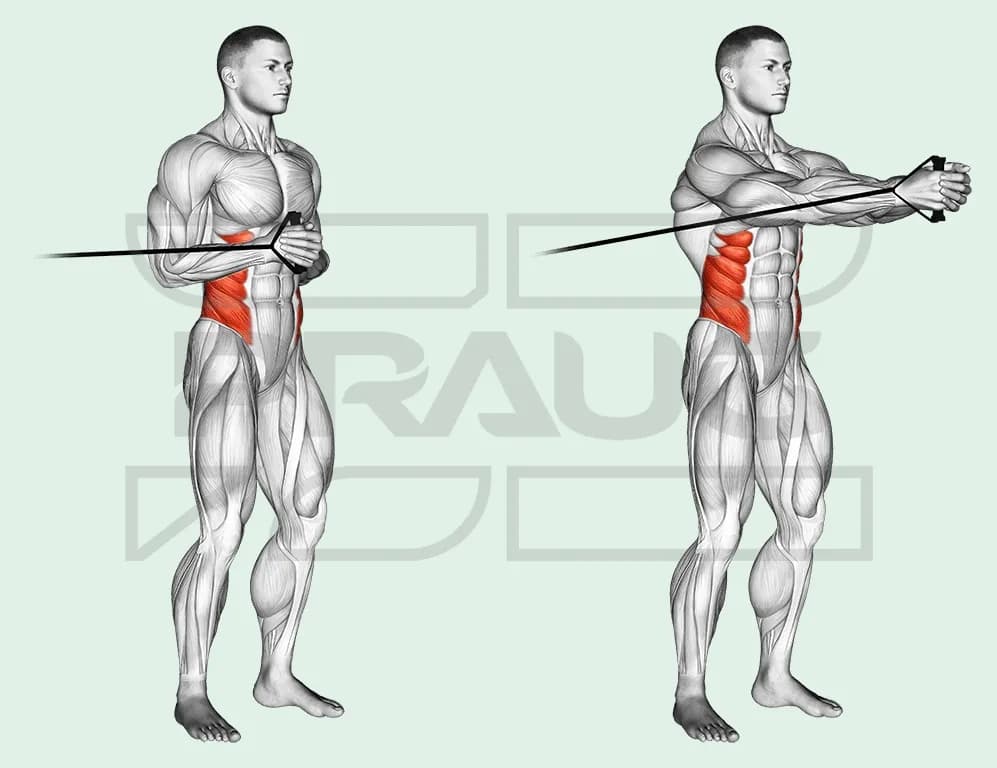
A side plank holds against side bending, while a Russian twist produces a different seated rotational task. A Pallof press resists rotation.
Sets, progression and tracking
One optional example is 2–3 sets of 6–12 controlled repetitions per side. Three sets on each side gives each side three sets. Record pad, foot support, range, arm position and load rather than adding reach or weight automatically.
Frequently asked questions
Is the intended movement a twist?
No. This guide describes sideways trunk bending with the torso facing sideways. Deliberate rotation is a different task.
When should I add demand?
When the intended support, range and effort remain repeatable and the next change is manageable. Record changes rather than comparing different levers as if they were identical.
Sources and limitations
Sources support the passages that cite them. Practical suggestions are coaching choices to adapt to your own situation.
- Anders et al. · 2018 · Isometric trunk force-direction mapping in twenty healthy men. ↗
No dynamic Russian twist or bench side-bend training comparison; no later growth or individual treatment outcome.
- Juker et al. · 1998 · Intramuscular activity during varied trunk and hip tasks in eight adults. ↗
Brief tasks and a small sample; no direct bench-side-bend versus side-plank growth or tolerance comparison.
This general information does not replace individual advice. Zepraug’s limitations.