Training· 3 min read
Leg day: build a foundation with four movements
A leg session benefits from covering different functions rather than stacking similar variations. This coaching template combines a squat, hip hinge, knee flexion and calf work, with adjustments for your experience.

Certified fitness coach · CQP Instructeur Fitness
Published on

The essentials before you start.
- The template combines a squat, hip hinge, knee flexion and calf work.
- Adjust set numbers to your experience and the rest of the week.
- Increase load using comparable technique and effort.
Prepare the session and its effort level
Begin with a few minutes of movement and progressively loaded warm-up sets for the planned exercises. These warm-up sets are not included in the table.
The base example has 11 working sets. If new or returning, one option is 2 sets per exercise, with further reductions if needed. Around 2 repetitions remaining is an optional effort reference, not a validated dose for every beginner or an instruction to deliberately fail. Allow more margin while learning.
Four complementary movements
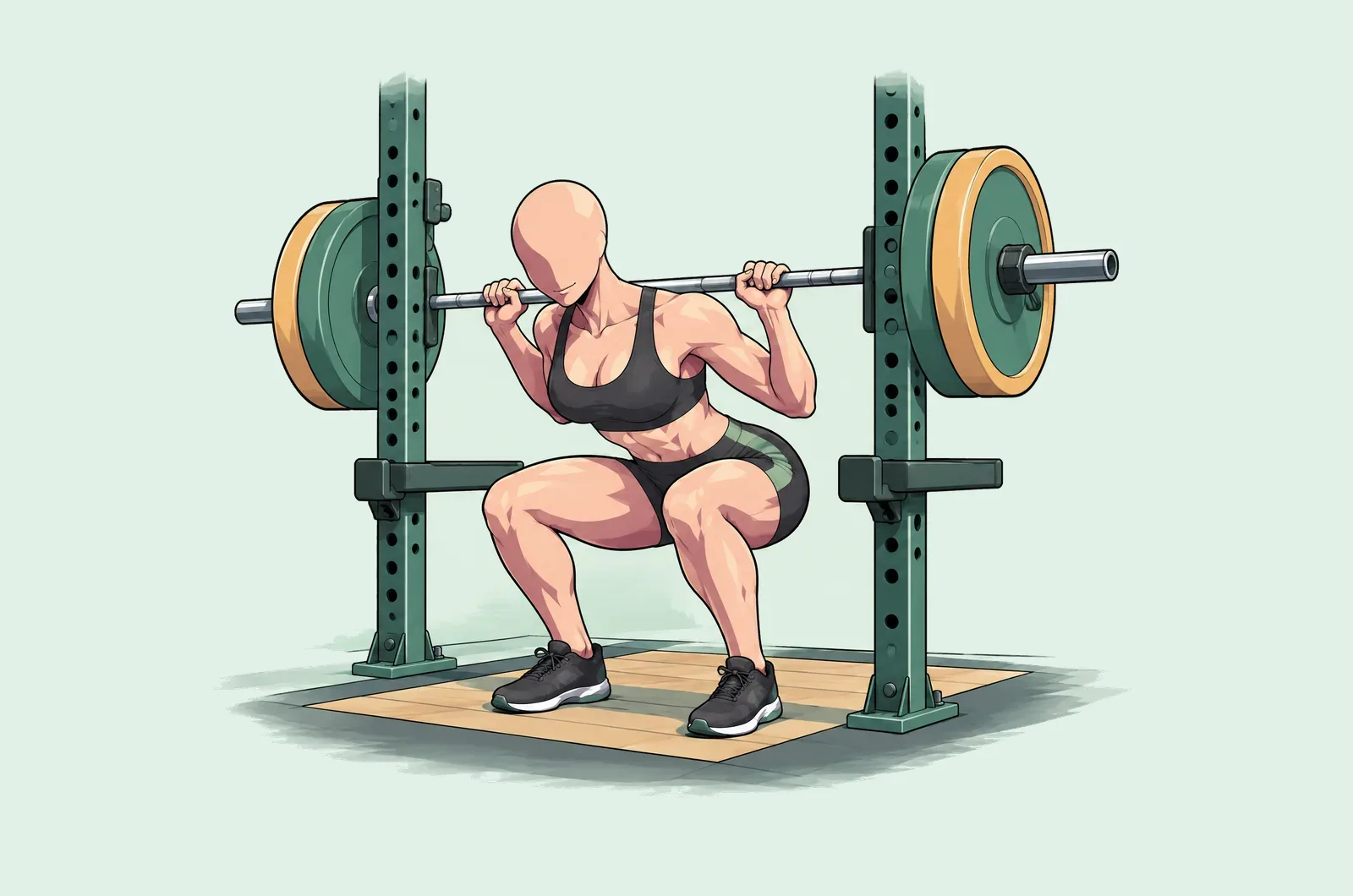
Squatting, hinging, knee flexion and calf work cover different functions. Choose variations you control and adjust loads to your experience.
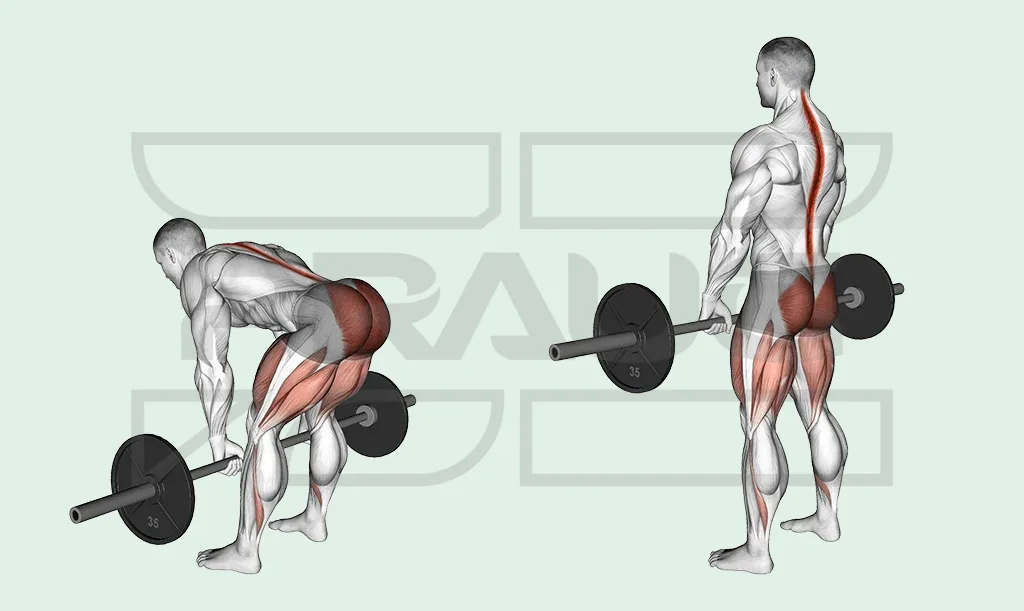
For the Romanian deadlift, move the hips back with weights close to the legs. On a lying leg curl, align the pivot near the knee, place the roller behind the ankles and keep the hips supported. Use stable support for balance on calf raises.
| Movement | Sets | Reps | Rest |
|---|---|---|---|
| Adapted squat | 3 | 6–10 | 2–3 min |
| Romanian deadlift | 3 | 8–12 | 2–3 min |
| Leg curl | 2 | 10–15 | 90–120 s |
| Standing calf raise | 3 | 10–20 | 90–120 s |
Reference: Kubo K et al. · 2019 ↗PubMed Central ↗
 Hip hinge
 Knee flexion
Progress without changing the criteria
When all sets reach the top of the range with comparable range of motion, technique and effort, increase the load slightly. Then build again from the lower end of the range.
Keep or reduce the load if technique deteriorates. Repetitions need to remain comparable enough for the log to describe progress rather than a change in movement.
A practical way to use this
Check equipment and settings before starting. Record the repetitions completed and how hard the sets felt. The suggested progression assumes consistent range of motion and control. Account for leg work elsewhere in your week before adding this template: one session is not a complete weekly programme.
Context and limits
Squats do not cover every hamstring-training need. A hip hinge and knee flexion provide complementary work. A lying leg curl is pictured; a properly adjusted seated machine is another option.
This is a coaching example, not a complete protocol validated by the cited studies or a result guarantee. Adapt it to equipment, experience and symptoms. Adjust for unusual pain and seek assessment if it persists.
Reference: Kubo K et al. · 2019 ↗PubMed Central ↗Singer A et al. · 2024 ↗Robinson ZP et al. · 2024 ↗
From the post to your practice
Explore the carousel.
Explore the visual version of this topic on @zepraug.
Leg day: build a foundation with four movements
The carousel is coming to Instagram. Scheduled for 1 November 2026.
Sources and limitations
Sources support the passages that cite them. Practical suggestions are coaching choices to adapt to your own situation.
- Kubo K et al. · 2019 · Effects of squat training with different depths on lower limb muscle volumes. ↗
Ten-week squat-depth trial in seventeen men; hamstring volume did not clearly increase. Does not test the four-exercise workout presented here.
- PubMed Central · Greater Hamstrings Muscle Hypertrophy but Similar Damage Protection after Training at Long versus Short Muscle Lengths ↗
Within-person trial comparing seated and prone leg curls in twenty healthy adults over twelve weeks. Does not directly compare Romanian deadlifts with leg curls or validate this session.
- Singer A et al. · 2024 · Give it a rest: a systematic review with Bayesian meta-analysis on the effect of inter-set rest interval duration on muscle hypertrophy. ↗
Nine-study synthesis of rest intervals and hypertrophy, with heterogeneous estimates. Does not establish the table’s exact rest periods as universally optimal.
- Robinson ZP et al. · 2024 · Exploring the Dose-Response Relationship Between Estimated Resistance Training Proximity to Failure, Strength Gain, and Muscle Hypertrophy: A Series of Meta-Regressions. ↗
Meta-regressions based on estimated repetitions in reserve. Does not validate exactly two repetitions remaining for every beginner or every exercise.
This general information does not replace individual advice. Zepraug’s limitations.