training2 min read
Machines or free weights: how to choose
Machines do not make a workout less serious, and free weights are not automatically better. The choice depends on the movement, goal, equipment and what you can perform consistently.

Certified fitness coach · CQP Instructeur Fitness
Published on

The essentials before you start.
- No equipment type is superior for every goal.
- Settings, stability and comfort are part of the choice.
- To improve a particular movement, keep practising it too.
How machines and free weights differ
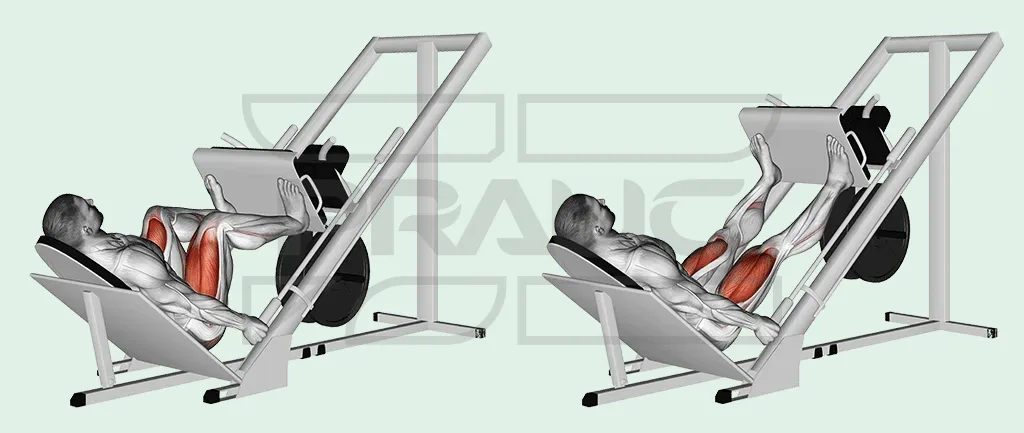
Some machines guide much of the path; free weights create different handling demands. That does not automatically rank their muscle-building value.
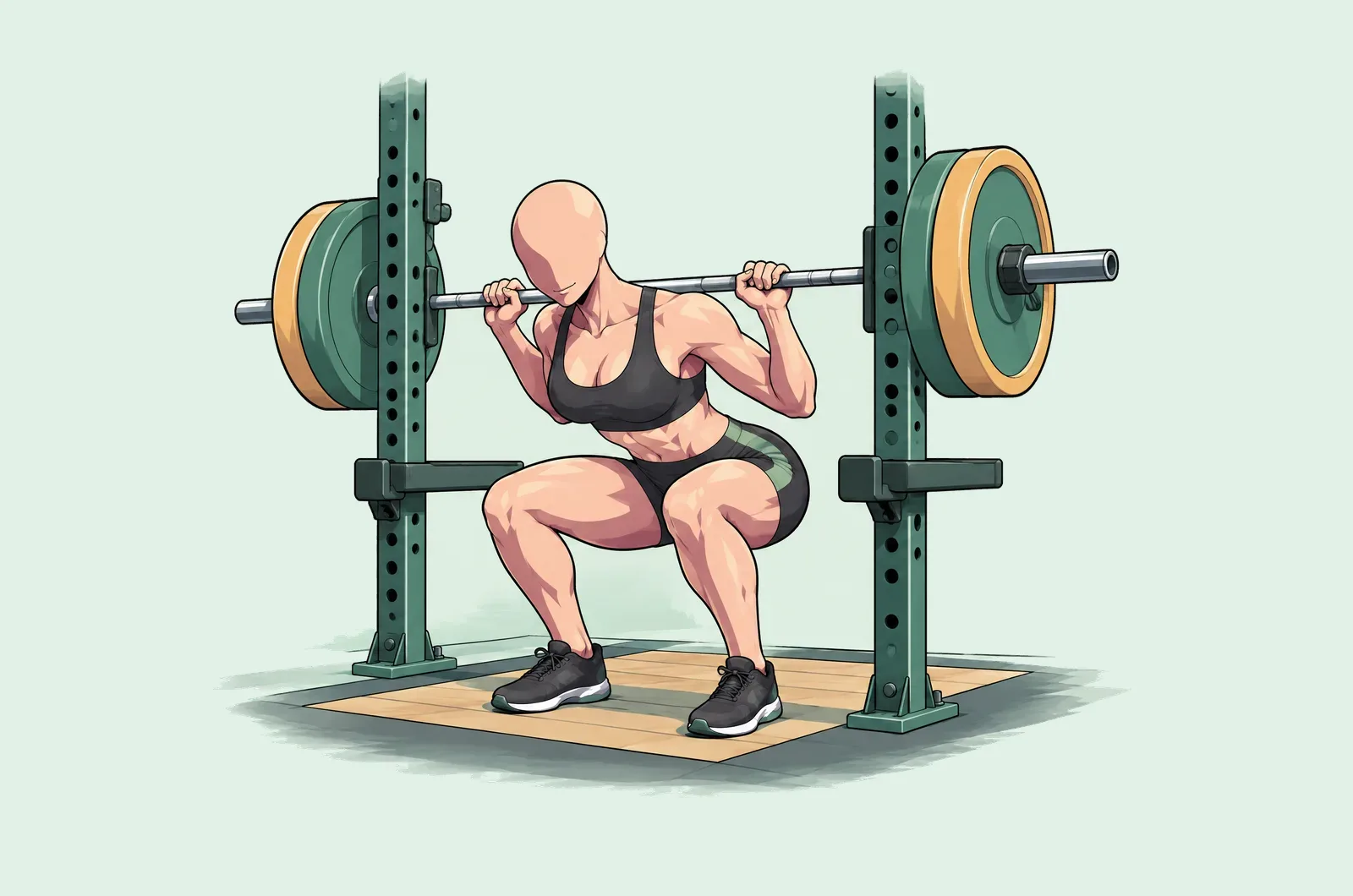
ACSM guidance does not identify one universally superior equipment type. A nine-week study in eight untrained women found no clear regional knee-extensor growth difference between a lunge and an inclined leg press. It did not compare the squat and leg extension pictured here.
Reference: ACSM ↗Amanuma MT et al. · 2025 ↗

Choose for the movement and your comfort
Machines can demand substantial effort. Free weights are not effective merely because they are unstable or impressive.
- Target muscle and movement
- Stability and comfort
- Available equipment and progression
Keep practising the movement you want to improve
To improve a barbell squat, keep practising it. Machines can add work without replacing every skill of the tested movement.
- Comfortable range
- Stable support
- Controlled load
A practical way to use this
Compare options that fill the same role in your programme. Consider settings, comfort, stability and whether progression is easy to track. A machine's displayed weight cannot be directly compared with another machine or a dumbbell. Keep reference points specific to the exercise you choose.
Context and limits
Combine tools when useful. Tracked progress and a suitable exercise matter more than an equipment war.
The cover shows different tools, not scientifically equivalent exercises. The illustrated row is not the quadriceps trial protocol.
Reference: ACSM ↗Amanuma MT et al. · 2025 ↗
From the post to your practice
Explore the carousel.
Explore the visual version of this topic on @zepraug.
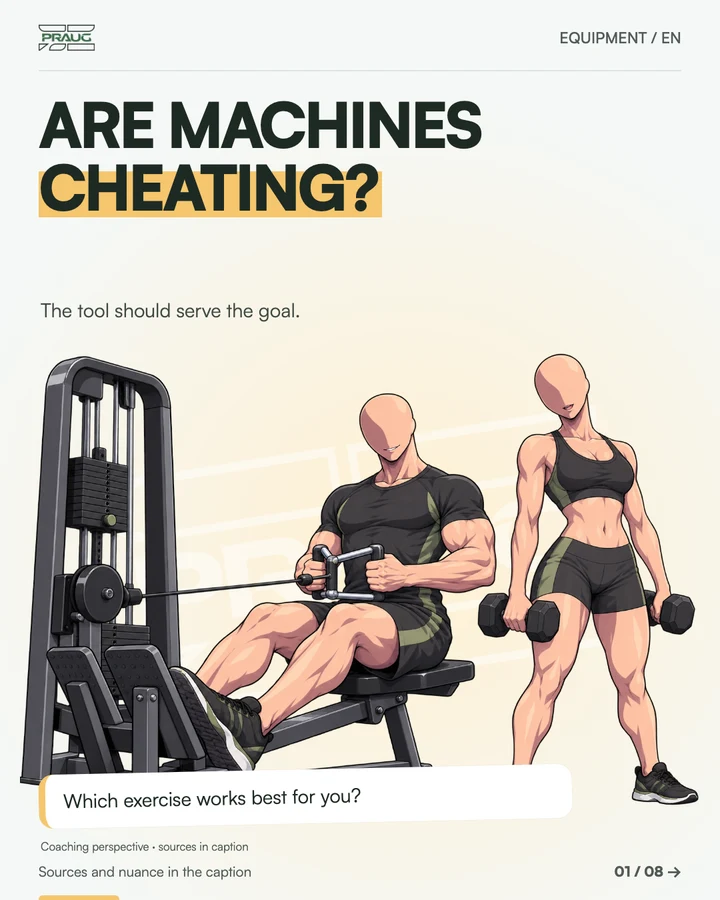
Machines or free weights: how to choose
The carousel is coming to Instagram. Scheduled for 15 November 2026.
Sources and limitations
Sources support the passages that cite them. Practical suggestions are coaching choices to adapt to your own situation.
- ACSM · Updated resistance training guidelines, 2026 ↗
ACSM official summary for healthy adults: equipment choice did not consistently determine outcomes. Does not imply that every machine and free-weight exercise is equivalent.
- Amanuma MT et al. · 2025 · Comparable regional hypertrophy of the knee extensor muscles in response to resistance training with machines versus free weights: a randomized within-subject approach. ↗
Nine-week within-person trial in eight young untrained women comparing a lunge with an inclined leg press. Regional knee-extensor measurements do not validate a leg-extension-versus-squat comparison or all equipment.
This general information does not replace individual advice. Zepraug’s limitations.