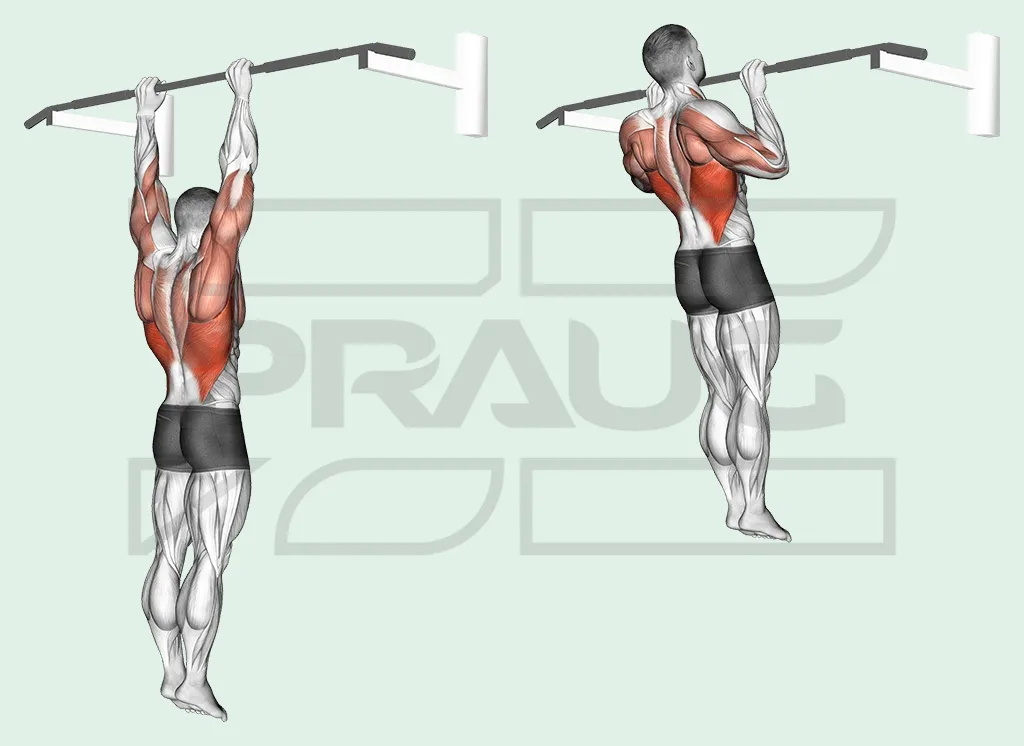
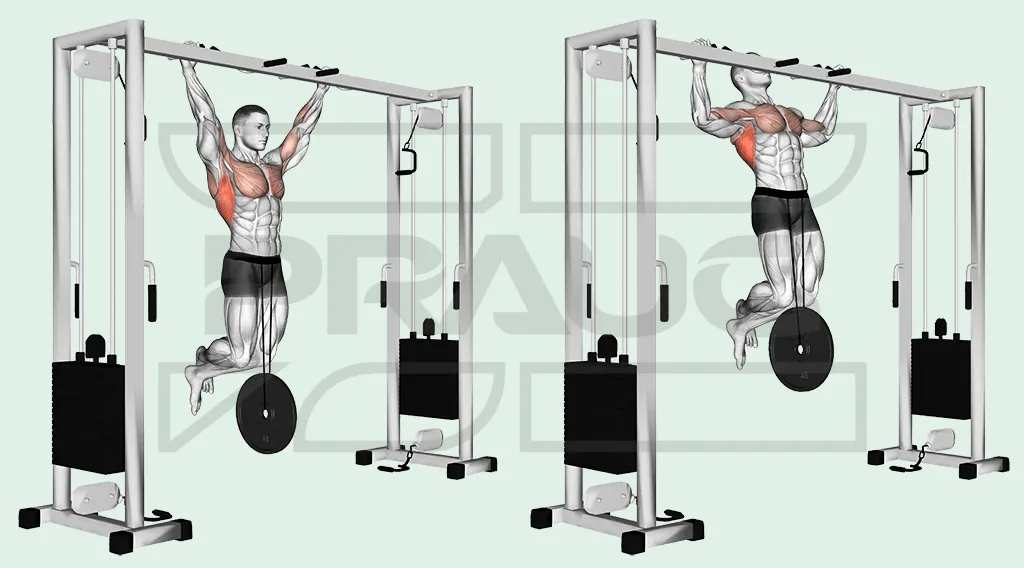
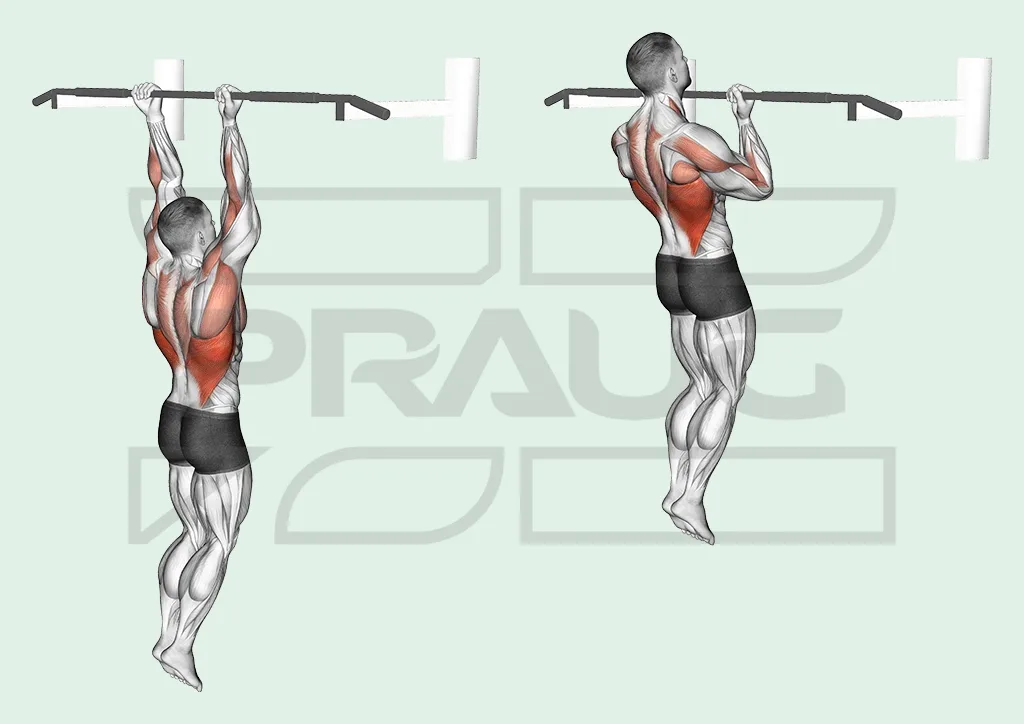
Training· 4 min read
L-sit pull-up: setup, technique and progression
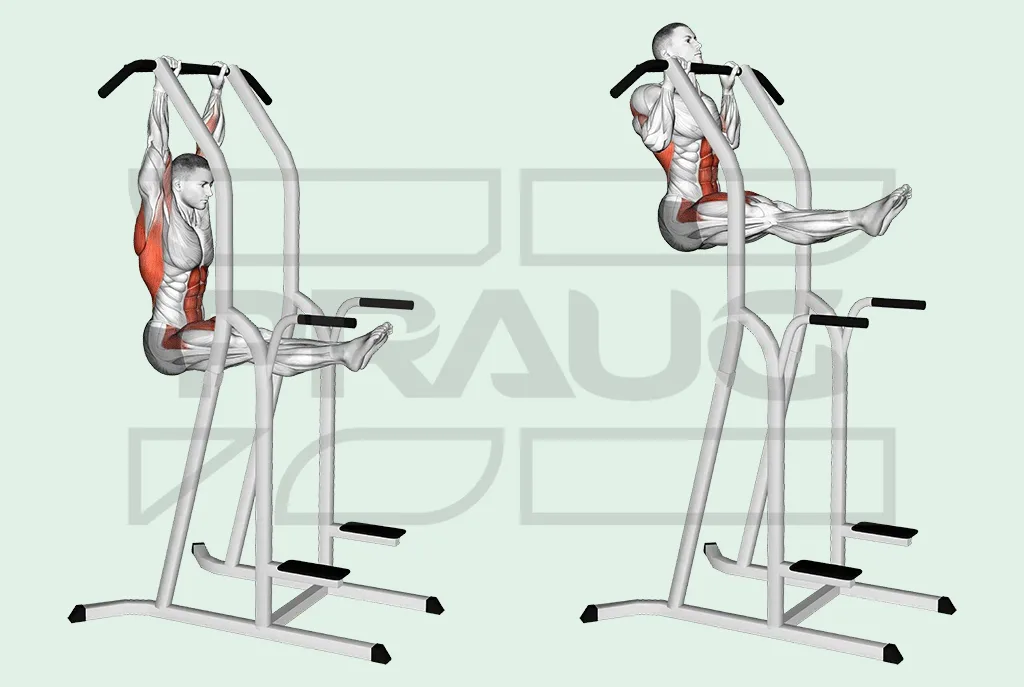
An L-sit pull-up is a vertical bodyweight pull with the legs held forwards, aiming towards an L-shaped position. Choose a secure bar or handles and a level of assistance or loading that lets you control the start, pull, return and dismount.

Certified fitness coach · CQP Instructeur Fitness
Published on
The essentials before you start.
- Use a secure setup and a load or assistance you can control.
- Keep the intended support, range and effort comparable between sessions.
- Variations change the task; acute activity does not rank long-term growth.
- Adapt the example workload to other training and recovery.
Exercise facts
- Main muscles
- Latissimus dorsi, Rectus abdominis, Hip flexors
- Secondary muscles
- Teres major, Middle and lower trapezius, Rhomboids, Biceps, Obliques, Quadriceps
- Equipment
- Secure pull-up bar
What the movement trains
Holding the legs forwards adds hip-flexor, abdominal and quadriceps demands alongside pulling. It is a different task, not a proven way to make every pull-up muscle grow more.
Set up and perform the movement
- Inspect the load-bearing bar or handles and plan a secure way to reach and leave them. Use suitable assistance or stable purpose-built access support if needed.
- Use a leg position you can retain, beginning with bent knees if appropriate. Raising the legs must not turn the start into a swing.
- Begin with a controlled overhead arm position and a steady trunk. Let the shoulder blades move with the pull rather than forcing them into a fixed depressed position.
- Bring the elbows down as they bend and lift the body smoothly. Use a repeatable finishing point instead of throwing the head forwards to force chin clearance.
- Lower under control through the chosen arm range without dropping into an uncontrolled hang or using a leg kick to start the next repetition.
- Finish on the planned support before releasing the grip. Stop the set when the intended range or body position is no longer repeatable.
What the cited research does and does not show
The cited pull-up activity study did not test an L position. The hanging-leg-raise analysis tested a different exercise, not an L-sit pull-up. Neither validates its progression ladder or a clinical spinal-load threshold.
Variations and alternatives
Use a bent-knee hold first if helpful. Separate hanging leg-control practice from assisted pulling, then combine manageable versions. Extending one leg or both changes the lever; no ten-second floor L-sit or exact pull-up count is a validated readiness test. Advanced archer or weighted versions are optional skills, not the required next stage.
Sets, progression and tracking
One coaching option is a few controlled sets of 2–5 repetitions with a leg position you can maintain. Shorten the lever or use suitable assistance before extending a set after control is lost. Record both leg position and pulling range.
When to reduce the demand or change the setup
A change in range, support, body angle or assistance changes the comparison. Reduce the demand or finish the set when you cannot retain the movement you intended. An equipment label or a beginner/advanced category does not establish individual suitability.
Stop for sharp pain and seek appropriate individual advice for persistent symptoms. A new handle, support or variation does not diagnose or treat the cause.
Browse the back collection for other pulling and trunk tasks, or the back programme to choose work within a whole week rather than adding every guide together.
Frequently asked questions
Must I hold a floor L-sit for ten seconds first?
No exact readiness threshold is validated by these sources. Practise manageable hanging leg control and pulling separately, then combine suitable versions.
Does the leg-raise study directly measure an L-sit pull-up?
No. Hanging leg raises are a different task, so its loading estimates are not an individual limit for this variation.
When should I progress?
When the chosen movement and effort are repeatable. Change one demand deliberately and log any setup change.
Can this treat back or shoulder pain?
The guide and its cited activity studies do not establish an individual treatment. Persistent symptoms need suitable assessment.
Sources and limitations
Sources support the passages that cite them. Practical suggestions are coaching choices to adapt to your own situation.
- Youdas and al. · 2010 · Electrical activity during overhand, underhand and rotating-handle pull-ups. ↗
Acute tests, not L-sit or fixed-neutral-grip training outcomes.
- McGill and al. · 2015 · Trunk activity and estimated spine loading in anterior-chain tasks. ↗
Hanging leg raises were tested, not L-sit pull-ups or individual clinical load limits.
This general information does not replace individual advice. Zepraug’s limitations.