Training· 4 min read
Weighted pull-up: setup, technique and progression
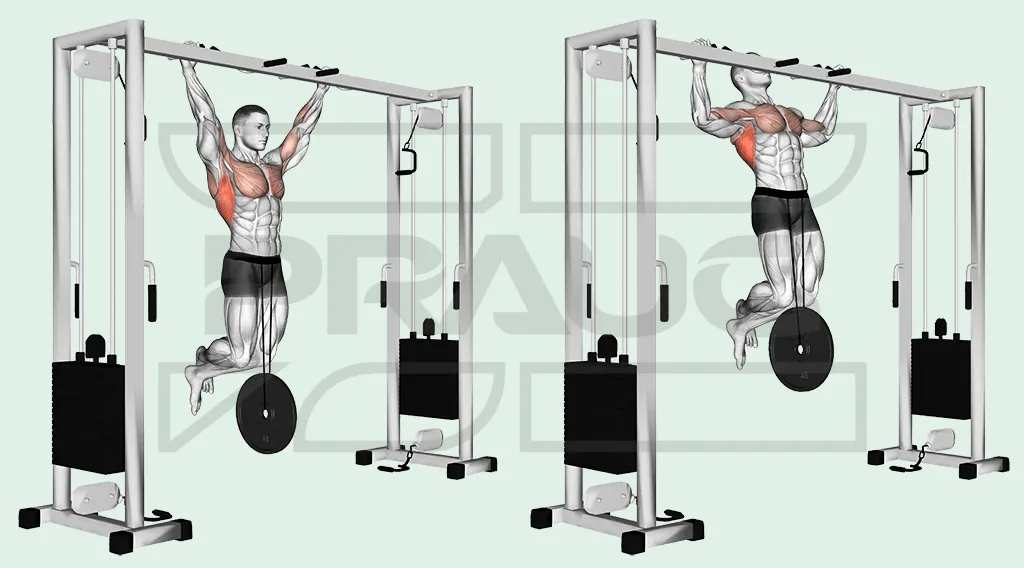
A weighted pull-up is a vertical bodyweight pull with a securely attached additional load. Choose a secure bar or handles and a level of assistance or loading that lets you control the start, pull, return and dismount.

Certified fitness coach · CQP Instructeur Fitness
Published on
The essentials before you start.
- Use a secure setup and a load or assistance you can control.
- Keep the intended support, range and effort comparable between sessions.
- Variations change the task; acute activity does not rank long-term growth.
- Adapt the example workload to other training and recovery.
Exercise facts
- Main muscles
- Latissimus dorsi, Teres major, Middle and lower trapezius
- Secondary muscles
- Rhomboids, Biceps, Brachialis, Brachioradialis, Forearms, Abdominal wall
- Equipment
- Secure pull-up bar, Suitable dipping belt
What the movement trains
Added resistance increases the load to move while the back, elbow flexors and grip contribute to the pull. The loading method also changes clearance and swing control. Body mass plus external mass describes the lifted system more usefully than external plates alone.
Set up and perform the movement
- Inspect the load-bearing bar or handles and plan a secure way to reach and leave them. Use suitable assistance or stable purpose-built access support if needed.
- Attach the load securely using equipment intended for it. Check clearance, bar capacity and the mount and dismount before leaving the support.
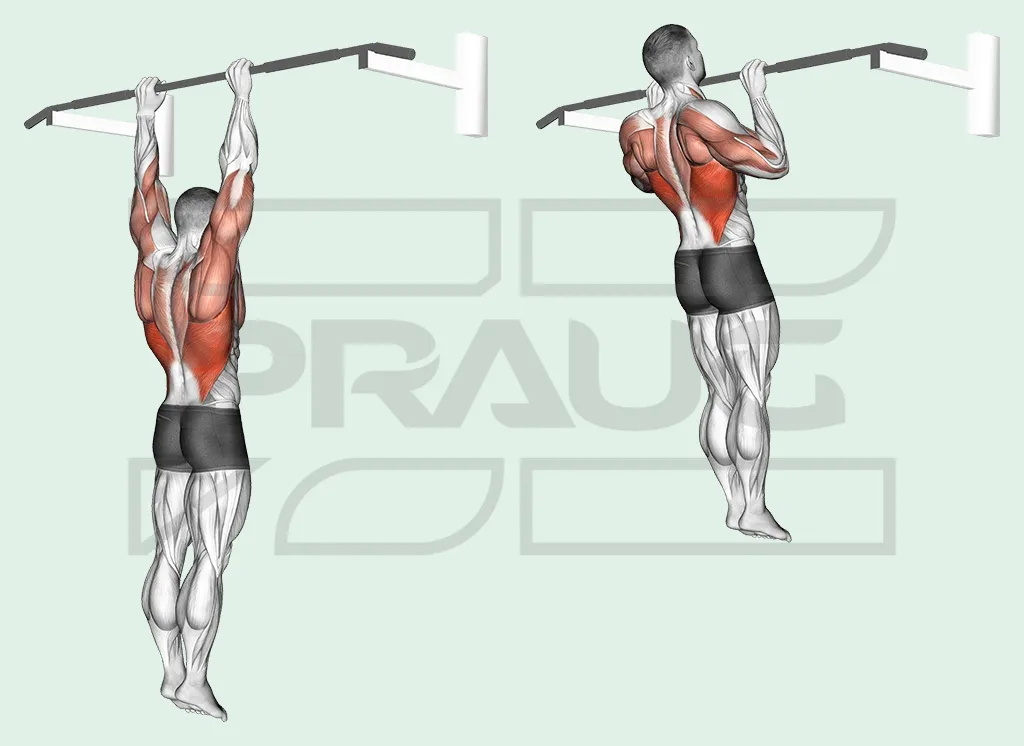
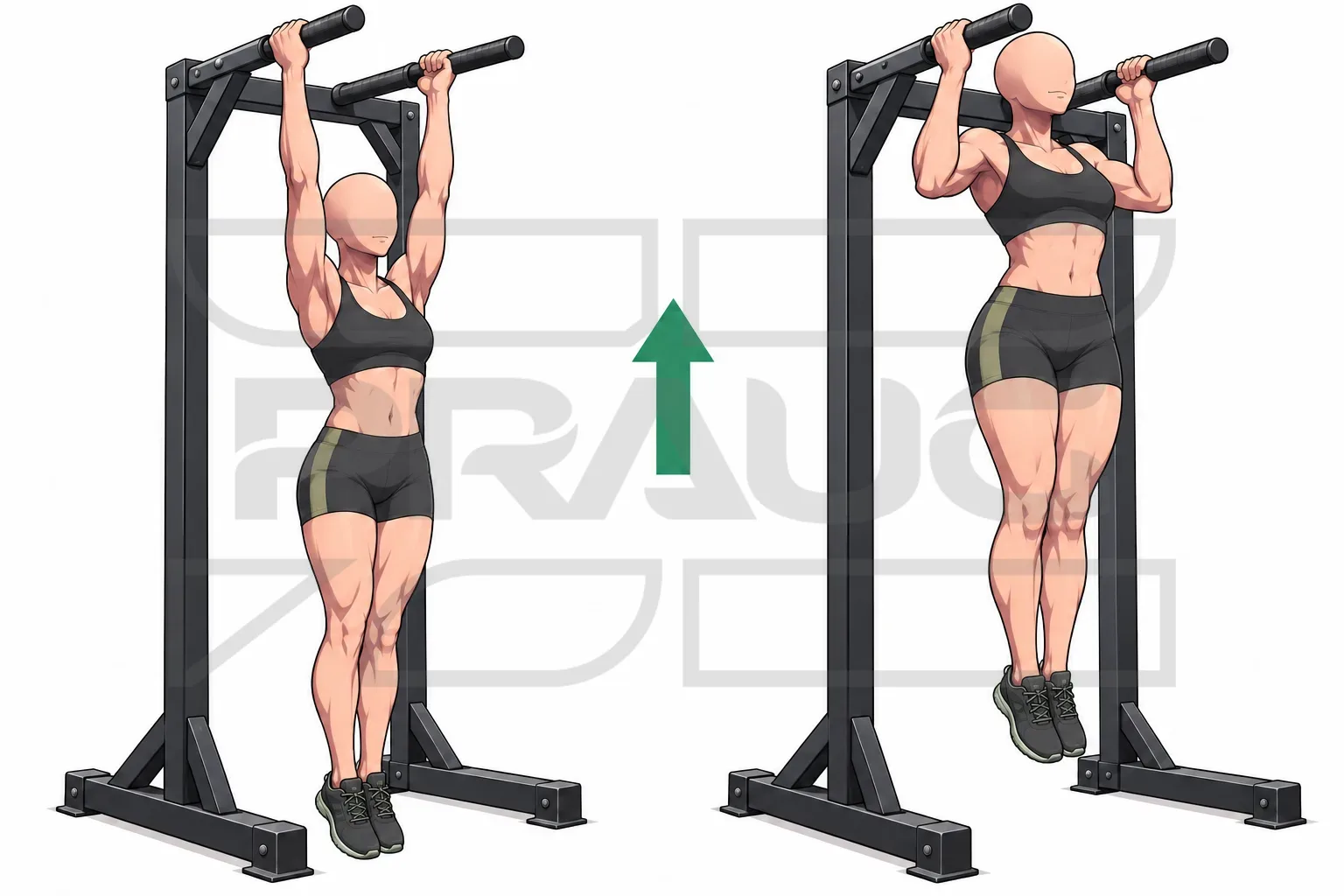
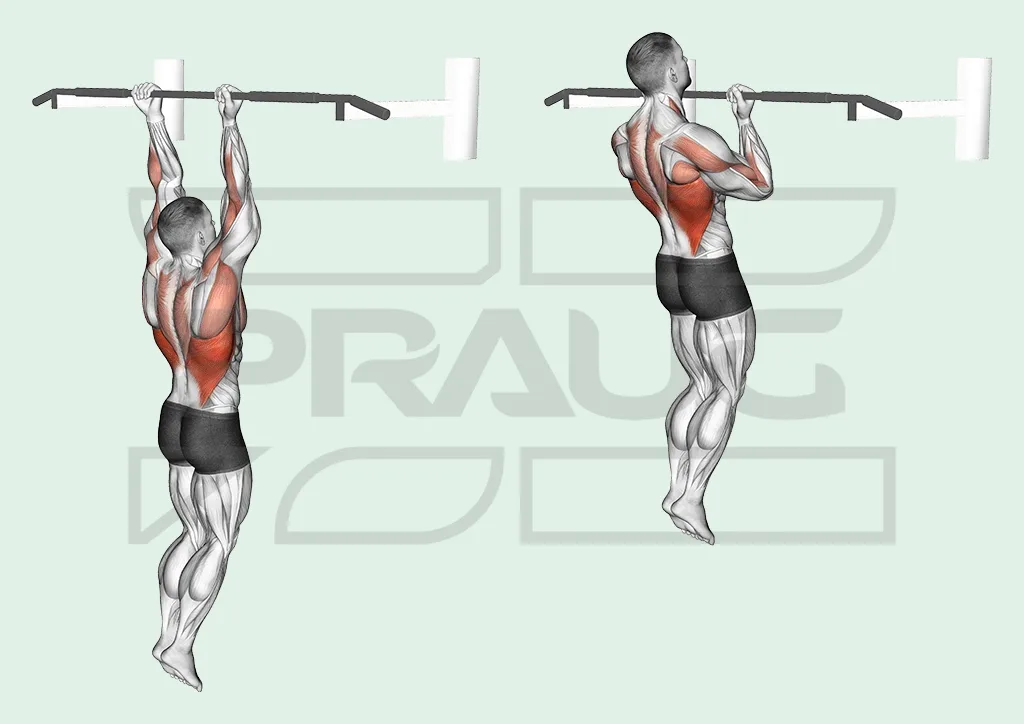
- Begin with a controlled overhead arm position and a steady trunk. Let the shoulder blades move with the pull rather than forcing them into a fixed depressed position.
- Bring the elbows down as they bend and lift the body smoothly. Use a repeatable finishing point instead of throwing the head forwards to force chin clearance.
- Lower under control through the chosen arm range without dropping into an uncontrolled hang or using a leg kick to start the next repetition.
- Finish on the planned support before releasing the grip. Stop the set when the intended range or body position is no longer repeatable.
What the cited research does and does not show
The eight-week trial trained bodyweight pull-ups with measured velocity loss, not weighted pull-ups. It does not prescribe a weighted set scheme or show that everyone should stop at an estimated twenty-five percent velocity loss without a measuring device.
Variations and alternatives
Establish repeatable bodyweight work and a controlled start and finish before adding a small load for a clear goal. Ten repetitions is not a compulsory loading threshold. A suitable belt or fitted weighted vest needs its own secure attachment and dismount; do not improvise a dumbbell grip with the feet as an automatic alternative.
Sets, progression and tracking
An adjustable example is 3–5 sets of 3–6 repetitions with adequate rest and repetitions still possible. Choose less work when starting and a load you can attach and put down securely. Log body mass, added mass, grip and range; change one demand at a time.
When to reduce the demand or change the setup
A change in range, support, body angle or assistance changes the comparison. Reduce the demand or finish the set when you cannot retain the movement you intended. An equipment label or a beginner/advanced category does not establish individual suitability.
Stop for sharp pain and seek appropriate individual advice for persistent symptoms. A new handle, support or variation does not diagnose or treat the cause.
Browse the back collection for other pulling and trunk tasks, or the back programme to choose work within a whole week rather than adding every guide together.
Illustrated positions and options
These show example positions and equipment. An illustration is not a required range, individual loading instruction or validation of a particular support.
Illustrated option 1
Frequently asked questions
Must I reach ten bodyweight repetitions before adding weight?
That is not a universal threshold established by the cited trial. Repeatable control, a secure loading setup and a clear goal matter; added load is optional.
Does the velocity-loss study prescribe my weighted sets?
No. It trained bodyweight pull-ups with measured repetition velocity, not this weighted set scheme.
When should I progress?
When the chosen movement and effort are repeatable. Change one demand deliberately and log any setup change.
Can this treat back or shoulder pain?
The guide and its cited activity studies do not establish an individual treatment. Persistent symptoms need suitable assessment.
Sources and limitations
Sources support the passages that cite them. Practical suggestions are coaching choices to adapt to your own situation.
- Sánchez-Moreno and al. · 2020 · Bodyweight pull-up training with different measured velocity-loss limits. ↗
Twenty-nine trained men; not weighted training, hypertrophy or an equipment-free velocity prescription.
This general information does not replace individual advice. Zepraug’s limitations.