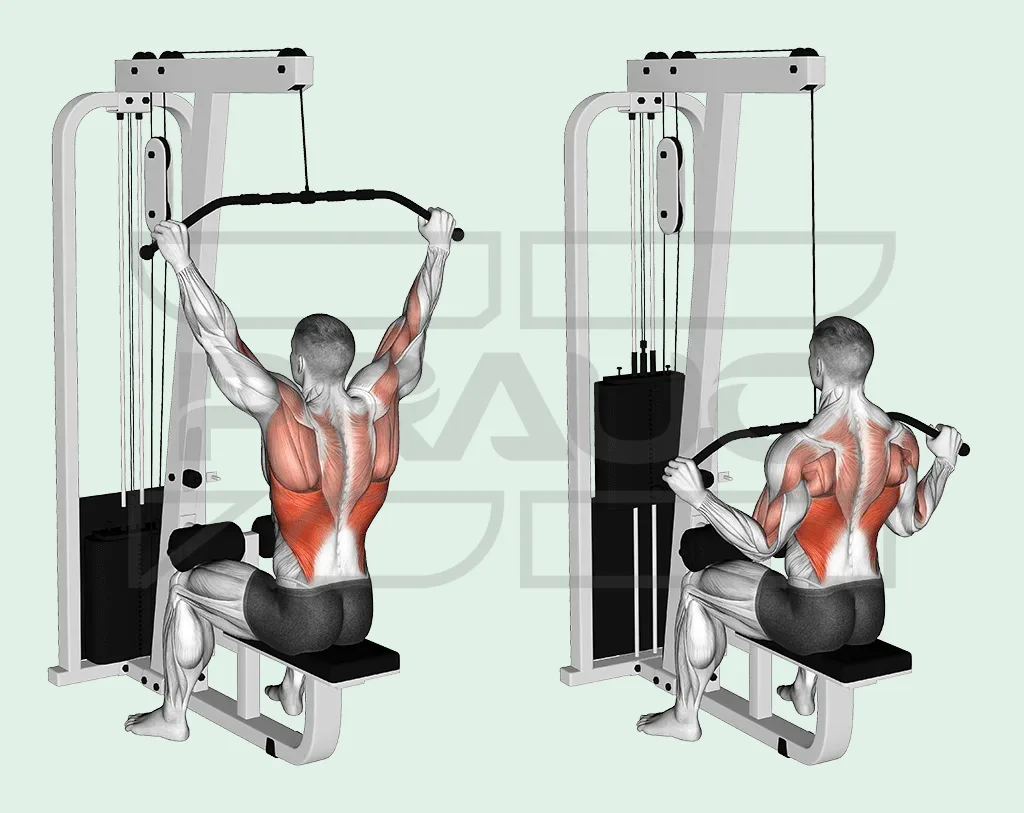
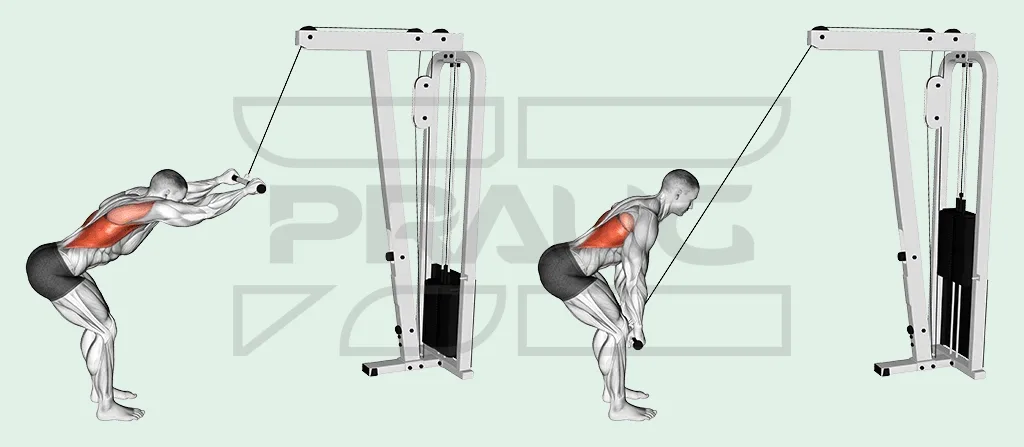
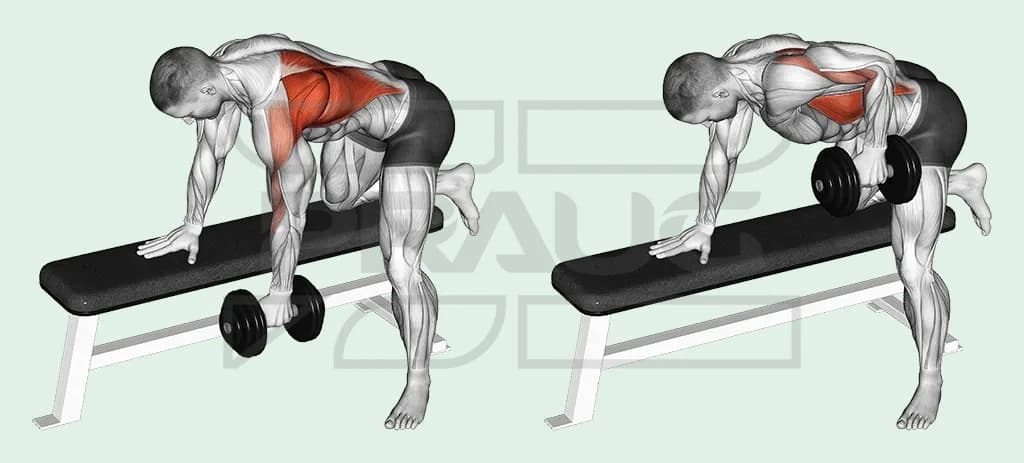
Training· 4 min read
Single-arm cable pulldown: setup, technique and progression
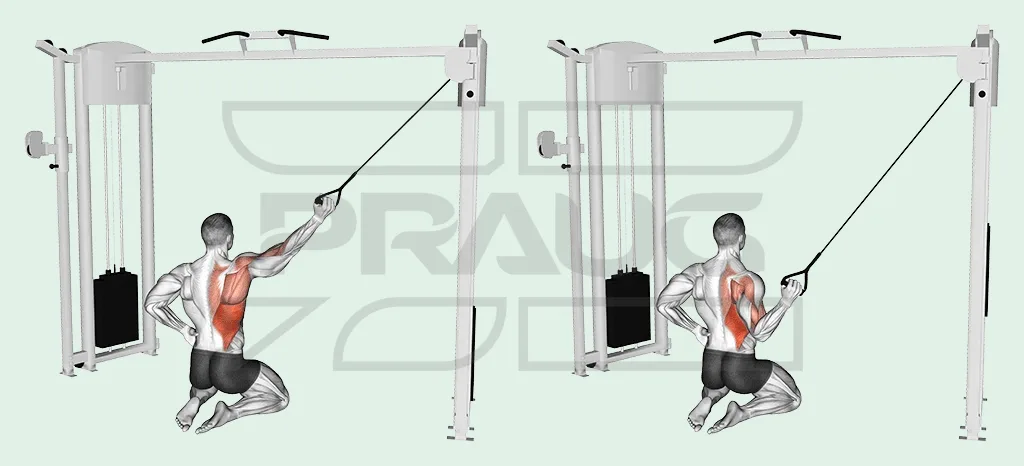
A single-arm cable pulldown brings one high-cable handle towards the side of the torso while the elbow bends. Kneeling, standing and seated setups offer different support. Working one side at a time makes its performance easier to record, but does not automatically increase range or correct an imbalance.

Certified fitness coach · CQP Instructeur Fitness
Published on
The essentials before you start.
- Use a secure setup and a load or assistance you can control.
- Keep the intended support, range and effort comparable between sessions.
- Variations change the task; acute activity does not rank long-term growth.
- Adapt the example workload to other training and recovery.
Exercise facts
- Main muscles
- Latissimus dorsi, Teres major
- Secondary muscles
- Rhomboids, Lower trapezius, Rear deltoids, Biceps, Brachialis, Obliques
- Equipment
- High cable pulley, Single cable handle
What the movement trains
The latissimus dorsi and teres major contribute to moving the upper arm, while elbow flexors assist and the muscles around the shoulder blade coordinate the pull. The trunk resists unwanted rotation or side bending. One-arm training does not establish that the opposite side receives no stabilising demand.
Set up and perform the movement
- Check a suitable high pulley, single handle and working space. Choose a light initial load and a controlled way to return it.
- Use both knees or a half-kneeling stance on suitable support, or another stable position intended for the station.
- Start with the working arm reaching overhead in a range you can control. Keep the trunk steady and take a comfortable neutral or overhand grip.
- Bring the elbow down towards the side as it bends, allowing the shoulder blade to move rather than fixing it permanently down.
- Stop before turning or leaning the torso becomes the main way to move the handle. Do not force the elbow behind the body to chase a lower finish.
- Return smoothly to the same overhead range. Set the load down securely and use comparable conditions on the other side.
What the cited research does and does not show
The unilateral-versus-bilateral synthesis did not specifically study back growth from these pulldowns. The older training trial involved post-menopausal women and measured lean tissue and strength outcomes rather than isolated lat growth. Neither proves one-arm superiority or prescribes extra work for a side that performs differently.
Variations and alternatives
Standing split stance, kneeling and supported seated versions need different load and pulley choices. Independent machine handles are not identical to a free cable. A straight-arm pulldown retains a nearly constant elbow angle and is a different shoulder task.
Sets, progression and tracking
One example is 2–4 sets of 10–15 repetitions per side. Three sets per side means three for each arm, not six received by each arm. Compare several sessions with the same support, grip, range and effort before deciding that a difference needs an adjustment. Do not automatically double the work on one side.
When to reduce the demand or change the setup
A change in range, support, body angle or assistance changes the comparison. Reduce the demand or finish the set when you cannot retain the movement you intended. An equipment label or a beginner/advanced category does not establish individual suitability.
Stop for sharp pain and seek appropriate individual advice for persistent symptoms. A new handle, support or variation does not diagnose or treat the cause.
Browse the back collection for other pulling and trunk tasks, or the back programme to choose work within a whole week rather than adding every guide together.
Frequently asked questions
Should I automatically add sets to the weaker side?
First compare repeatable conditions over several sessions. A single difference is not a diagnosis or a reason to double the work.
Is one-arm training proven better for back growth?
The cited synthesis and population-specific trial do not establish that for this exercise.
When should I progress?
When the chosen movement and effort are repeatable. Change one demand deliberately and log any setup change.
Can this treat back or shoulder pain?
The guide and its cited activity studies do not establish an individual treatment. Persistent symptoms need suitable assessment.
Sources and limitations
Sources support the passages that cite them. Practical suggestions are coaching choices to adapt to your own situation.
- Kassiano and al. · 2025 · Synthesis of unilateral and bilateral training outcomes. ↗
Few trials with moderate bias concerns; no specific back-growth comparison for this pulldown.
- Janzen and al. · 2006 · Unilateral and bilateral training in post-menopausal women. ↗
Lean tissue and strength outcomes in a specific population, not isolated lat growth in trained lifters.
This general information does not replace individual advice. Zepraug’s limitations.