Training· 4 min read
Straight-arm cable pulldown: setup, technique and progression
Other names: Standing cable pullover
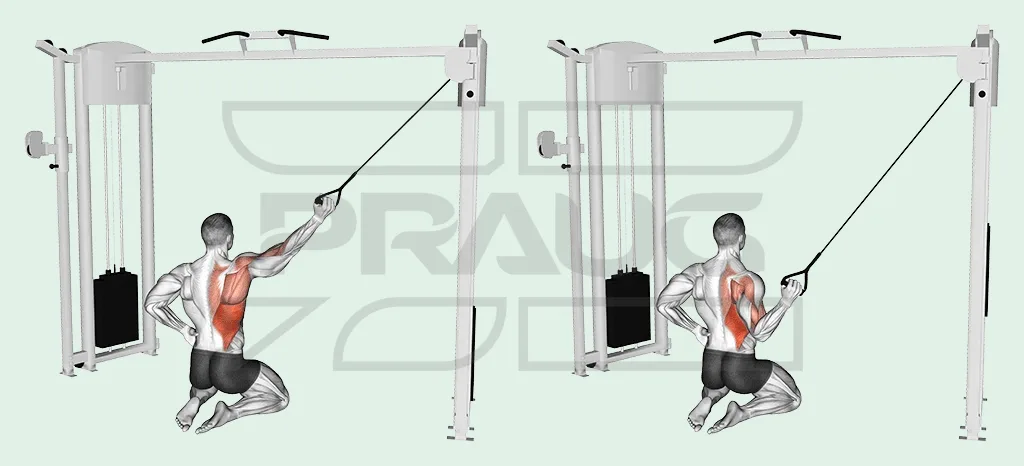
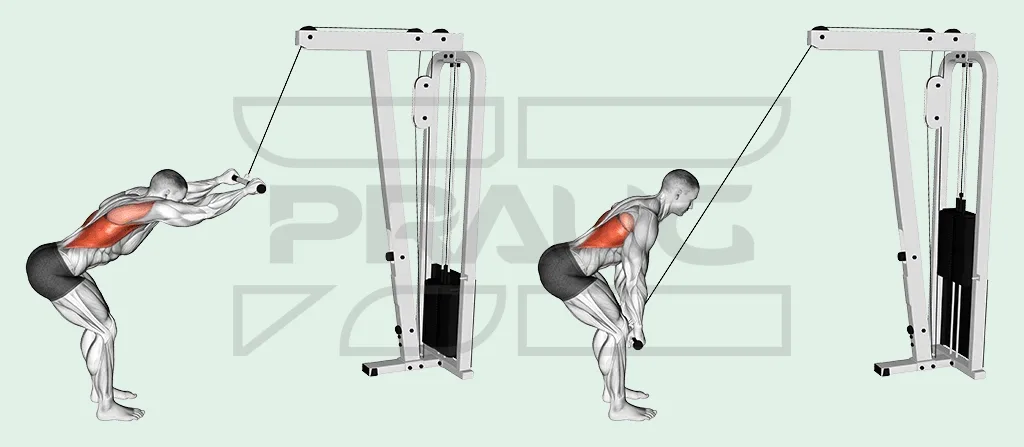
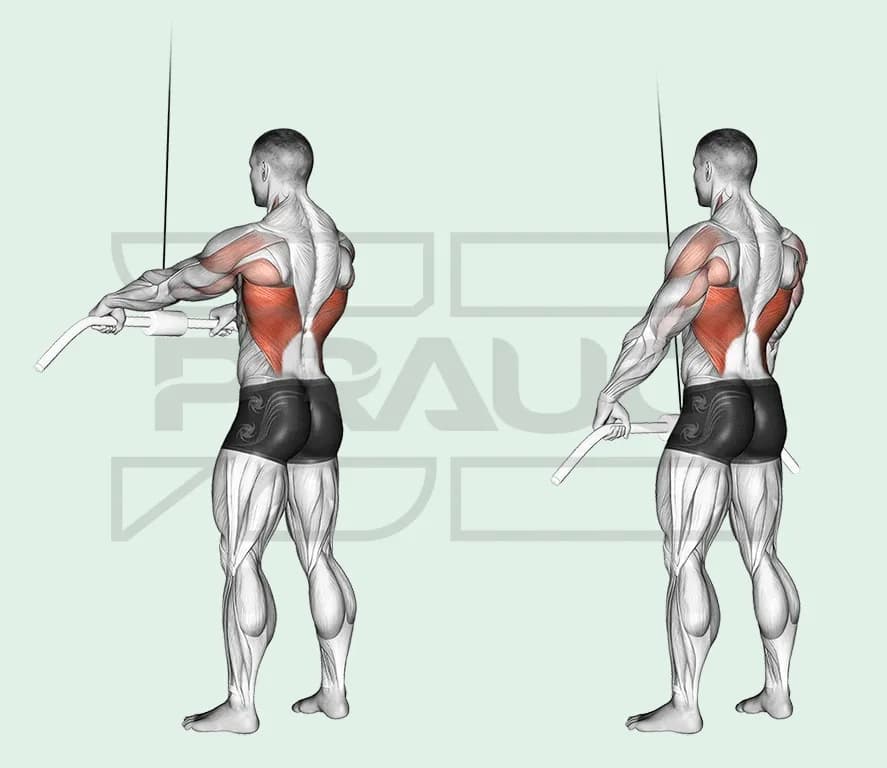
A straight-arm cable pulldown, also called a standing cable pullover, brings a high-cable attachment towards the thighs while the elbow angle stays nearly constant. It emphasises shoulder movement rather than repeated elbow bending. The lats contribute, but the exercise does not isolate them or establish that the arms are inactive.

Certified fitness coach · CQP Instructeur Fitness
Published on
The essentials before you start.
- Use a secure setup and a load or assistance you can control.
- Keep the intended support, range and effort comparable between sessions.
- Variations change the task; acute activity does not rank long-term growth.
- Adapt the example workload to other training and recovery.
Exercise facts
- Main muscles
- Latissimus dorsi, Teres major
- Secondary muscles
- Long head of triceps, Pectoralis major, Rear deltoids, Abdominal wall
- Equipment
- High cable pulley, Rope or straight-bar attachment
What the movement trains
The latissimus dorsi, teres major and other shoulder muscles contribute as the upper arms move towards the torso. The long head of the triceps can contribute at the shoulder and help hold the elbow position. The trunk holds the body against the cable. Grip and arm-position demands remain even with little elbow movement.
Set up and perform the movement
- Check a suitable high pulley and bar or rope. Choose a light setting and a clear space where the attachment cannot strike the body.
- Face the pulley, hold the attachment securely and step back under control. Use stable feet, comfortable knees and a slight hip hinge if needed.
- Start with the arms reaching forwards or overhead in a controlled shoulder range. Keep a small elbow bend that you can retain.
- Move the upper arms down towards the sides as the attachment travels towards the thighs. Let the shoulder blades move with the arms.
- Keep the torso steady instead of repeatedly leaning backwards, and do not turn the movement into an elbow pressdown.
- Return smoothly to the same shoulder range without being pulled into an uncontrolled stretch. Put the stack down with control.
What the cited research does and does not show
The review includes other pullover setups, not a direct test of this standing cable version. The pre-exhaustion experiment did not establish that doing pullovers before rows improves the later growth of trained lifters. Use these sources as limited context, not proof that this exercise always belongs first or last.
Variations and alternatives
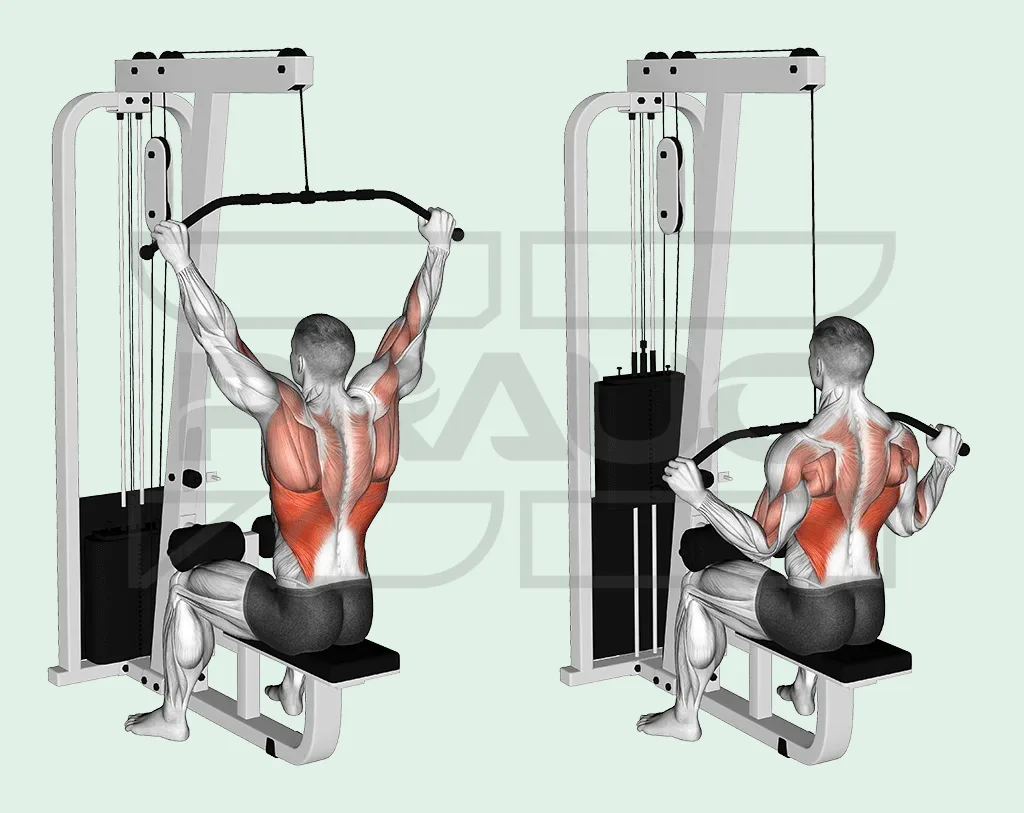
A rope allows a different hand path from a rigid bar. Kneeling or single-arm work changes support and the pulling angle; reset the pulley and load accordingly. A more hinged torso changes the task rather than automatically increasing lat involvement. A single-arm pulldown also bends the elbow and is a different option.
Sets, progression and tracking
One coaching option is 2–3 sets of 12–20 repetitions after a main pull. Choose less or another order when appropriate. Leave repetitions possible while learning. Record attachment, pulley, torso position and range; changing these makes stack numbers harder to compare.
When to reduce the demand or change the setup
A change in range, support, body angle or assistance changes the comparison. Reduce the demand or finish the set when you cannot retain the movement you intended. An equipment label or a beginner/advanced category does not establish individual suitability.
Stop for sharp pain and seek appropriate individual advice for persistent symptoms. A new handle, support or variation does not diagnose or treat the cause.
Browse the back collection for other pulling and trunk tasks, or the back programme to choose work within a whole week rather than adding every guide together.
Illustrated positions and options
These show example positions and equipment. An illustration is not a required range, individual loading instruction or validation of a particular support.
Illustrated option 1
Frequently asked questions
Does a straight-arm pulldown remove all arm work?
No. Keeping a nearly fixed elbow angle reduces repeated elbow bending, but the grip and muscles holding the arm position still contribute.
Should I pre-exhaust the lats before rowing?
That is an optional ordering choice, not a growth advantage established by the cited acute experiment.
When should I progress?
When the chosen movement and effort are repeatable. Change one demand deliberately and log any setup change.
Can this treat back or shoulder pain?
The guide and its cited activity studies do not establish an individual treatment. Persistent symptoms need suitable assessment.
Sources and limitations
Sources support the passages that cite them. Practical suggestions are coaching choices to adapt to your own situation.
- Di Fonza and al. · 2026 · Narrative review of pulling-exercise electrical activity. ↗
Acute findings with varied setups; not a growth ranking or validation of every cable variation.
- Fujita and al. · 2022 · Pullover pre-exhaustion before seated rowing. ↗
Twenty inexperienced adults and acute activity, not long-term growth or the ideal order for trained lifters.
This general information does not replace individual advice. Zepraug’s limitations.