Training· 4 min read
Superman floor exercise: setup, technique and progression
Other names: Prone floor extension
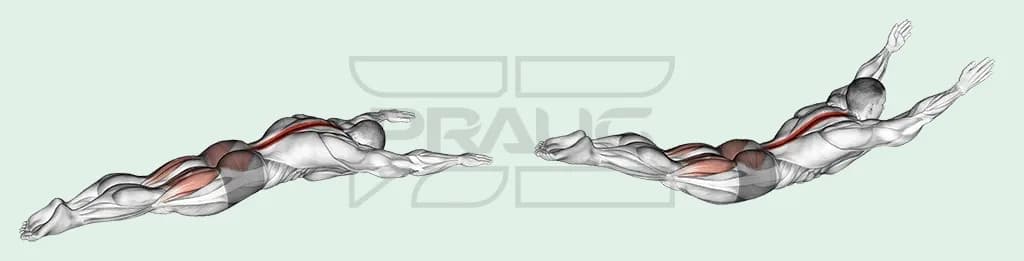
The superman is a prone floor exercise that slightly lifts the arms, upper torso and legs, or uses a shorter-lever version. It trains a trunk-and-hip extension task with bodyweight. It is not a substitute for loaded pulling, a proven back-pain treatment or a requirement to lift the limbs as high as possible.

Certified fitness coach · CQP Instructeur Fitness
Published on
The essentials before you start.
- Use a secure setup and a load or assistance you can control.
- Keep the intended support, range and effort comparable between sessions.
- Variations change the task; acute activity does not rank long-term growth.
- Adapt the example workload to other training and recovery.
Exercise facts
- Main muscles
- Spinal erectors, Multifidus
- Secondary muscles
- Gluteus maximus, Hamstrings, Middle and lower trapezius, Rear deltoids
- Equipment
- Bodyweight, Exercise mat
What the movement trains
The spinal erectors and other trunk extensors contribute, while the glutes and hamstrings assist the leg lift. Arm position adds shoulder and upper-back demands. Different versions do not isolate one deep back muscle simply because its thickness or electrical activity changes immediately after a set.
Set up and perform the movement
- Use a comfortable floor or mat with room for the arms and legs. Lie face down with the head in a comfortable continuation of the trunk.
- Begin with a manageable arm position, such as elbows bent or arms beside the body. Reaching overhead lengthens the lever.
- Create enough trunk control to make a small deliberate lift; keep breathing rather than bracing through a long strained hold.
- Lift the intended limbs and upper torso only a small controlled amount. Avoid throwing the head back or chasing maximum back arch.
- Pause briefly if desired, then return smoothly and rest on the floor before repeating.
- Use a shorter lever, fewer repetitions or a simpler version when the movement becomes uncomfortable or loses control.
What the cited research does and does not show
The small studies measured acute activity, immediate ultrasound changes or perceived effort in healthy men. An immediate thickness change is not evidence of later hypertrophy. Neither establishes which hold duration treats pain or produces greater long-term strength.
The cited protocols used particular floor or bench trunk-extension positions. They did not compare every combination of lifted arms and legs described here. Changing the lever is a coaching adaptation, not a study-validated progression ladder.
Variations and alternatives
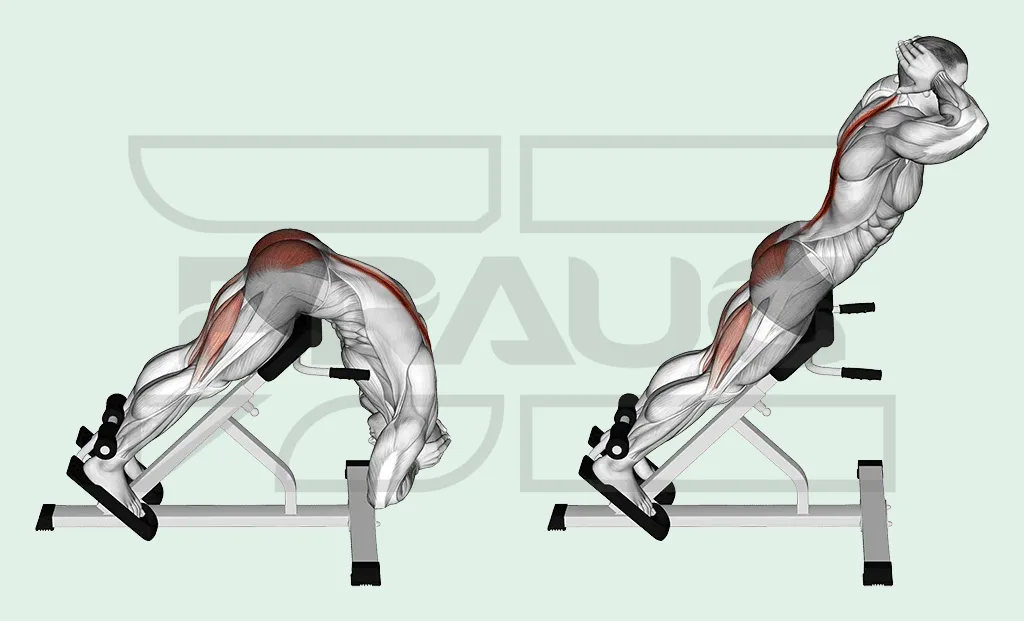
Opposite-arm/leg lifts, bent-arm W positions and alternating swimmer-style repetitions change the task. Longer holds increase sustained demand and are not automatically a better progression. A bird dog uses hands-and-knees support; a 45-degree back extension uses different equipment and loading.
Sets, progression and tracking
A starting coaching option is 1–3 short sets of 6–12 controlled repetitions, or brief holds with rest, using a lever you can manage. You do not need to copy the research’s fifty seconds of total contraction. If used in a warm-up, keep it light enough to prepare rather than fatigue. Persistent symptoms need individual advice.
When to reduce the demand or change the setup
A change in range, support, body angle or assistance changes the comparison. Reduce the demand or finish the set when you cannot retain the movement you intended. An equipment label or a beginner/advanced category does not establish individual suitability.
Stop for sharp pain and seek appropriate individual advice for persistent symptoms. A new handle, support or variation does not diagnose or treat the cause.
Browse the back collection for other pulling and trunk tasks, or the back programme to choose work within a whole week rather than adding every guide together.
Illustrated positions and options
These show example positions and equipment. An illustration is not a required range, individual loading instruction or validation of a particular support.
Illustrated option 1
Frequently asked questions
Should I lift the arms and legs as high as possible?
No. Use a small controlled movement and a manageable lever rather than chasing maximum back arch.
Does a thicker multifidus immediately after exercise mean it has grown?
An immediate ultrasound change is not evidence of later hypertrophy or a better long-term training dose.
When should I progress?
When the chosen movement and effort are repeatable. Change one demand deliberately and log any setup change.
Can this treat back or shoulder pain?
The guide and its cited activity studies do not establish an individual treatment. Persistent symptoms need suitable assessment.
Sources and limitations
Sources support the passages that cite them. Practical suggestions are coaching choices to adapt to your own situation.
- Maeo and al. · 2013 · Trunk activity during bracing and other floor/bench exercises. ↗
Ten healthy young men; immediate activity, not subsequent strength or treatment.
- Kellis and al. · 2025 · Immediate responses to different prone-extension hold formats. ↗
Twenty healthy men; acute activity, ultrasound thickness and effort do not establish long-term growth.
This general information does not replace individual advice. Zepraug’s limitations.