Training· 4 min read
Barbell bent-over row: setup, technique and progression
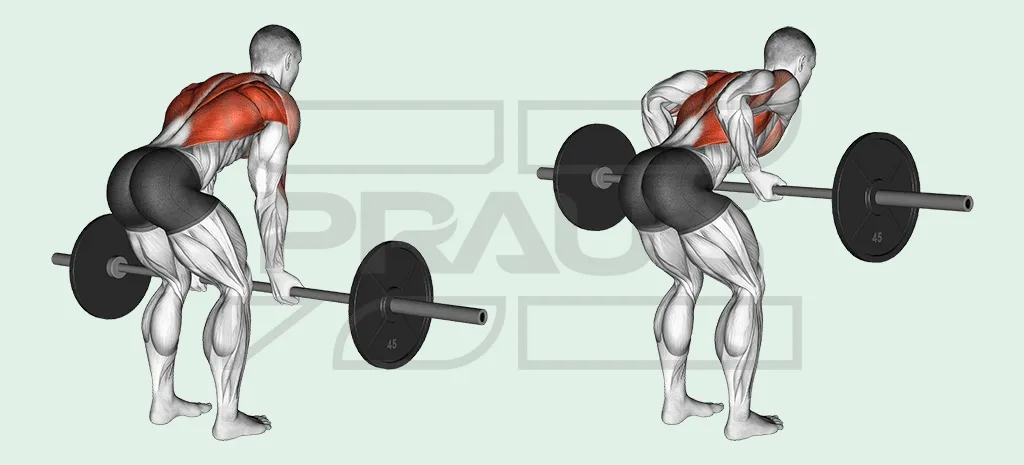
A barbell bent-over row pulls a bar towards the lower ribs or abdomen while you hold a hip hinge. The back and elbow flexors move the bar while the trunk and hips support the torso. Choose a manageable hinge and load; it is not automatically the heaviest or best horizontal pull for everyone.

Certified fitness coach · CQP Instructeur Fitness
Published on
The essentials before you start.
- Use a secure setup and a load or assistance you can control.
- Keep the intended support, range and effort comparable between sessions.
- Variations change the task; acute activity does not rank long-term growth.
- Adapt the example workload to other training and recovery.
Exercise facts
- Main muscles
- Latissimus dorsi, Rhomboids, Middle and lower trapezius
- Secondary muscles
- Teres major, Rear deltoids, Biceps, Forearms, Spinal erectors
- Equipment
- Barbell
What the movement trains
The lats, teres major, rear deltoids and muscles around the shoulder blades contribute to the pull. The spinal erectors and abdominal muscles help hold the trunk. The grip holds the bar and the elbow flexors assist. An unsupported position adds a holding task, rather than proving a superior growth stimulus.
Set up and perform the movement
- Choose a clear lifting space and plan how to pick up and put down the bar. Use a rack or a controlled floor lift appropriate to the setup.
- Take a secure overhand grip just outside shoulder width as a starting option, with stable feet and comfortable knees.
- Hinge at the hips to a torso angle you can hold. Around 45 degrees to near horizontal describes examples, not a mandatory angle.
- Brace enough to keep the intended position, then pull the elbows back as the bar approaches the lower ribs or abdomen. Let the shoulder blades move with the arms.
- Avoid repeatedly standing up to throw the bar upwards or forcing contact when it changes the intended range.
- Return the bar smoothly with the trunk angle controlled. End the set and put the bar down securely before fatigue prevents a controlled finish.
What the cited research does and does not show
The small rowing comparison estimated greater lumbar loading in its bent-over condition than in its two other conditions. It did not measure injury risk. The separate fifteen-man comparison measured trunk activity, not lat growth. Neither ranks all rows for long-term results or diagnoses an individual back problem.
Variations and alternatives
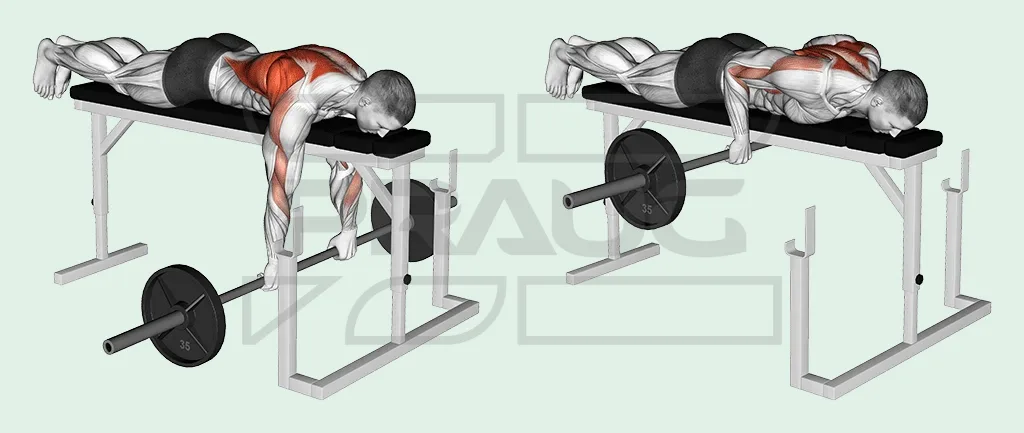
A Yates-style row uses a more upright torso and often an underhand grip; both changes affect the task. A Pendlay-style row resets on the floor and requires an appropriate start height. A seal row supports the chest. Relearn the load when changing variations instead of comparing their best weights directly.
Sets, progression and tracking
An adjustable example is 3–4 sets of 6–12 repetitions. Use lighter practice and sufficient rest, and account for the holding demand alongside deadlifts and other hinges. Record grip, torso angle, bar path and range as well as load. Use a supported alternative when that better fits the intended session.
When to reduce the demand or change the setup
A change in range, support, body angle or assistance changes the comparison. Reduce the demand or finish the set when you cannot retain the movement you intended. An equipment label or a beginner/advanced category does not establish individual suitability.
Stop for sharp pain and seek appropriate individual advice for persistent symptoms. A new handle, support or variation does not diagnose or treat the cause.
Browse the back collection for other pulling and trunk tasks, or the back programme to choose work within a whole week rather than adding every guide together.
Frequently asked questions
What changes in a Yates row?
It uses a more upright torso and often an underhand grip. These change the task and need an appropriate load rather than an automatic transfer of your other rowing best.
Does higher lumbar loading mean I will be injured?
An acute estimated load is not an individual injury prediction. Choose a repeatable movement and seek suitable advice for persistent symptoms.
When should I progress?
When the chosen movement and effort are repeatable. Change one demand deliberately and log any setup change.
Can this treat back or shoulder pain?
The guide and its cited activity studies do not establish an individual treatment. Persistent symptoms need suitable assessment.
Sources and limitations
Sources support the passages that cite them. Practical suggestions are coaching choices to adapt to your own situation.
- Fenwick and al. · 2009 · Small biomechanical comparison of three rowing tasks. ↗
Seven men; standing one-arm cable, bent-over and inverted rows, not every seated or supported variation.
- Saeterbakken and al. · 2015 · Trunk activity during unilateral and bilateral rowing setups. ↗
Fifteen trained men; not lat growth, long-term adaptation or injury risk.
This general information does not replace individual advice. Zepraug’s limitations.