Training· 3 min read
Sit-up: setup, technique and progression
A sit-up raises the torso from lying towards sitting, usually with the knees bent. It combines trunk and hip movement and differs from a short crunch. It is useful to describe the intended task rather than call it universally more complete or harmful.

Certified fitness coach · CQP Instructeur Fitness
Published on
The essentials before you start.
- Choose secure support and a manageable starting demand.
- Describe the intended trunk, hip and pelvic movement.
- Record lever, range and counting method consistently.
- Research measurements do not establish every variation or a local-fat-loss promise.
Exercise facts
- Main muscles
- Rectus abdominis, Iliopsoas
- Secondary muscles
- External and internal obliques, Rectus femoris, Transversus abdominis
- Equipment
- Bodyweight, Exercise mat
What the movement trains
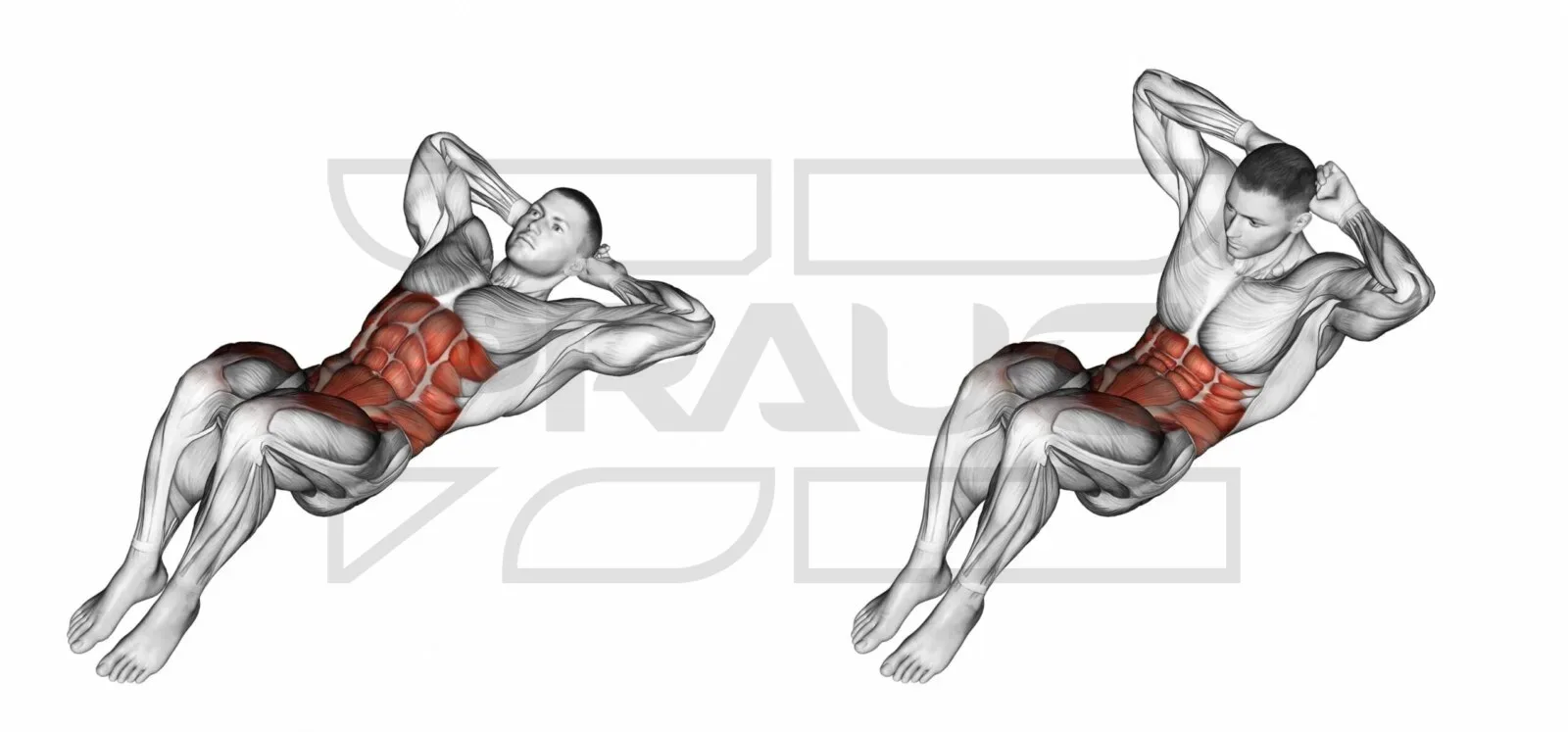
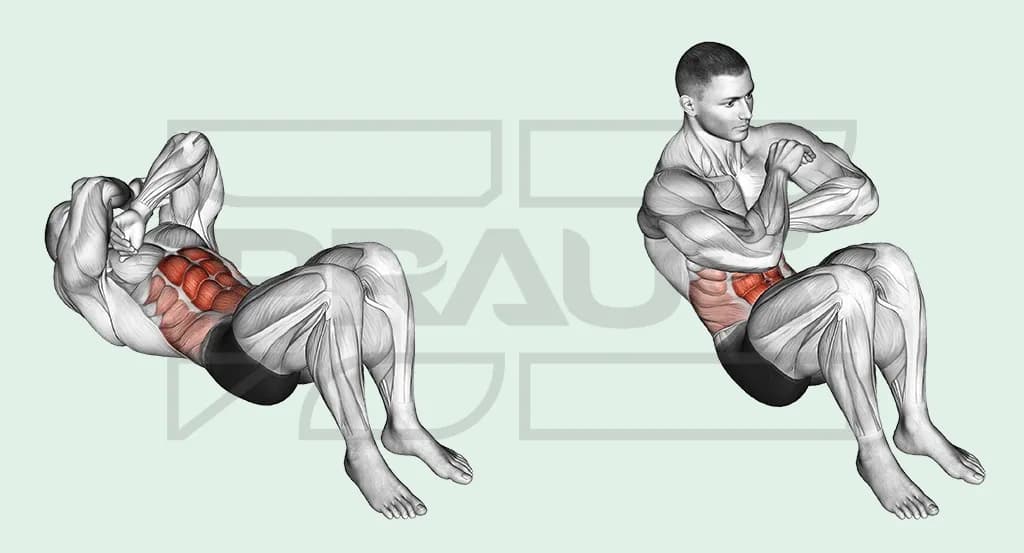
The abdominal muscles contribute to curling the trunk while the hip flexors also contribute as the body rises. Foot anchoring, arm position and range change that distribution; it is not an isolated abdominal task.
Set up and perform the movement
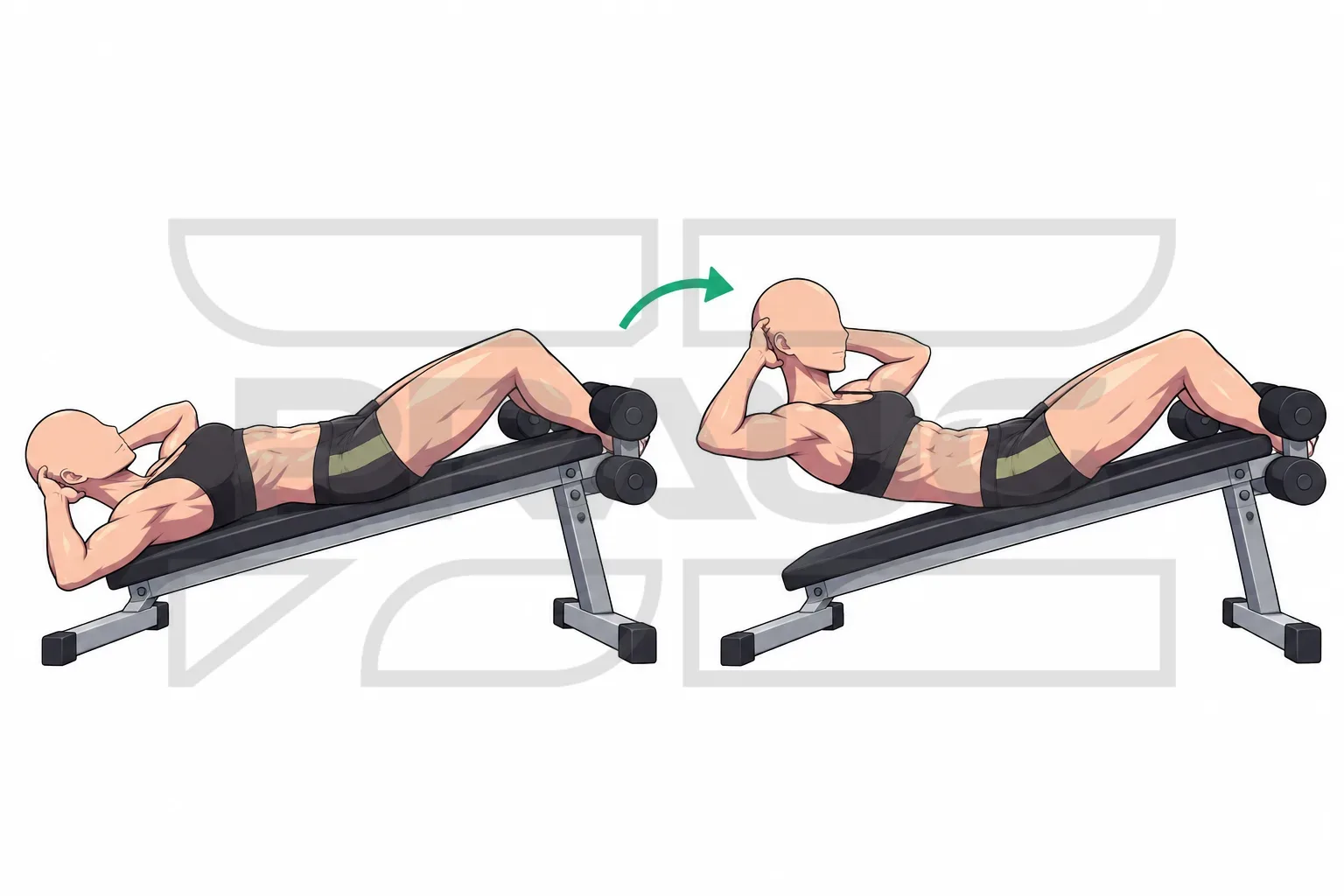
- Lie on a comfortable mat with the knees bent and feet securely supported.
- Cross the arms over the chest or use a light fingertip position without pulling the neck.
- Begin curling the upper torso, then continue towards sitting through the range you can control.
- Avoid launching the arms or bouncing the torso to finish.
- Lower smoothly through the same path without dropping the head.
- Pause or end when the chosen technique changes. For a formal test, follow its actual rules rather than assuming this coaching example matches them.
Range, support and control
Anchored feet and unanchored feet are different setups. Added load, rotation and a decline bench are separate variations, not compulsory progressions. Choose a task that can be practised without forcing symptoms.
What the cited research supports
The twelve-week trial in 2,616 soldiers compared sit-up training with a core-stabilisation programme. Both improved sit-up performance, with no clear between-group sit-up score difference. This is a task-performance result, not proof of greater abdominal growth. Small mechanical studies estimate loading rather than later injury rates.
Variations and alternatives
A floor crunch stops earlier. A front plank holds position. Neither must be treated as a universal replacement for every test or training goal.
Sets, progression and tracking
One example is 2–3 sets of 6–15 controlled repetitions, resting enough to retain range. For test preparation, log the rules, time limit and repetitions actually completed. Avoid adding repeated test sets automatically after an existing abdominal programme.
Frequently asked questions
Does the military trial show sit-ups are mandatory?
No. Both training groups improved test performance. The result concerns that programme and test, not a universal exercise requirement.
When should I add demand?
When the intended support, range and effort remain repeatable and the next change is manageable. Record changes rather than comparing different levers as if they were identical.
Sources and limitations
Sources support the passages that cite them. Practical suggestions are coaching choices to adapt to your own situation.
- Escamilla et al. · 2006 · Acute activity comparison of traditional and device-based abdominal tasks in twenty-one adults. ↗
Specific Power Wheel, strapped knee-up, inclined reverse-crunch and floor tasks; not every commercial device, later growth or injury outcomes.
- Axler and McGill · 1997 · Activity and modelled lumbar loading across twelve abdominal tasks in nine volunteers. ↗
Mechanical estimates and brief testing, not later injuries, pain outcomes or a universal safest exercise.
- Childs et al. · 2009 · Twelve-week sit-up versus core-stabilisation training trial in 2,616 soldiers. ↗
Both improved test performance, without a clear between-group sit-up score difference; not an abdominal-growth trial.
This general information does not replace individual advice. Zepraug’s limitations.