

training2 min read
Can you build muscle with light weights?
A dumbbell's weight does not describe the whole set. Effort, range of motion and progression matter too. Light loads can have a role, without automatically being equivalent for every goal.

Certified fitness coach · CQP Instructeur Fitness
Published on
The essentials before you start.
- Load alone does not describe how demanding a set is.
- Hypertrophy and maximal strength are different goals.
- Keep range, effort and repetition references when tracking progress.
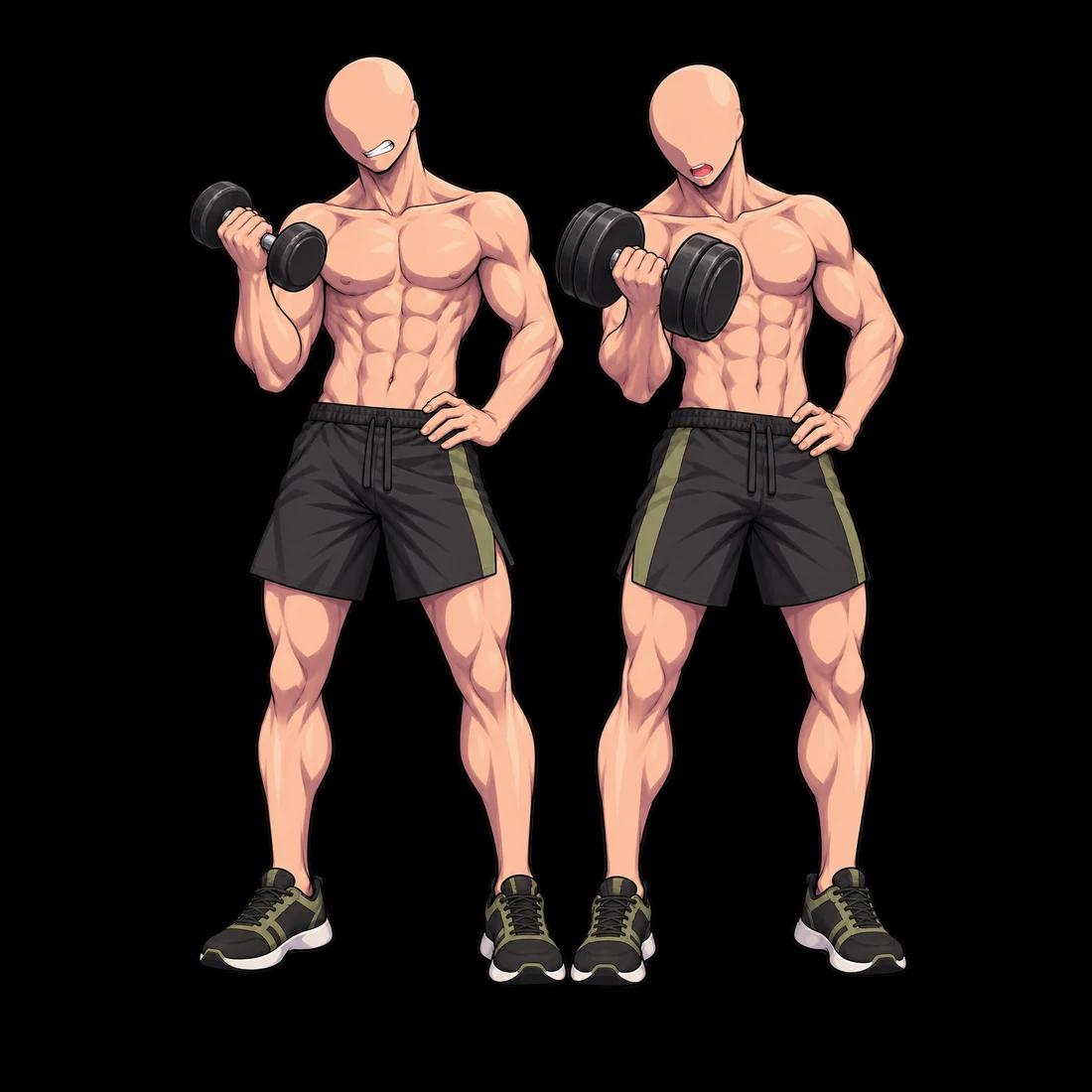
Demanding sets with different loads
A light load can demand substantial effort as repetitions accumulate. Dumbbell weight alone cannot grade the muscle’s work.
Reviews find growth across varied loads when sets are sufficiently demanding. Heavy loads retain specific value for maximal strength.
Reference: Lopez P et al. · 2021 ↗Schoenfeld BJ et al. · 2017 ↗
Choose for the goal and the exercise
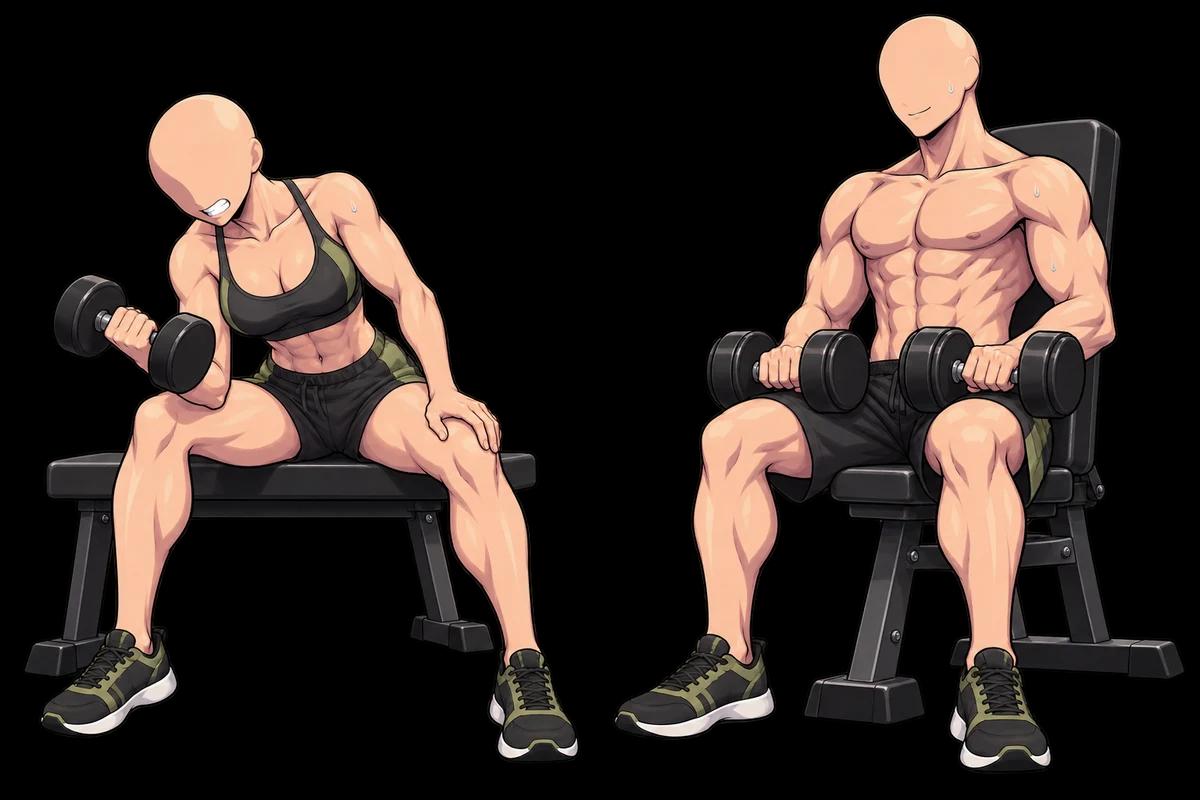
A heavy set also requires suitable support and preparation. Rest and safety do not disappear because there are fewer repetitions.
- What is your goal?
- Which exercise are you doing?
- Which range allows suitable effort and technique?
Track progress within a suitable rep range
A moderate repetition range on a stable movement and a longer range on an isolation exercise can both have a place. Choose a load that allows suitable effort while preserving the intended execution.
Track progress using the same exercise, range of motion and comparable effort criteria. An extra repetition under those conditions tells you more than changing every variable at once. This comparison does not require failure on every set.
Context and limits
Our choice: a useful, sufficiently demanding and sustainable range. Neither a weight contest on every exercise nor an easy set stopped before meaningful work.
Protocols and experience varied; many trials used failure training. The findings do not prove that any extremely light load is equivalent.
Reference: Lopez P et al. · 2021 ↗Schoenfeld BJ et al. · 2017 ↗Lopez et al. · 2022 correction ↗
From the post to your practice
Explore the carousel.
Explore the visual version of this topic on @zepraug.
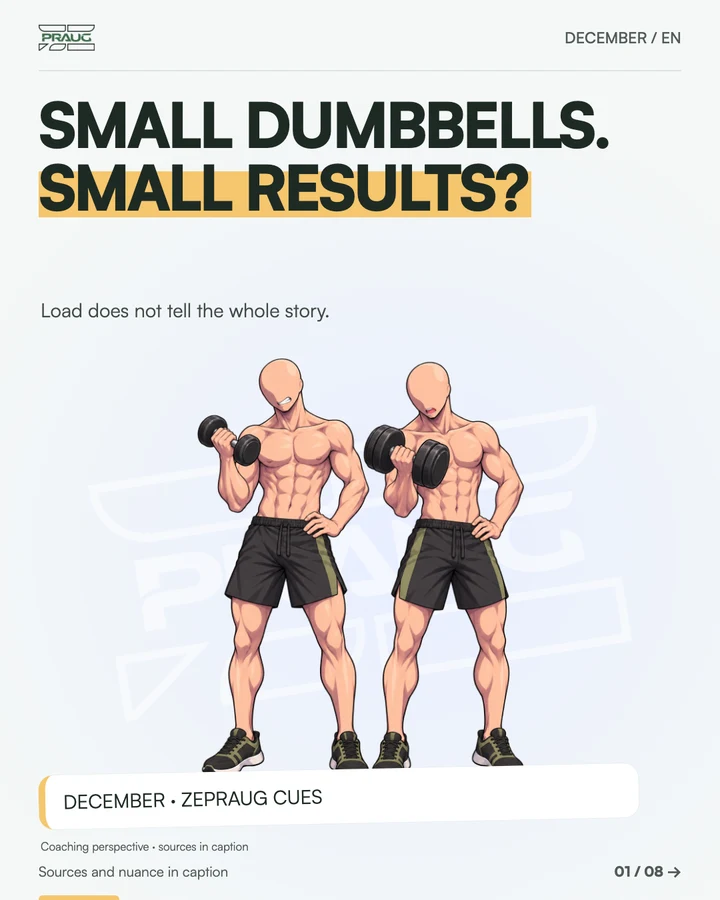
Can you build muscle with light weights?
The carousel is coming to Instagram. Scheduled for 28 December 2026.
Sources and limitations
Sources support the passages that cite them. Practical suggestions are coaching choices to adapt to your own situation.
- Lopez P et al. · 2021 · Resistance Training Load Effects on Muscle Hypertrophy and Strength Gain: Systematic Review and Network Meta-analysis. ↗
Network meta-analysis of 28 studies in 747 healthy adults, with sets taken to volitional failure. Higher loads favoured strength; this does not establish equivalence for easy or arbitrarily light sets. The 2022 corrigendum changes effect sizes without changing the main conclusions.
- Schoenfeld BJ et al. · 2017 · Strength and Hypertrophy Adaptations Between Low- vs. High-Load Resistance Training: A Systematic Review and Meta-analysis. ↗
Meta-analysis of 21 studies comparing lower and higher loads with sets to momentary failure. Similar measured hypertrophy does not make all loads, exercises or effort levels interchangeable.
- Lopez et al. · 2022 correction · Resistance Training Load Effects on Muscle Hypertrophy and Strength Gain: Corrigendum ↗
2022 correction of three study effect sizes in Figure 4 of Lopez et al.; the authors report no change to the main findings or conclusions.
This general information does not replace individual advice. Zepraug’s limitations.