


training2 min read
How many sets do you need to build muscle?
Adding sets can look like the most direct path to more muscle. The useful question is also whether that amount lets you perform, recover and progress consistently.

Certified fitness coach · CQP Instructeur Fitness
Published on

The essentials before you start.
- Consider weekly volume for each muscle.
- Reviews do not provide one universally optimal individual dose.
- Assess performance and recovery after adding sets.
What weekly volume means
Look at weekly work per muscle. An easy warm-up set and a demanding work set do not represent the same effort.
The recent meta-regression links more sets with more growth, with diminishing returns. It does not establish your personal optimal dose.
Reference: Pelland JC et al. · 2026 ↗ACSM ↗
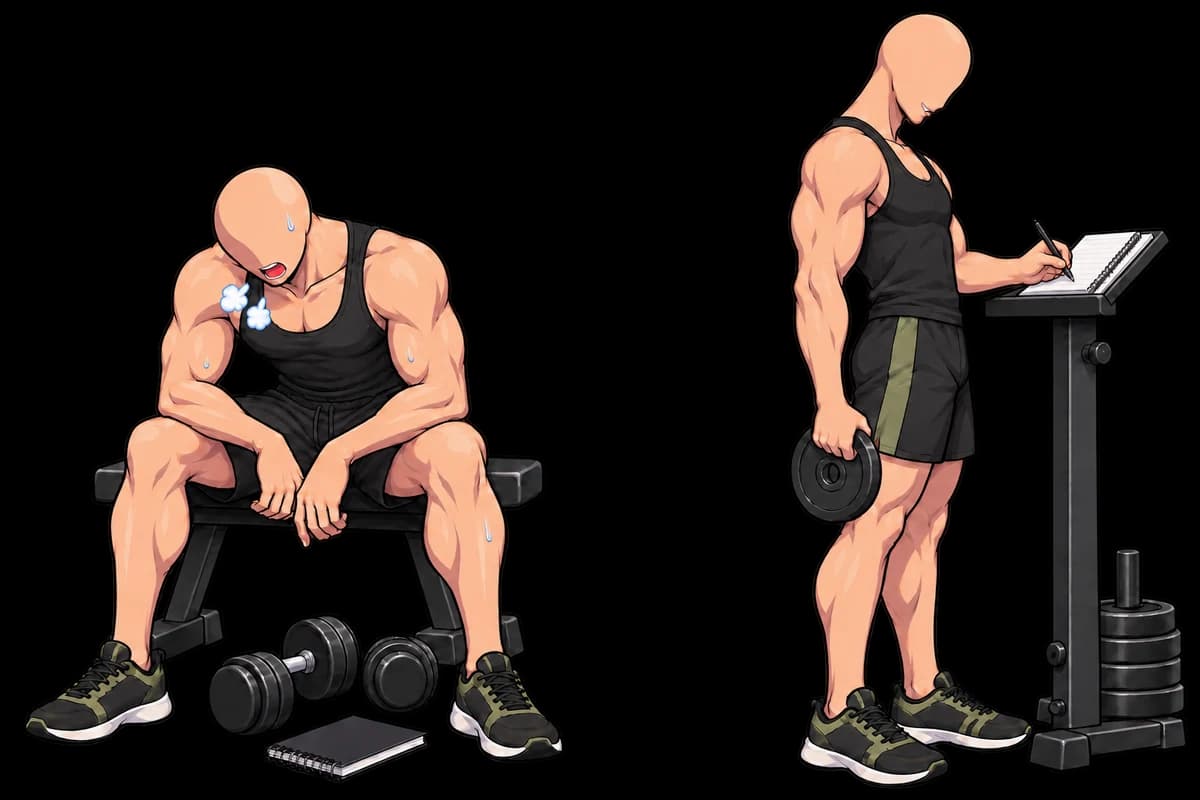
Check recovery before adding work
Falling performance and unmanageable sessions deserve adjustment. Soreness alone does not measure programme quality.
- Are your sets demanding enough?
- Is your technique comparable?
- Do you recover before training the muscle again?
Track the response to extra sets
If progress stalls despite consistency, suitable effort and recovery, test a small targeted increase. Keep the rest stable.
- Loads and repetitions
- Technique and range
- Fatigue and consistency
A practical way to use this
Start by listing the week's exercises, working sets and muscles involved. Do not automatically count each exercise as an equal effort for every muscle. When adding work, keep the rest stable enough to observe the effect. The following session matters as much as the one with extra sets.
Context and limits
Build a sustainable baseline. Add sets to address an observed need, rather than reach a fashionable number.
Associations across studies do not precisely predict individual responses. Indirect work complicates set counting. The suggested adjustments are coaching cues.
Reference: Pelland JC et al. · 2026 ↗ACSM ↗
From the post to your practice
Explore the carousel.
Explore the visual version of this topic on @zepraug.
How many sets do you need to build muscle?
The carousel is coming to Instagram. Scheduled for 3 November 2026.
Sources and limitations
Sources support the passages that cite them. Practical suggestions are coaching choices to adapt to your own situation.
- Pelland JC et al. · 2026 · The Resistance Training Dose Response: Meta-Regressions Exploring the Effects of Weekly Volume and Frequency on Muscle Hypertrophy and Strength Gains. ↗
Meta-regressions across 67 studies, mostly young men, with direct and indirect sets classified separately. Population-level associations and diminishing returns do not identify an individual optimum.
- ACSM · Updated resistance training guidelines, 2026 ↗
ACSM official 2026 summary for healthy adults. Weekly-volume reference points are general guidance rather than a required minimum or upper limit for every reader.
This general information does not replace individual advice. Zepraug’s limitations.