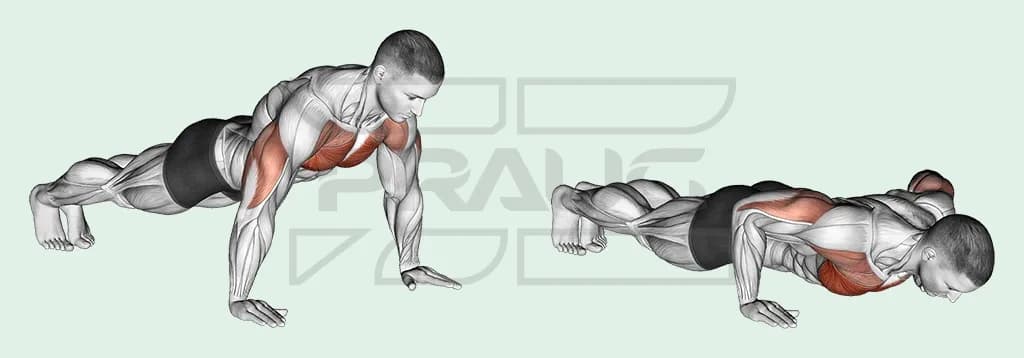
Training· 4 min read
Calisthenics equipment: choose for the task
Start with the movement you want to practise and the support it needs. Floor push-ups and squats require little equipment, while pull-ups and rows need suitable load-bearing supports. A pull-up bar, bands or parallel bars can expand the options, but there is no compulsory two-item shopping list for everyone.

Certified fitness coach · CQP Instructeur Fitness
Published on
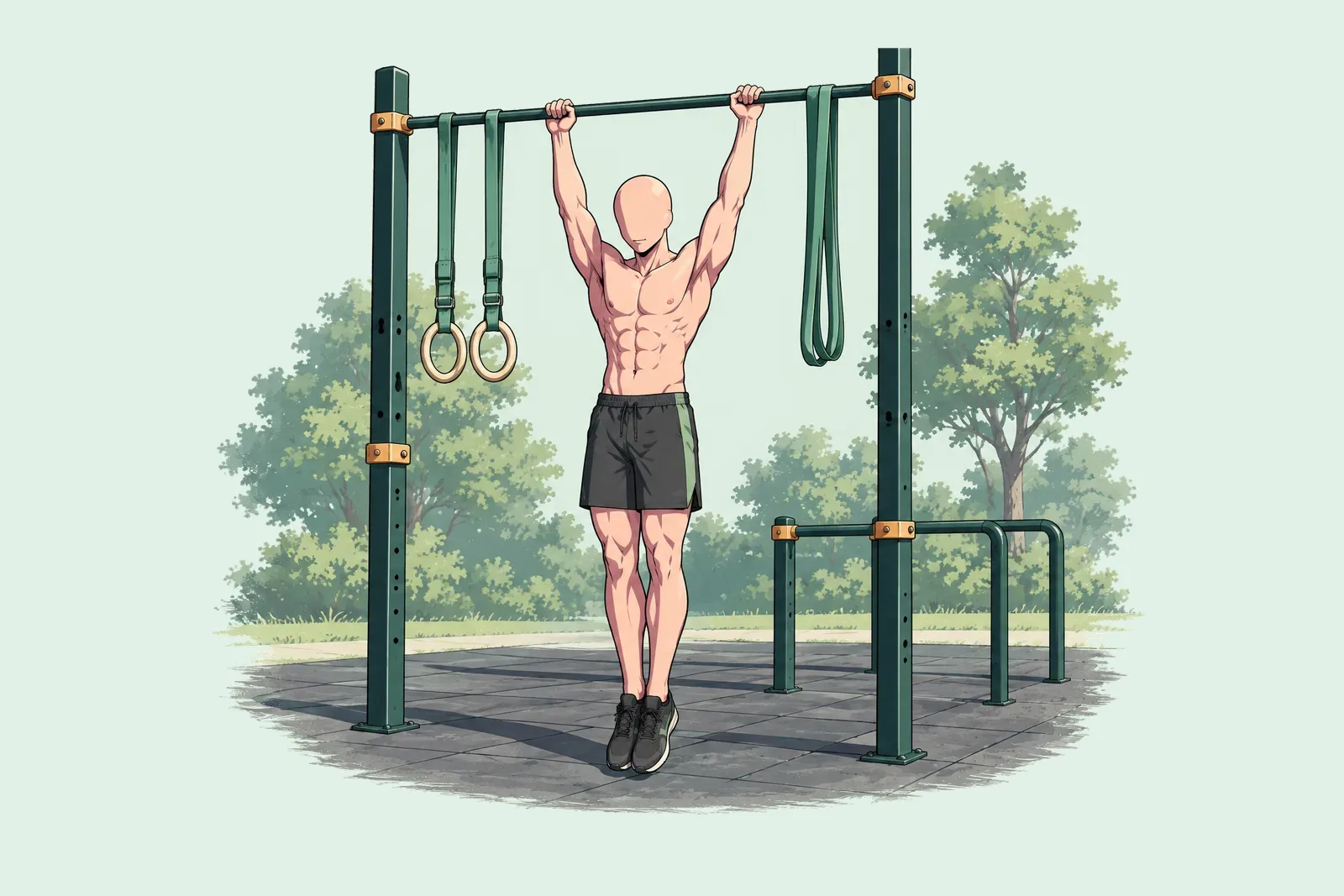
The essentials before you start.
- Check the support, fixings, clearance and intended load before using equipment.
- An ordinary door frame, table or chair is not automatically an exercise support.
- Bands, rings and loading belts change tasks; each needs its own setup.
- Buy or use an item for a clear purpose rather than a universal repetition milestone.
Pull-up bars, row supports and parallel bars
A bar or suspension anchor provides a pulling task that floor pressing does not reproduce. Choose equipment designed for the direction and load, installed according to its instructions. A fixed bar, doorway product and freestanding tower have different constraints; check the actual support rather than relying on the product category.
Parallel bars can support dips and other skills, but dips are optional. Check stability, spacing, height and a controlled mount and dismount. Pushing on chairs is not automatically equivalent to using rated parallel bars. A combined tower still needs adequate floor support and clearance.
Assistance and resistance bands
An assistance band changes the resistance across a pull-up or dip. It can help practise a task, but neither its colour nor matching a nominal assistance number guarantees a first unassisted repetition. Check wear, anchoring and the entry method.
Bands can also resist a push-up or other movement. The cited elastic-resistance synthesis concerns strength comparisons under varied protocols, not proof that every band setup equals every free-weight programme or produces identical growth.
Rings, parallettes, belts and mats
Rings allow hand rotation and add a support-control demand. Check the anchor, straps and clearance and start with a manageable body angle. Instability is not automatically a better muscle-building stimulus.
Parallettes change wrist angle and available range in supported tasks. A neutral grip may feel different, but is not a treatment guarantee. Wrist wraps do not remove the need to manage demand or investigate persistent pain.
A loading belt or vest needs equipment intended for that load and a method of fitting and removing it safely. A loose improvised weight is not a required progression after twelve repetitions. A mat can improve comfort without making an unstable surface suitable for every exercise.
Choose by a specific need
Check what is already available at a suitable gym or public exercise area, including the condition and rules of that equipment. Access alone does not show that a bar or anchor is in usable condition.
| Task | Possible equipment | What to check |
|---|---|---|
| Vertical pulling | Suitable pull-up bar or assisted station | Fixings, clearance, load and dismount. |
| Horizontal pulling | Purpose-built low bar or rated suspension system | Anchor, floor grip and body angle. |
| Supported dip | Purpose-built parallel bars | Stability, spacing and mount/dismount. |
| Assistance or added resistance | Appropriate band | Condition, anchor and changing resistance. |
| Extra external load | Suitable belt or vest | Load rating and secure setup. |
Equipment does not replace a plan
The short push-up trials show specific examples of adjustable resistance, not that an equipment purchase guarantees progress. The force-platform study measured push-up loading and did not directly compare dips.
Record support height, attachment, assistance or load, range and repetitions. Change one demand when useful rather than treating more difficult equipment as an achievement by itself.
For a practical first plan, see beginner calisthenics. The bodyweight exercise collection compares tasks without assuming every exercise needs no equipment.
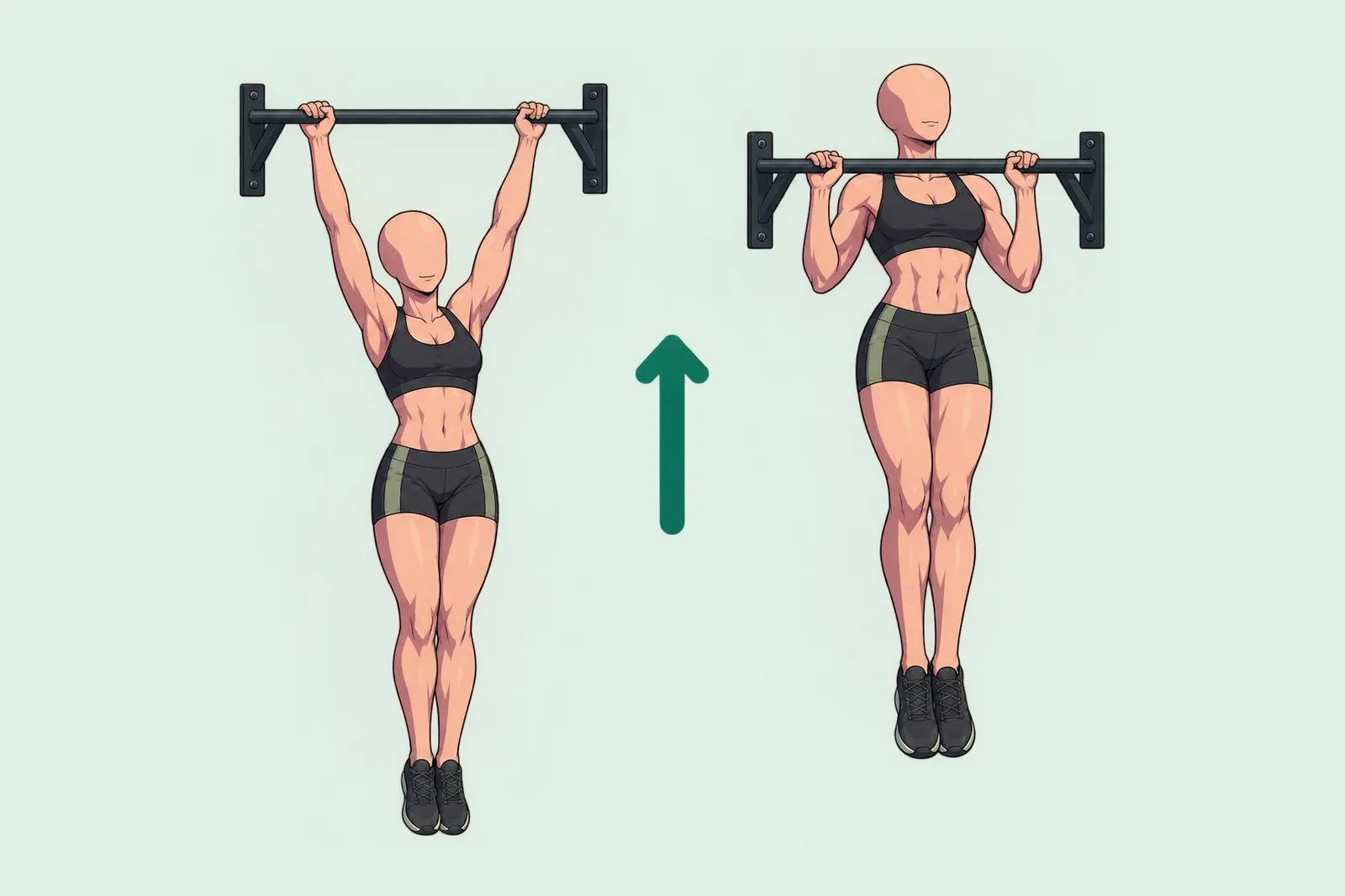
Illustrated movement examples
The original illustrations are retained. Furniture shown in an image is not proof of a suitable load-bearing support; choose purpose-built equipment and the controlled setup described above.
Movement example 1
Frequently asked questions
Do I need dip bars immediately?
No. Choose them if a dip or another supported task serves your goal and you have an appropriate setup.
Can I use a table or chairs?
Do not assume furniture is designed for the load or direction. Use suitable exercise supports and follow their instructions.
Are rings always better?
They change hand freedom and control demands. Better depends on the task and your ability to use them.
When should I buy a loading belt?
When secure added resistance serves the goal and the equipment supports it, not at a universal repetition count.
Sources and limitations
Sources support the passages that cite them. Practical suggestions are coaching choices to adapt to your own situation.
- Kotarsky et al. · 2018 · Short progressive push-up training trial. ↗
Strength outcomes do not validate this whole plan or establish long-term hypertrophy equivalence.
- Ebben et al. · 2011 · Forces during six push-up setups. ↗
Acute loading, not training adaptation or a direct comparison with dips.
- Lopes et al. · 2019 · Elastic versus conventional resistance: strength synthesis. ↗
Varied protocols and populations; not proof of identical growth or every band setup.
This general information does not replace individual advice. Zepraug’s limitations.