
Training· 5 min read
Cable triceps exercises: four setup options
Cable triceps work can use the upper arms near the sides or raised overhead, with one or two arms. These four setup options change position, support and handling. Choose an amount within your programme rather than assuming all four are required in the same session.

Certified fitness coach · CQP Instructeur Fitness
Published on
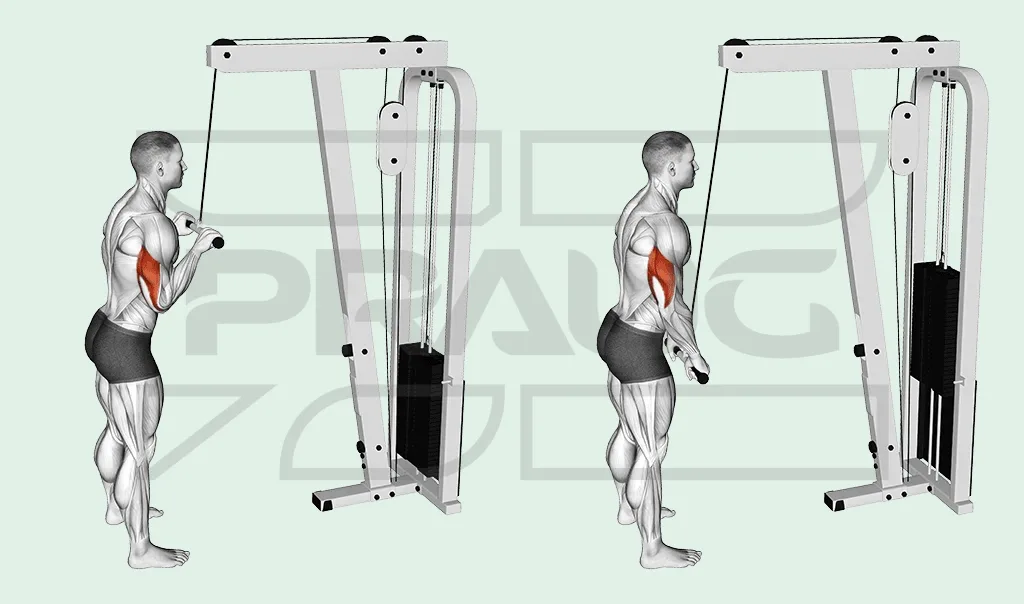
The essentials before you start.
- Shoulder position and grip orientation describe different things.
- The cable trial compared one-arm positions, not every accessory or a complete combined routine.
- One-arm and two-arm setups need their own load and stability references.
- Count direct extensions alongside pressing and repeat the chosen workload deliberately.
Shoulder position, hand grip and the long head
The triceps extend the elbow. Its long head also crosses the shoulder, so raising the upper arm changes its length. In the cited trial, neutral arm position meant the upper arm near the side, not a neutral hand grip. All three heads can contribute in either shoulder position.
The twelve-week trial in twenty-one adults used one arm overhead and the other near the side. Measured triceps growth favoured the overhead condition under that protocol. This does not show that every reader must use it, that both positions together are superior, or that one grip solves elbow symptoms.
Four options and what changes
| Option | Upper-arm position | Setup to record |
|---|---|---|
| Two-arm pressdown | Near the sides | Attachment, high pulley, stance and elbow range |
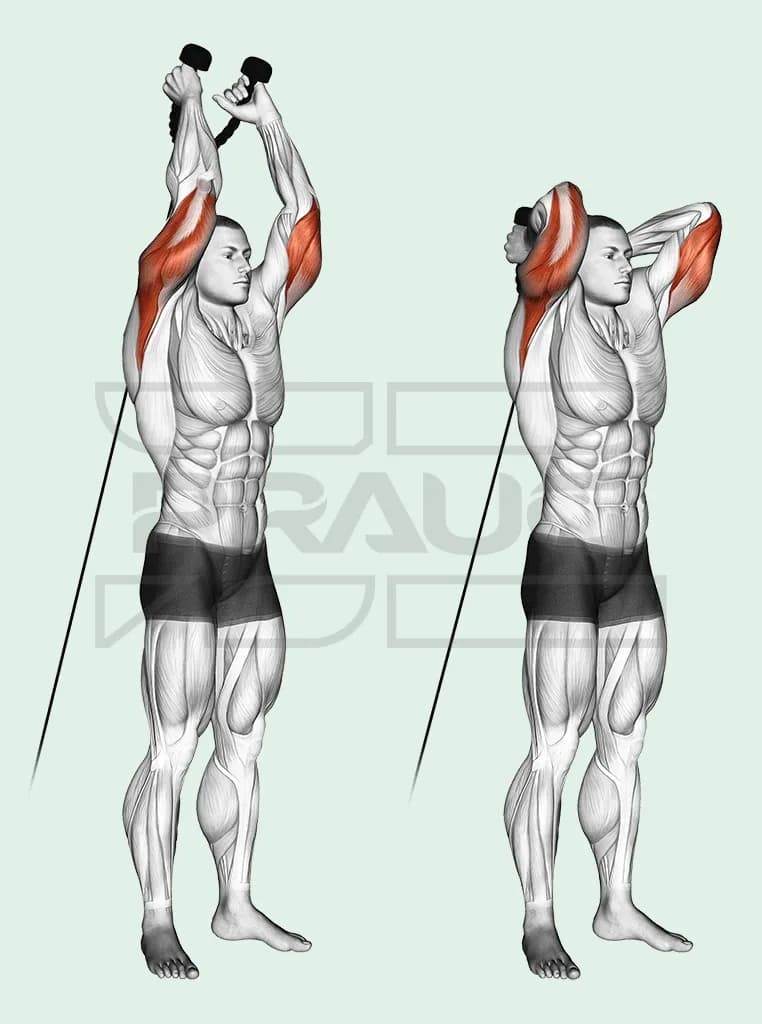
| Two-arm overhead extension | Raised | Pulley, attachment, access and controlled return |
| Single-arm pressdown | Near the side | Handle, stance, range and comparable conditions per side |
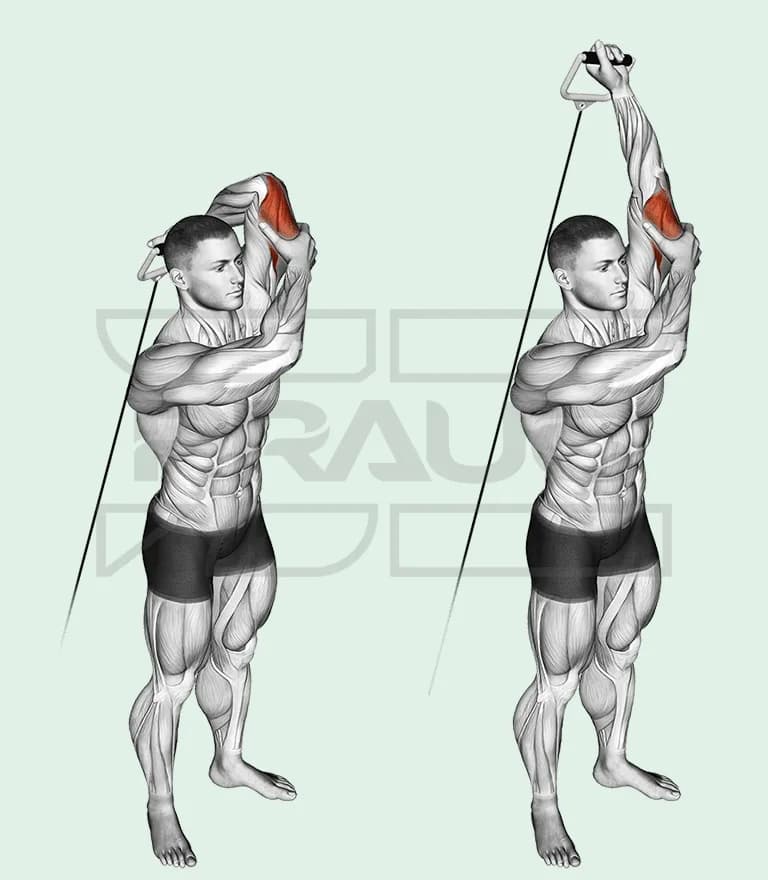
| Single-arm overhead extension | Raised | Handle, shoulder range and support per side |
Set up the two main tasks
For a pressdown, face a high pulley, bring the upper arms near the sides and extend the elbows without turning the movement into a downward whole-body push. Return through a controlled bend rather than letting the stack jerk the arms up.
For overhead work, arrange a suitable pulley and controlled way to bring the handle behind the head before choosing a demanding load. Face away from the cable in a stable stance, raise the upper arms through a manageable range and extend the elbows smoothly. Plan how to lower the stack before releasing the attachment.
A one-arm version uses a separately manageable load and a steady trunk. The other hand may provide suitable support, but should not force a shoulder angle or add unrecorded help to the working arm.
Rope, bar and handle are choices
Choose an intact attachment that permits a secure grip and a repeatable path. A rope may allow the hands to separate; this does not require a forced outward twist. A bar connects the hands, while a single handle allows an independent path.
The cited trial did not compare ropes, bars, reversed grips or bilateral versus unilateral training. Different stations and pulley ratios make stack labels imperfect load comparisons. Record the actual setup rather than treating cable tension as constant muscle torque.
Adjustable workload examples
Choose a row or a deliberate combination, not all three as compulsory additions. These are per occurrence; repeating them multiplies the work. For one-arm tasks, three sets per arm gives each arm three, not six. Both presses and other extensions contribute to weekly demand.
| Option | Sets | Repetitions | Example rest | Possible place |
|---|---|---|---|---|
| Pressdown | 3–4 | 10–15 | 60–90 s | Within a push or arm session, ordered by priority |
| Overhead extension | 3–4 | 10–12 | 60–90 s | Within the chosen direct triceps amount |
| A selected one-arm version | 3 per arm | 12–15 | 45–60 s between arms as one option | As an alternative setup, not automatic extra volume |
Progress with a repeatable task
Start with relevant lighter practice. A range that preserves control and some repetitions still possible is useful while learning; the table is a coaching example rather than a dose validated for every person. More rest is appropriate when it helps retain the intended movement.
Log pulley and handle, upper-arm position, stance, elbow range, load and effort. Increase demand when comparable work is repeatable. An unusually difficult set does not automatically require more direct arm volume.
The triceps collection compares other elbow-extension tasks, and the triceps programme puts the options into a whole plan. Stop for sharp pain and seek individual advice for persistent symptoms.
Illustrated positions and options
The images show example positions, not an individual range or loading prescription. A pictured household chair does not establish a suitable exercise support. Use equipment intended for the task.
Illustrated option 1
Illustrated option 2
Illustrated option 3
Frequently asked questions
Do I need all four options?
No. They are setup choices. Choose the work within a programme rather than stacking every variation.
Did the trial compare one arm with two arms?
It compared shoulder positions on separate arms. It did not establish unilateral versus bilateral superiority.
Does neutral mean palms facing each other?
In the trial’s arm-position comparison it meant the upper arm near the side. Grip orientation is a separate description.
Is a rope proven better than a bar?
That accessory comparison was not tested by the cited trial. Use a secure, repeatable setup.
Sources and limitations
Sources support the passages that cite them. Practical suggestions are coaching choices to adapt to your own situation.
- Maeo and al. · 2023 · Cable elbow-extension training with two shoulder positions. ↗
Specific one-arm protocol; no accessory or combined-routine comparison.
This general information does not replace individual advice. Zepraug’s limitations.