Training· 3 min read
Swiss ball crunch: setup, technique and progression
Other names: Stability ball crunch
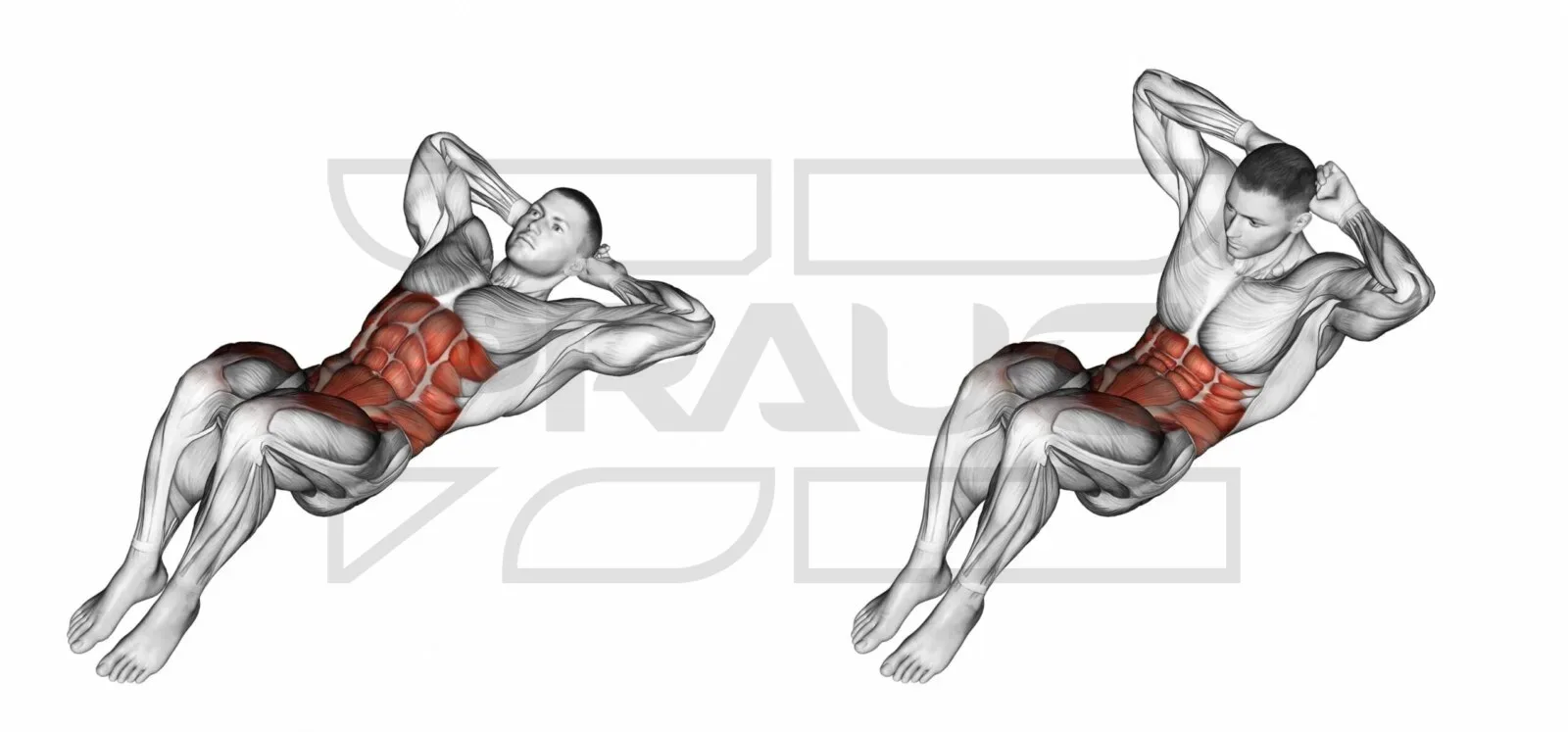
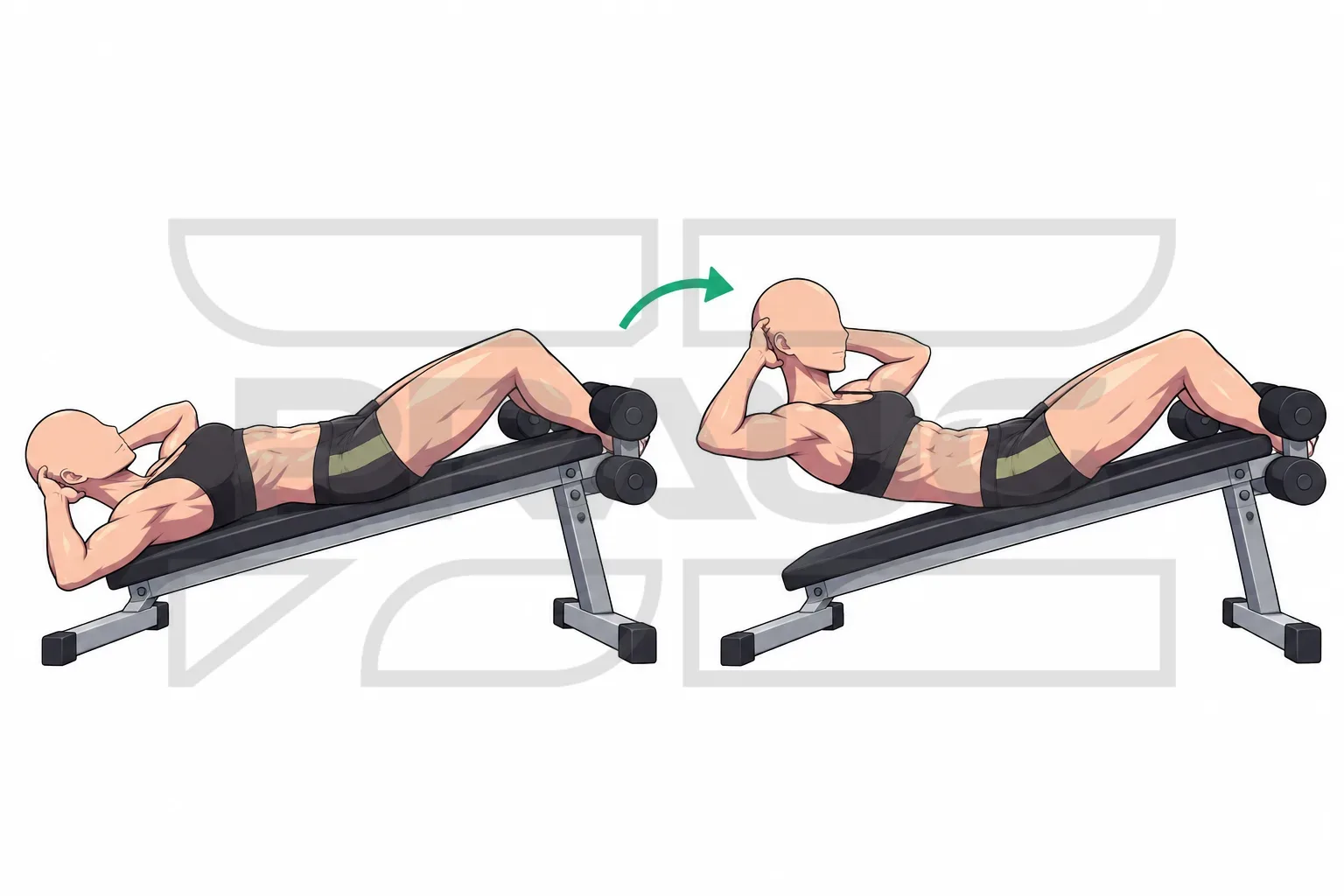
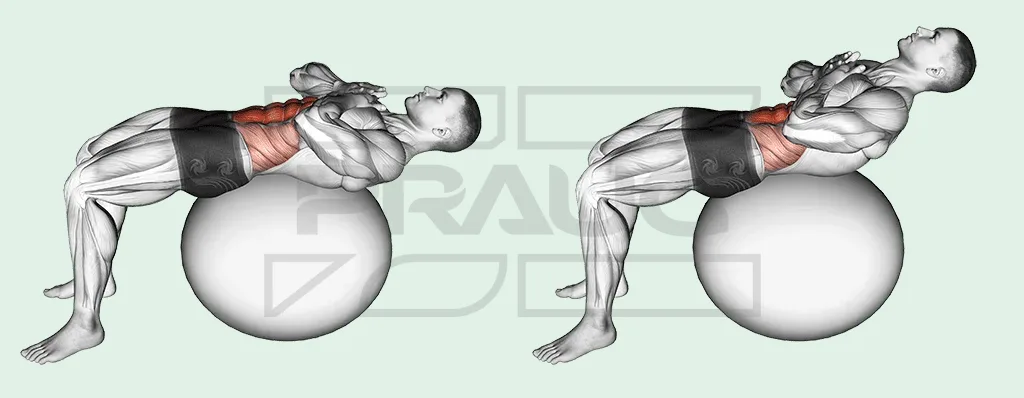
A Swiss ball crunch curls the upper torso while a suitable exercise ball supports the back. Ball placement changes both support and movement. Instability alone does not guarantee a greater training effect.

Certified fitness coach · CQP Instructeur Fitness
Published on
The essentials before you start.
- Choose secure support and a manageable starting demand.
- Describe the intended trunk, hip and pelvic movement.
- Record lever, range and counting method consistently.
- Research measurements do not establish every variation or a local-fat-loss promise.
Exercise facts
- Main muscles
- Rectus abdominis
- Secondary muscles
- External and internal obliques, Transversus abdominis
- Equipment
- Suitable exercise ball
What the movement trains
The abdominal wall contributes to trunk flexion while the feet and ball support the body. A ball beneath the lower back creates a different task from one beneath the shoulder blades or a floor crunch.
Set up and perform the movement
- Inspect a ball of suitable size and load rating, and use a clear non-slip area.
- Sit securely with the feet supported and spaced for balance.
- Walk the feet forwards slowly until the intended part of the back rests on the ball; start with a small range.
- Keep the neck comfortable and arms across the chest or otherwise manageable.
- Curl the upper torso without launching it or letting the ball roll away. Lower only through a controlled back range.
- Return to a stable sitting position before standing or releasing support.
Range, support and control
Allowing the back to move over the curve does not require a maximum stretch. Narrow feet, rotation or an added plate change balance and handling. Use a floor version if controlling the ball limits the intended task.
What the cited research supports
In forty-one adults, activity was higher with the ball beneath the lower back than during a floor crunch, and lower when it supported the upper back. That acute comparison shows why placement matters; it does not establish greater later growth, universal difficulty or injury prevention.
Variations and alternatives
A floor crunch changes support. Loaded or rotating ball versions need a separately manageable setup; they were not established as superior long-term progressions by the cited comparison.
Sets, progression and tracking
One adjustable example is 2–3 sets of 8–15 repetitions. Rest sufficiently to keep ball placement and range repeatable. Record ball size, support position, foot spacing and effort.
Frequently asked questions
Is every ball crunch harder than a floor crunch?
No. The activity comparison depended on where the ball supported the back. Instability is not a universal ranking of difficulty or growth.
When should I add demand?
When the intended support, range and effort remain repeatable and the next change is manageable. Record changes rather than comparing different levers as if they were identical.
Sources and limitations
Sources support the passages that cite them. Practical suggestions are coaching choices to adapt to your own situation.
- Sternlicht et al. · 2007 · Floor versus two ball-placement crunch conditions in forty-one adults. ↗
Activity depended on ball placement; no later strength, growth or injury-prevention comparison.
This general information does not replace individual advice. Zepraug’s limitations.