Training· 2 min read
Does soreness prove a workout was effective?
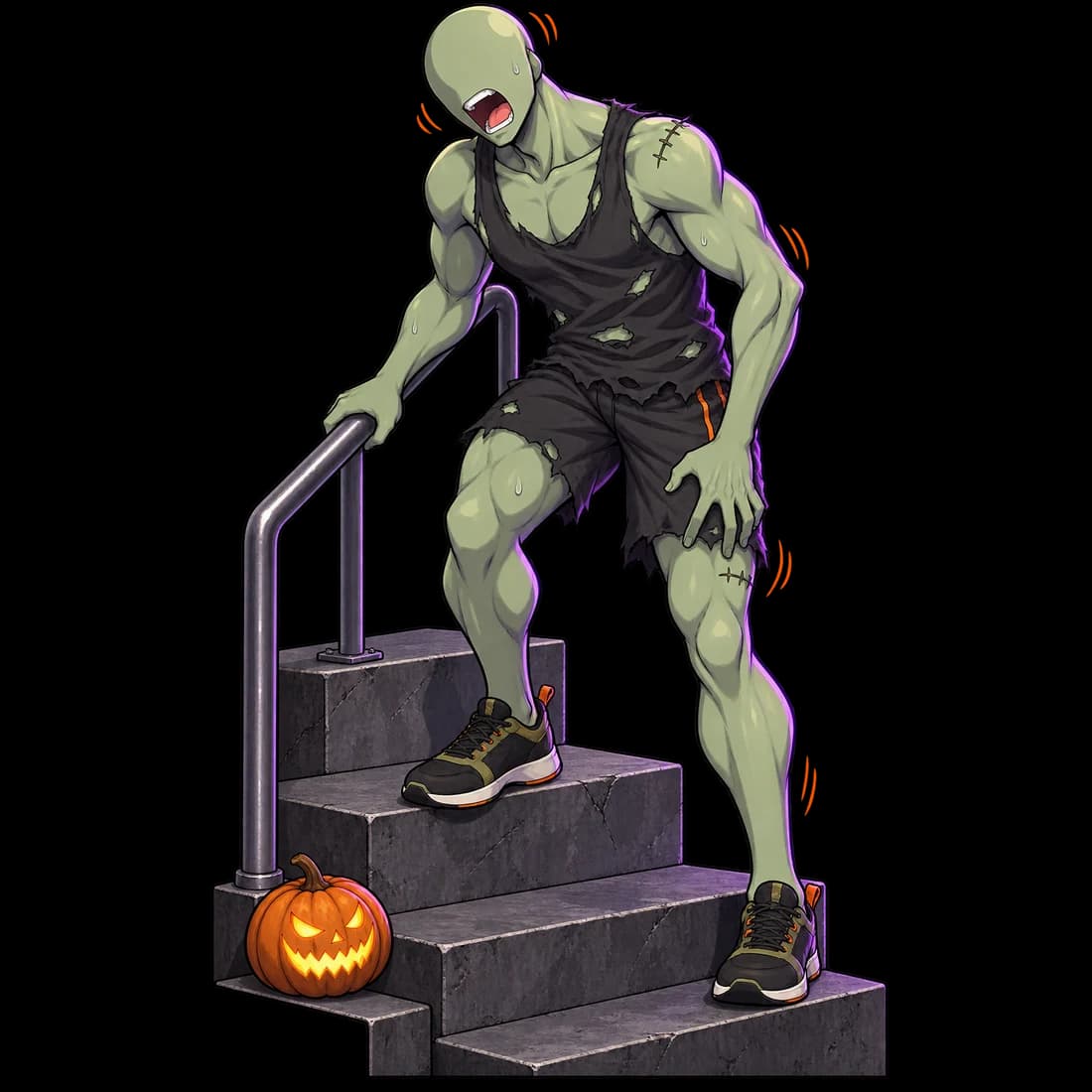
Walking like a zombie after leg day is memorable. It is not a reliable measure of progress. Soreness describes a response to exercise, and that response needs context.

Certified fitness coach · CQP Instructeur Fitness
Published on
The essentials before you start.
- Soreness intensity alone cannot grade a workout.
- Also track loads, repetitions, technique and recovery.
- Unusual, severe or persistent pain deserves assessment.
Why soreness appears
Sitting down becomes a challenge after unfamiliar exercise. Soreness is common, but its intensity does not grade your workout.
Damas and colleagues followed 10 men for 10 weeks. Damage markers fell as they adapted, while muscle fibres grew later in training.
Reference: PubMed Central ↗
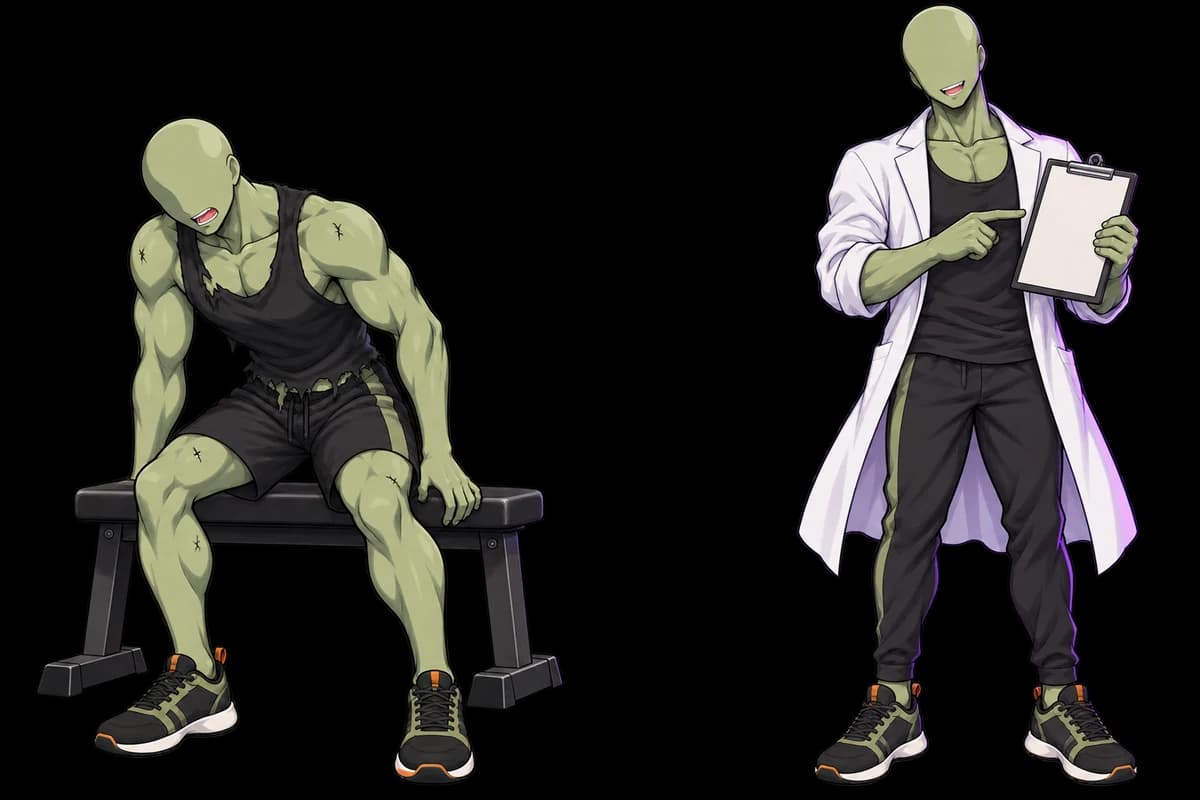
More useful ways to track your workouts
If comfortable, an easy walk can help you stay active. It does not mean you must train legs again or push through pain.
- Comparable loads and repetitions.
- Controlled technique and range.
- Recovery between sessions.
Recognise pain that needs attention
Our choice: work you can recover from. When returning or trying a new exercise, build up gradually instead of doing everything on day one.
- Sharp pain during movement: stop and assess.
- Unusual, severe or persistent pain: seek advice.
- The zombie cartoon is not a diagnosis.
A practical way to use this
Separate performance, technique and next-day sensations in your training log. After a new exercise, avoid judging the entire programme by soreness alone. Adjust the next session as needed to regain controlled movement. Unusual, severe or persistent pain deserves assessment.
Context and limits
Our choice: compare loads, reps and technique over time, with work you can recover from. Returning or trying a new exercise? Build up gradually. A comfortable walk can keep you active; it is not a guaranteed soreness treatment.
Sharp pain during movement: stop and assess. Seek advice for unusual, severe or persistent pain. A drawing cannot distinguish soreness from injury.
Reference: PubMed Central ↗my.clevelandclinic.org ↗
From the post to your practice
Explore the carousel.
Explore the visual version of this topic on @zepraug.
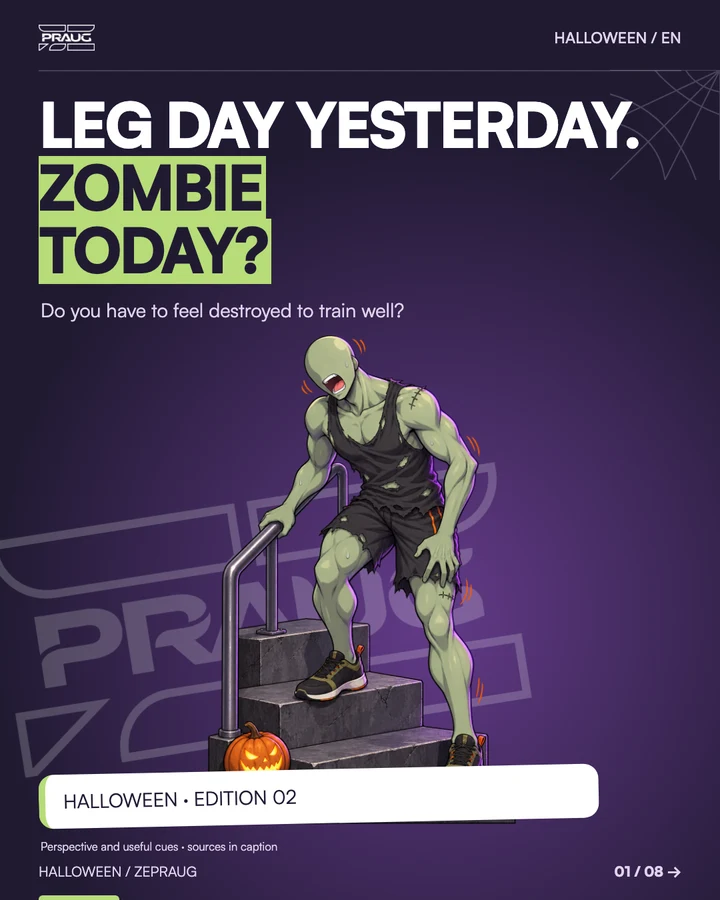
Does soreness prove a workout was effective?
The carousel is coming to Instagram. Scheduled for 31 October 2026.
Sources and limitations
Sources support the passages that cite them. Practical suggestions are coaching choices to adapt to your own situation.
- PubMed Central · Resistance training‐induced changes in integrated myofibrillar protein synthesis are related to hypertrophy only after attenuation of muscle damage ↗
Ten-week study in ten young men relating muscle damage and integrated protein synthesis to fibre growth. Not a diagnostic test for soreness, injury or the effectiveness of any single session.
- my.clevelandclinic.org · Delayed Onset Muscle Soreness (DOMS): What It Is & Treatment ↗
Clinician-reviewed patient information on delayed soreness and concerning symptoms. Supports symptom context, not a biological requirement for muscle growth.
This general information does not replace individual advice. Zepraug’s limitations.