Training· 2 min read
Butt wink in the squat: should you change your technique?
A pelvis that tucks under at the bottom of a squat is easy to notice. That movement alone does not diagnose an injury. Load, range of motion, control and symptoms also matter.

Certified fitness coach · CQP Instructeur Fitness
Published on
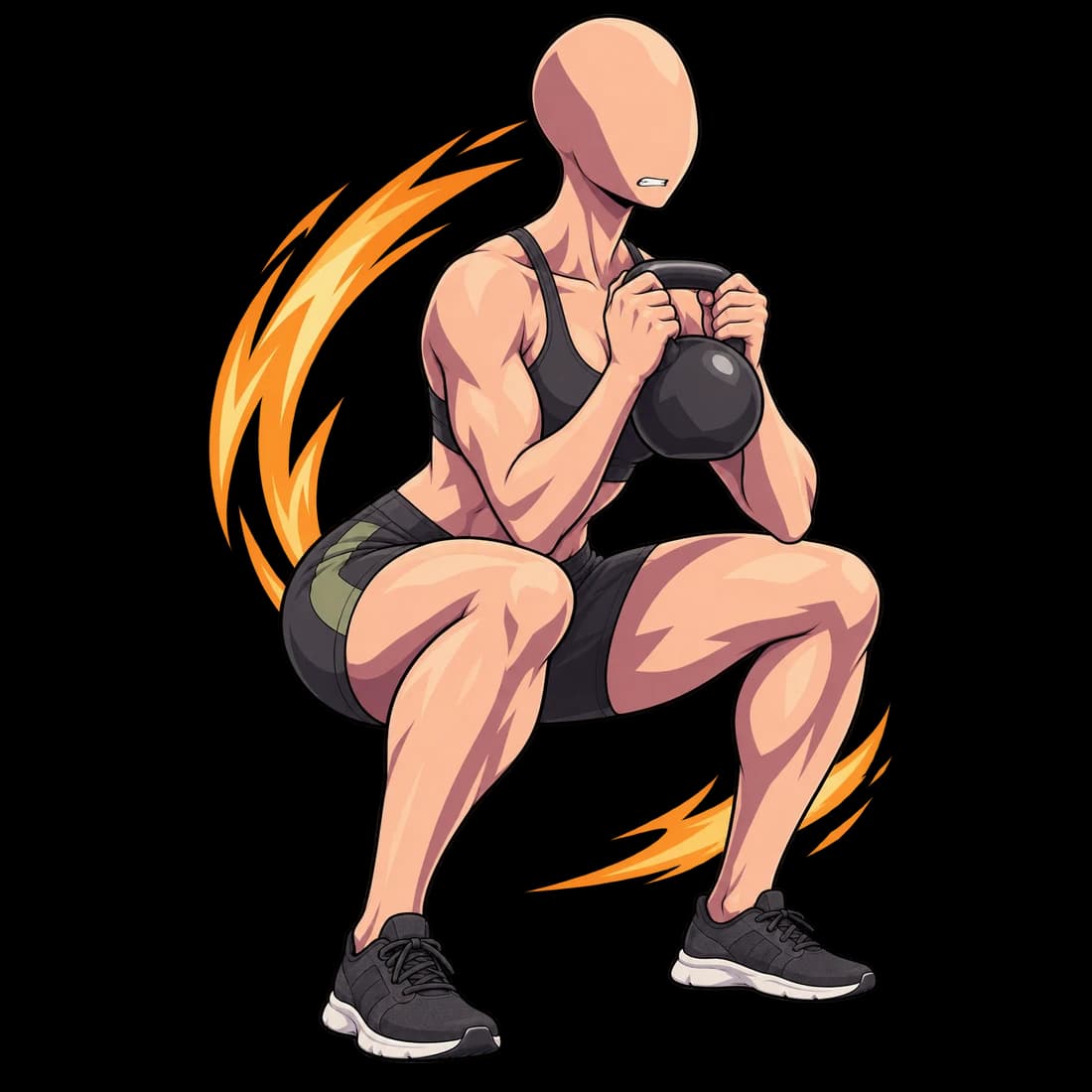
The essentials before you start.
- Pelvic tuck describes movement, not a diagnosis.
- Load, control and symptoms matter when assessing the movement.
- Compare setup changes with a load you can control.
What pelvic tuck describes
The pelvis tucks under the torso near the bottom. This describes movement, not an injury. Torso lean alone cannot identify it.
A small amount of flexion does not predict an injury on its own. Research gives no universal visual “safe / unsafe” cutoff. Lifting research does not validate every squat load.
Reference: McKean MR et al. · 2010 ↗Saraceni N et al. · 2020 ↗
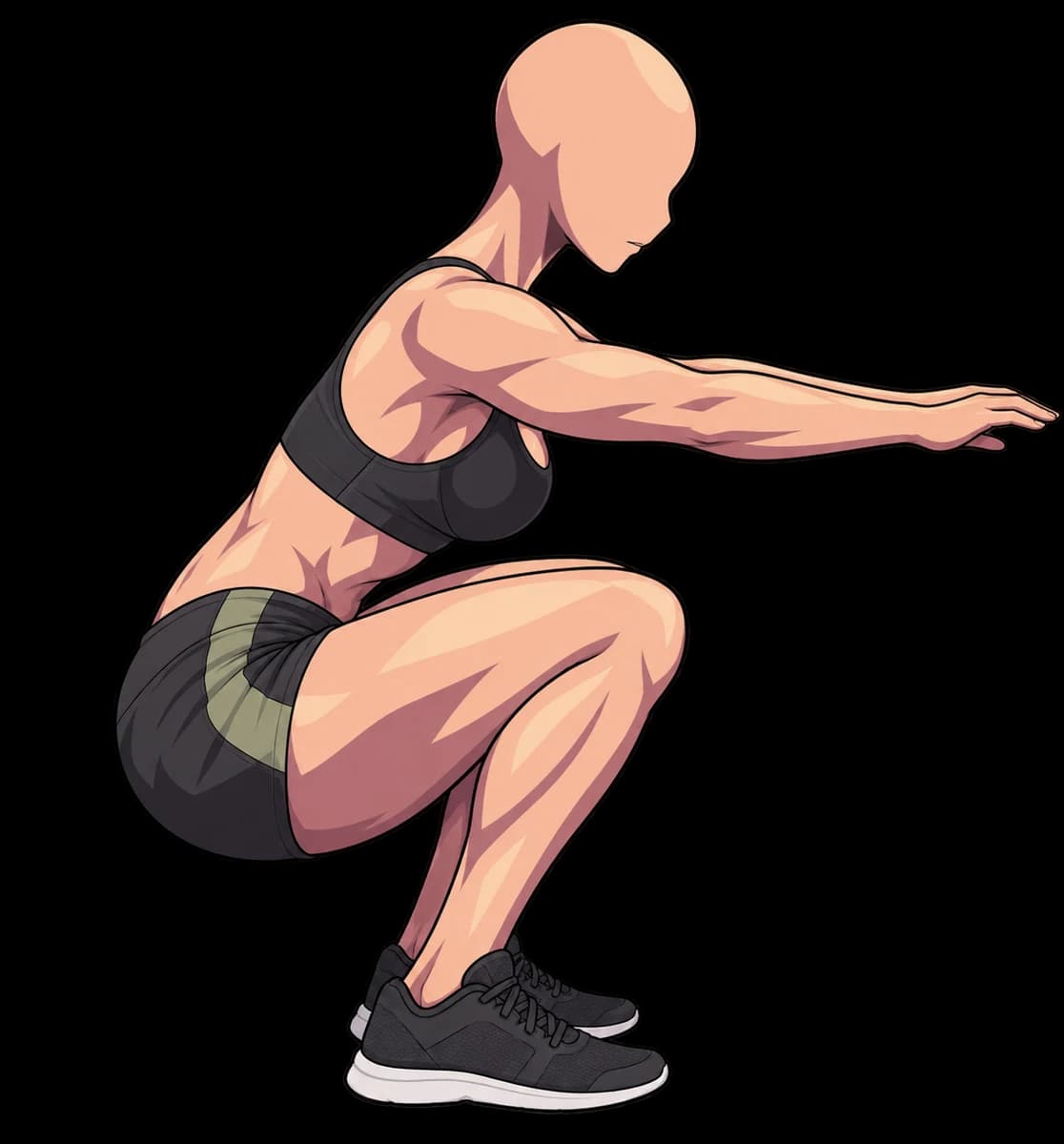
Watch control and symptoms
Stop before a clear loss of control. A bench or box can mark the depth: touch lightly without dropping onto it. Build the range back gradually.
- Pain appears or gets worse during the movement.
- You suddenly lose your position at the bottom.
- The movement deteriorates as effort increases.
Compare changes to your setup
Stance width. Toe angle. A small, stable heel lift. A wedge changes the mechanics; it does not automatically “fix” butt wink.
Set your footing and create tension around your trunk. Descend with control. Forcing your lower back into extension is not a universal solution.
A practical way to use this
Compare attempts with a manageable load and a similar camera angle. Change one thing at a time: depth, stance or exercise variation. Aim for a repeatable movement rather than one perfect-looking frame. If pain appears, a video does not replace an appropriate assessment.
Context and limits
These adjustments are coaching options. A wedge does not prove that your ankle lacks mobility or automatically fix butt wink. Do not force an arch or a painful position.
If pain appears, reduce the demand. If it persists or worsens, seek an individual assessment.
Reference: McKean MR et al. · 2010 ↗Saraceni N et al. · 2020 ↗Berglund L et al. · 2024 ↗Lorenzetti S et al. · 2018 ↗PubMed Central ↗
From the post to your practice
Explore the carousel.
Explore the visual version of this topic on @zepraug.
Butt wink in the squat: should you change your technique?
The carousel is coming to Instagram. Scheduled for 20 October 2026.
Sources and limitations
Sources support the passages that cite them. Practical suggestions are coaching choices to adapt to your own situation.
- McKean MR et al. · 2010 · The lumbar and sacrum movement pattern during the back squat exercise. ↗
- Saraceni N et al. · 2020 · To Flex or Not to Flex? Is There a Relationship Between Lumbar Spine Flexion During Lifting and Low Back Pain? A Systematic Review With Meta-analysis. ↗
- Berglund L et al. · 2024 · Are Anthropometric Measures, Range of Motion, or Movement Control Tests Associated with Lumbopelvic Flexion during Barbell Back Squats? ↗
- Lorenzetti S et al. · 2018 · How to squat? Effects of various stance widths, foot placement angles and level of experience on knee, hip and trunk motion and loading. ↗
- PubMed Central · Effect of Heel Lift Insoles on Lower Extremity Muscle Activation and Joint Work during Barbell Squats ↗
This general information does not replace individual advice. Zepraug’s limitations.