Nutrition· 2 min read
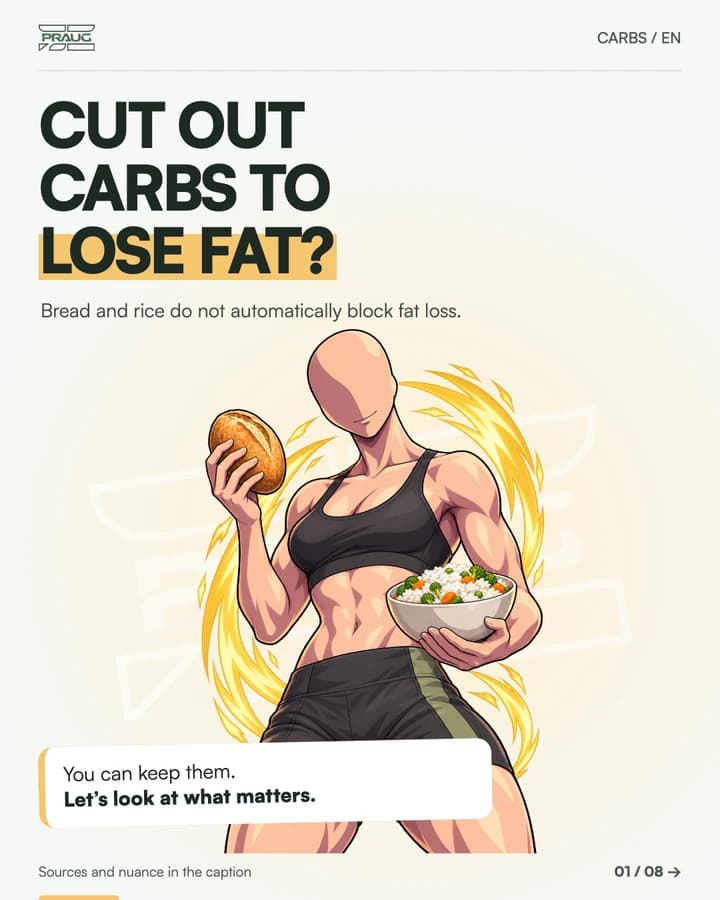
Do you need to cut carbs to lose body fat?
Bread, pasta and rice are not automatically incompatible with fat loss. An eating strategy also needs to be practical, provide varied meals and fit your activity.

Certified fitness coach · CQP Instructeur Fitness
Published on
Updated on
The essentials before you start.
- Cutting carbs is not compulsory for fat loss.
- An early weight drop after restriction can include water.
- Also assess appetite, meals and training quality.
Energy balance, glycogen and weight
Reducing carbohydrate foods may change total energy intake. It does not mean that all carbohydrate-containing foods need to be excluded.
After a large reduction in carbohydrate intake, glycogen stores and associated water can decrease. Weight may rise when carbs return without an equivalent gain in fat.
Reference: Cochrane ↗Shiose et al. · 2022 ↗

What low-carb research compares
A Cochrane review of 61 trials in adults with overweight or obesity found probably little or no weight-loss difference between low- and balanced-carbohydrate weight-reducing diets over up to two years. This comparison concerns body weight; it does not calculate your personal fat or muscle changes.
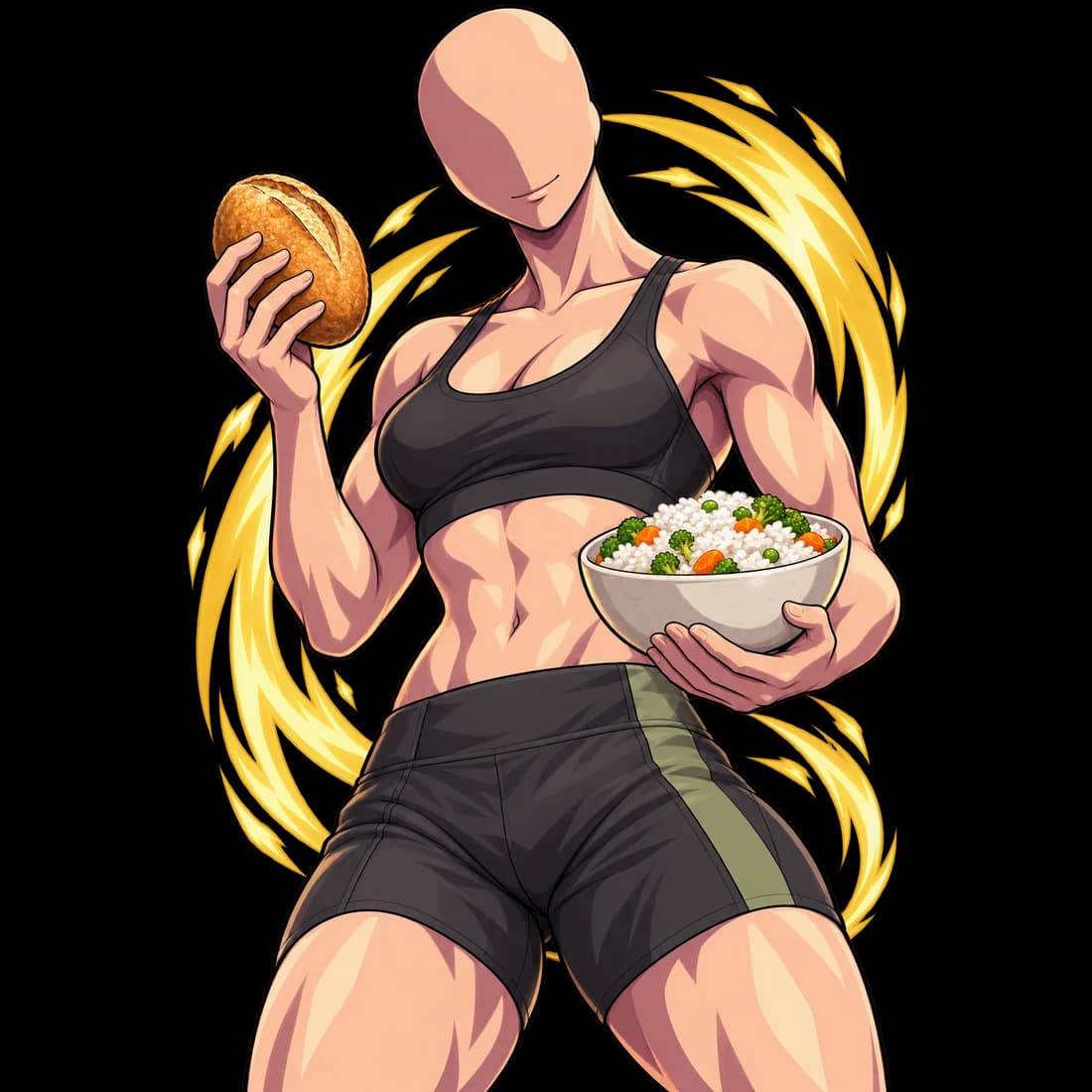
Combine a protein source, vegetables and a suitable portion of starchy food. Bread, potatoes, rice or pulses can fit.
An eating routine that suits you
If a restriction leaves you drained or repeatedly overeating, reassess it. Lower carb suits some people. Keeping carbs can work too.
Oils, cheese and nuts also provide energy. Adding them without a portion guide can offset reductions elsewhere.
A practical way to use this
Start by observing your usual meals. What keeps you satisfied, makes shopping easier and supports training? Compare a sustainable change with your actual habits. Removing a whole food group may simplify some choices, but it is neither the only available option nor proof of a better diet.
Context and limits
After sharp carbohydrate restriction, an early weight drop can include changes in glycogen and body water. Weight returning as carbohydrate intake returns is not automatically an equivalent fat gain. The amount cannot be calculated from scale weight alone.
Build satisfying meals with protein, vegetables and portions of starchy foods you enjoy. Consider hunger and training quality too.
If you take diabetes medication, major carb restriction needs a plan with your clinician; do not adjust medication alone.
From the post to your practice
Explore the carousel.
Explore the visual version of this topic on @zepraug.
Do you need to cut carbs to lose body fat?
The carousel is coming to Instagram. Scheduled for 24 October 2026.
Sources and limitations
Sources support the passages that cite them. Practical suggestions are coaching choices to adapt to your own situation.
- Cochrane · Low-carbohydrate diets or balanced-carbohydrate diets: which works better for weight loss and heart disease risks? ↗
Cochrane review of 61 trials in adults with overweight or obesity, with or without type 2 diabetes. Weight-loss comparisons up to two years do not directly prescribe fat loss or an eating pattern for every reader.
- Shiose et al. · 2022 · Muscle Glycogen Assessment and Relationship with Body Hydration Status: A Narrative Review ↗
Narrative review of glycogen assessment and hydration, including carbohydrate-loading research. The water relationship varies and does not quantify an individual weight change or a fixed glycogen-to-water ratio.
- NIDDK · Eating & Physical Activity to Lose or Maintain Weight ↗
NIDDK public information on varied food and sustainable activity. Not a trial proving one carbohydrate restriction level.
- NIDDK · Food Portions: Choosing Just Enough for You ↗
NIDDK information distinguishing chosen portions from labelled serving sizes. Does not supply an individual calorie target or standard portions for everyone.
This general information does not replace individual advice. Zepraug’s limitations.