Training· 4 min read
Dumbbell chest fly: setup, technique and progression
A dumbbell chest fly opens and closes the upper arms while you lie on a bench, using a small, fairly steady elbow bend. It is a different shoulder task from a press. The long lever can make modest weights demanding; choose a range you control instead of chasing the deepest stretch.

Certified fitness coach · CQP Instructeur Fitness
Published on
The essentials before you start.
- Choose a secure setup and a manageable starting demand.
- Keep the intended support, arm path and range repeatable.
- The cited studies have specific populations and exercise limits.
- Count this work within the whole week rather than adding every variation.
Exercise facts
- Main muscles
- Pectoralis major
- Secondary muscles
- Anterior deltoids, Biceps brachii, Pectoralis minor
- Equipment
- Dumbbells, Flat bench
What the movement trains
The pectoralis major and anterior deltoids contribute to moving the upper arms, while elbow and grip muscles help hold the weights. Keeping a steady elbow angle reduces repeated elbow extension without switching every arm muscle off. Gravity gives a different shoulder-torque profile as the arms open and close.
Set up and perform the movement
- Check a stable bench, supported feet and manageable dumbbells. Plan the pickup and return before opening the arms.
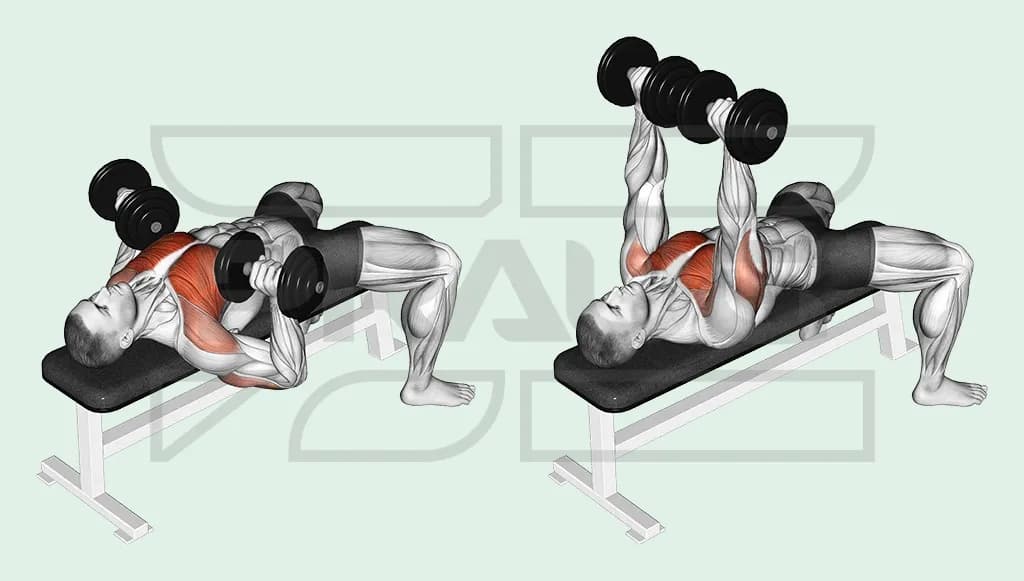
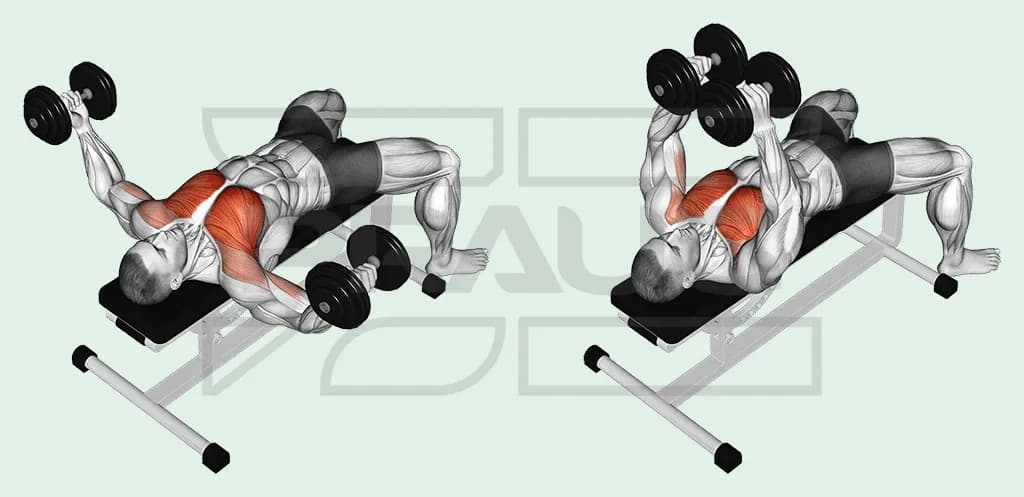
- Bring the weights above the chest with a controlled method, usually with palms facing each other.
- Choose a small elbow bend you can retain. Establish steady trunk and bench contact without a forced maximal shoulder-blade pinch.
- Open the arms smoothly in an arc through a shoulder range you can control. Near torso level is a starting reference, not a depth to force.
- Bring the arms back above the chest without turning the movement into a heavy elbow press or banging the dumbbells together.
- Before leaving the bench, bend and bring the weights into the planned controlled return position. Do not drop them from wide open arms.
Range, control and common changes
If elbow bend, depth or torso position changes as fatigue rises, the task is changing. Reduce the load or end the set rather than counting increasingly short or press-like repetitions as the same fly. A floor version changes the available range; contact with the floor must also remain controlled.
What the cited research does and does not show
The small activity comparisons did not measure later chest growth. Their different samples and protocols do not establish that one higher activity reading ranks every fly or press for all goals.
Variations and alternatives
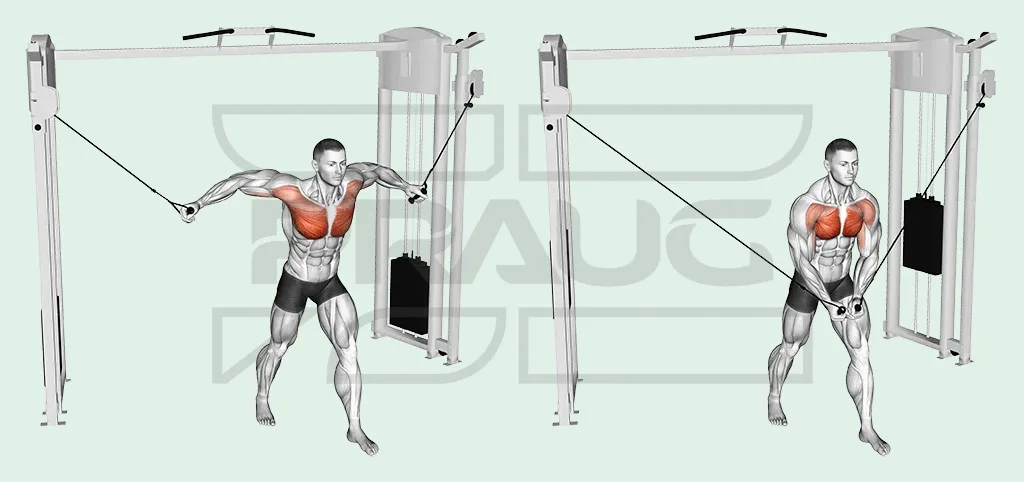
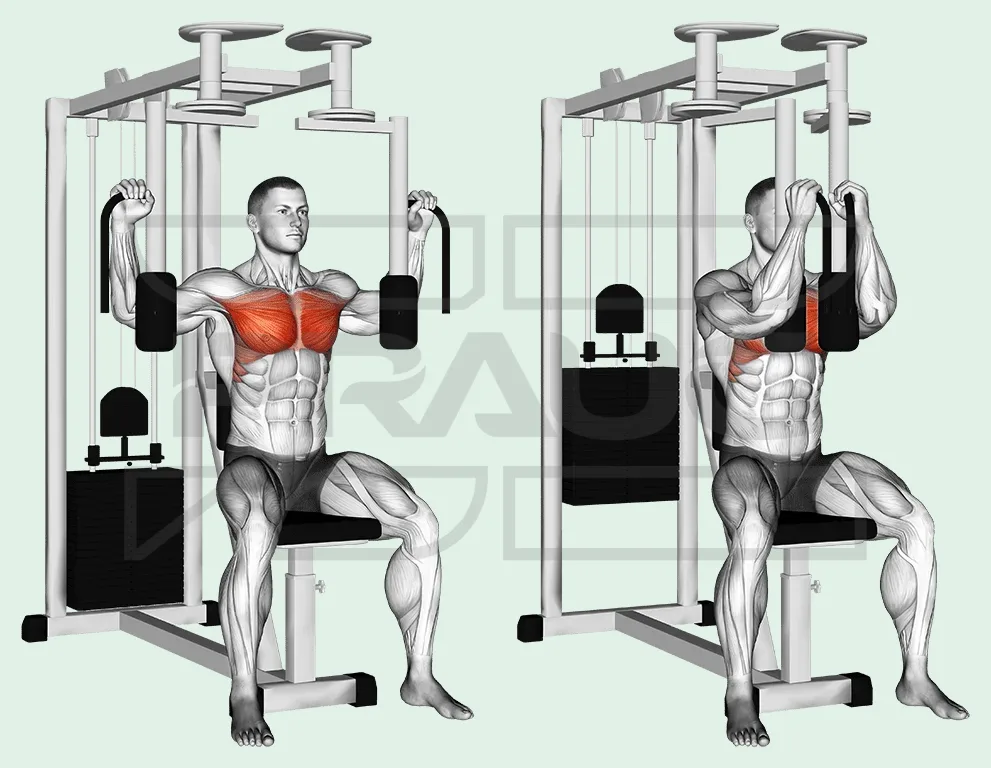
A pec deck guides the arms; a cable fly changes the resistance line. Inclining the bench changes the task again, rather than guaranteeing isolation of an upper-chest compartment.
Sets, progression and tracking
An adjustable example is 2–4 sets of 10–15 controlled repetitions. Choose a lighter load than a press when needed to preserve the longer-lever task. Record weight per hand, bench angle, elbow bend and range, and count the work alongside presses.
Frequently asked questions
Do flyes work the chest without any arm involvement?
No. Less elbow movement does not remove the muscles holding the arm position and weights.
Should I use my dumbbell pressing weight?
The lever and movement differ. Establish a separately manageable fly load rather than transferring a press load.
When should I add demand?
When the chosen task, support and range are repeatable and the next increment is manageable. Record the setup and effort, and account for the rest of the week.
Sources and limitations
Sources support the passages that cite them. Practical suggestions are coaching choices to adapt to your own situation.
- Solstad and al. · 2020 · Activity comparison of barbell pressing and dumbbell flyes. ↗
Seventeen trained men; not pec deck, cables or later growth.
- Welsch and al. · 2005 · Acute comparison of presses and dumbbell flyes. ↗
Twelve adults; concentric activity, not long-term training equivalence.
This general information does not replace individual advice. Zepraug’s limitations.