Nutrition· 2 min read
Creatine and hair loss: what do studies show?
Does a change in a hormone mean creatine causes hair loss? Answering that requires separating hormone measurements, direct hair observations and the limits of follow-up.

Certified fitness coach · CQP Instructeur Fitness
Published on
Updated on

The essentials before you start.
- The 2009 hormone study did not measure hair loss.
- The 2025 hair trial remains limited to 12 weeks in men.
- A rapid weight change is not automatically fat or newly built muscle.
DHT and hair: two different measurements
The 2009 study in rugby players found a rise in DHT, a hormone involved in some forms of hair loss. It did not measure hair: the hormonal finding therefore did not demonstrate hair loss.
A separate trial published in 2025 compared creatine with placebo over 12 weeks. Of the 38 men who completed it, 37 had hair measurements available. No between-group difference was detected in DHT or hair measures. The finding remains limited to that duration and population.
Reference: van der Merwe J et al. · 2009 ↗Lak M et al. · 2025 ↗

Effort, strength and changes in weight
It can help during repeated short, intense efforts. Alongside resistance training, it can improve strength gains. Responses vary.
A quick weight increase does not automatically mean fat gain. It is not new muscle built in a few days either.
Choosing and reporting supplementation
For healthy adults, 3–5 g of creatine monohydrate daily is a common approach, including rest days. A loading phase is optional; without it, stores build more gradually. Check the amount in grams rather than assuming every scoop holds the same dose.
Blood creatinine may rise without, on its own, indicating kidney damage. Mention supplementation before blood tests. Kidney disease, pregnancy or current medication calls for individual advice before use.
Context and limits
The 2025 hair trial does not answer every question about several years of use or other populations. Finding no detectable difference over 12 weeks cannot establish zero risk for everyone.
Digestive discomfort can occur, especially with large single doses. The practical information here concerns healthy adults and is not an individual prescription.
Several authors of the cited research disclose supplement-industry relationships. That is a limitation to consider, rather than a reason to hide the findings.
Reference: van der Merwe J et al. · 2009 ↗Lak M et al. · 2025 ↗DOI ↗PubMed Central ↗DOI ↗Naeini EK et al. · 2025 ↗Longobardi I et al. · 2025 ↗
From the post to your practice
Explore the carousel.
Explore the visual version of this topic on @zepraug.
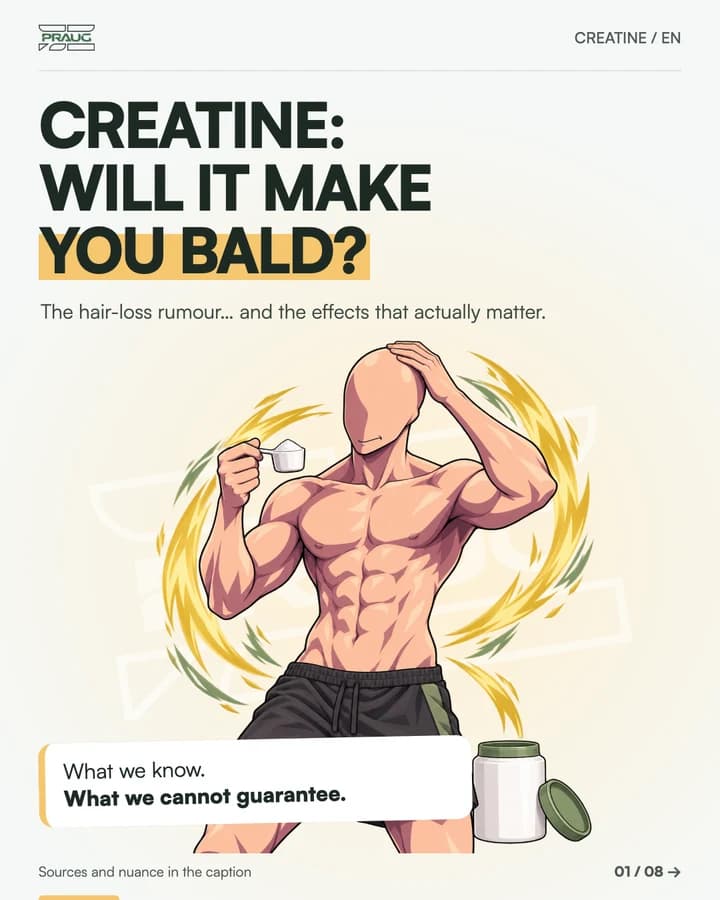
Creatine and hair loss: what do studies show?
Instagram content loads only when you choose. Instagram may then use cookies.
Sources and limitations
Sources support the passages that cite them. Practical suggestions are coaching choices to adapt to your own situation.
- van der Merwe J et al. · 2009 · Three weeks of creatine monohydrate supplementation affects dihydrotestosterone to testosterone ratio in college-aged rugby players. ↗
- Lak M et al. · 2025 · Does creatine cause hair loss? A 12-week randomized controlled trial. ↗
- DOI · International Society of Sports Nutrition position stand: safety and efficacy of creatine supplementation in exercise, sport, and medicine ↗
- PubMed Central · Effects of Creatine Supplementation and Resistance Training on Muscle Strength Gains in Adults <50 Years of Age: A Systematic Review and Meta-Analysis ↗
- DOI · Common questions and misconceptions about creatine supplementation: what does the scientific evidence really show? ↗
- Naeini EK et al. · 2025 · Effect of creatine supplementation on kidney function: a systematic review and meta-analysis. ↗
- Longobardi I et al. · 2025 · A short review of the most common safety concerns regarding creatine ingestion ↗
This general information does not replace individual advice. Zepraug’s limitations.