Training· 2 min read
Full or half squats: how much range of motion?
The weight on the bar does not capture everything about a squat. Changing the range of motion changes the task too. Progress starts with an appropriate depth and consistent reference points.

Certified fitness coach · CQP Instructeur Fitness
Published on
The essentials before you start.
- Compare loads with defined depth and technique.
- Range-of-motion findings do not transfer to every muscle and exercise.
- Choose a depth you can control before chasing heavier weights.
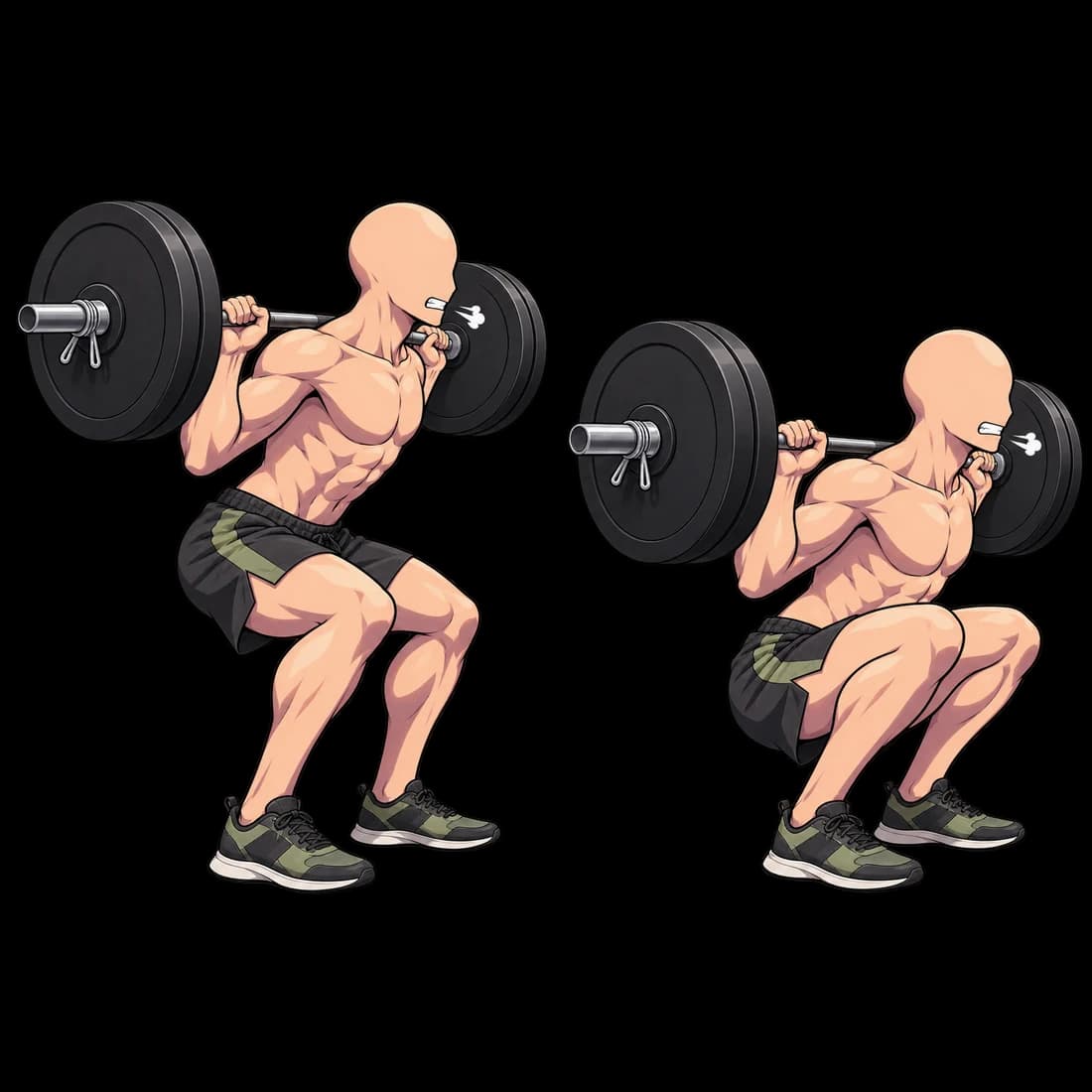
Define range of motion before comparing
Use hip height and knee bend as references. Keep your definition consistent to track progress.
Reviews generally favour full range for lower-body growth. Results vary by muscle and training protocol.
Reference: Kubo K et al. · 2019 ↗Pallarés JG et al. · 2021 ↗
Strength and growth: specify the goal
If your goal is a full squat, practise that range. Compare loads at similar depth and technique.
Lengthened partials are studied in several exercises. Their results cannot all be transferred to the half squat.
Choose a depth you can control
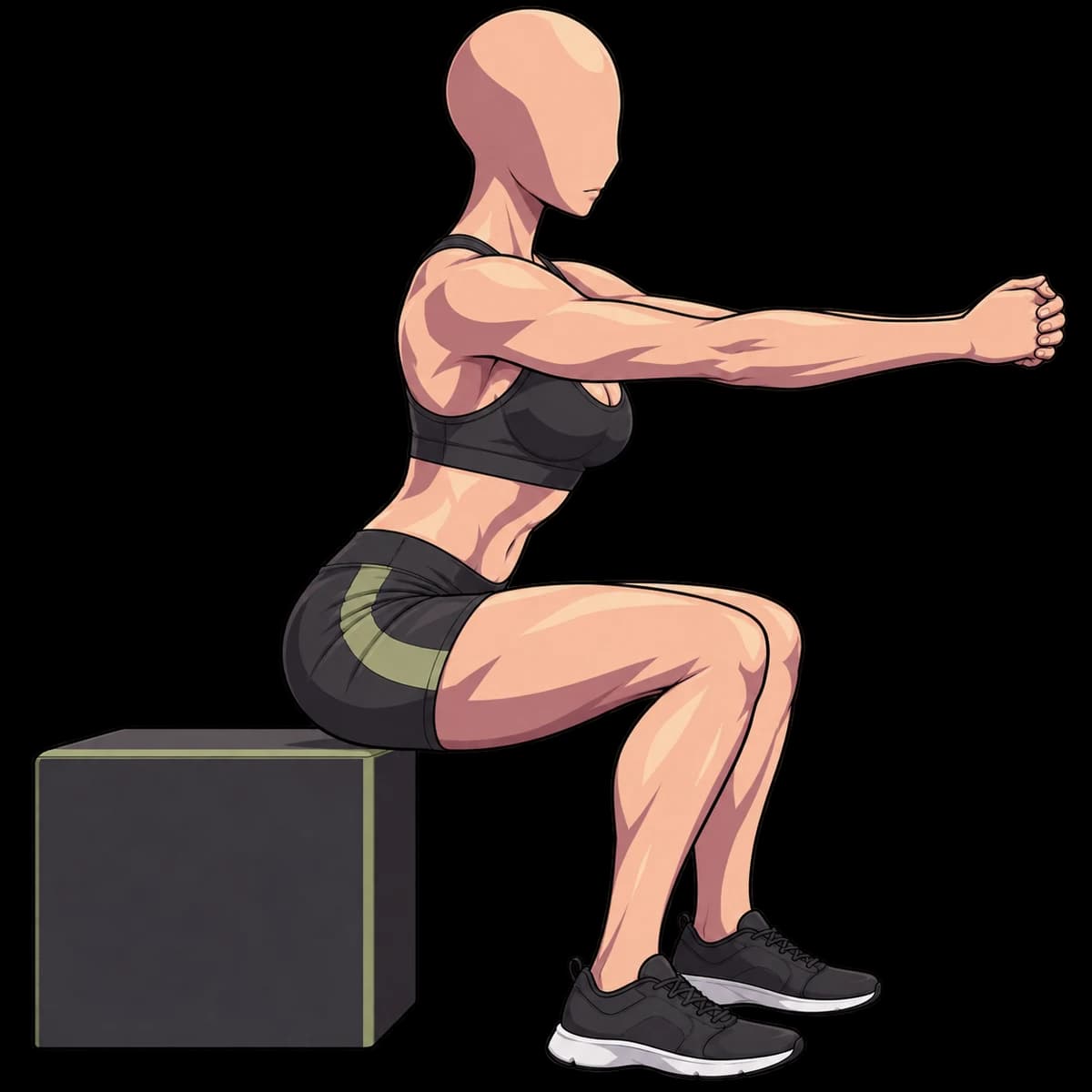
Stable footing, controlled movement and comfort. Do not force depth at the cost of a clear loss of control.
Stance width, toe angle or a small stable heel lift. Keep what improves your movement.
A practical way to use this
Choose a variation, record your range of motion and keep those reference points across sessions. If you decide to squat deeper, adjust the load to the new movement. Lower numbers on the bar need not mean regression. Compare later sessions against that new baseline, with similar technique and effort.
Context and limits
Lengthened partials are a separate question. Results from different exercises do not establish that the top half of a squat is superior. For strength, define the tested movement: lifting more over a shorter range is a different record.
Keep consistent depth, technique and load references. Test setup changes with a light load and progress without forcing a position. The drawings are schematic, with no measured angle or universal prescribed load.
Reference: Kubo K et al. · 2019 ↗Pallarés JG et al. · 2021 ↗Kassiano W et al. · 2023 ↗DOI ↗
From the post to your practice
Explore the carousel.
Explore the visual version of this topic on @zepraug.
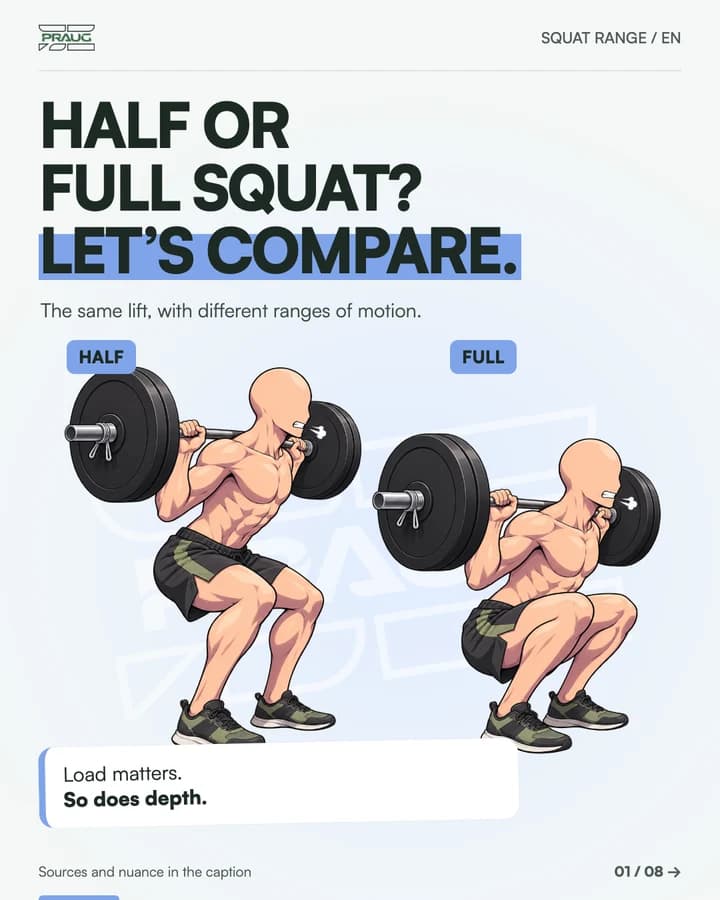
Full or half squats: how much range of motion?
The carousel is coming to Instagram. Scheduled for 28 October 2026.
Sources and limitations
Sources support the passages that cite them. Practical suggestions are coaching choices to adapt to your own situation.
- Kubo K et al. · 2019 · Effects of squat training with different depths on lower limb muscle volumes. ↗
- Pallarés JG et al. · 2021 · Effects of range of motion on resistance training adaptations: A systematic review and meta-analysis. ↗
- Kassiano W et al. · 2023 · Which ROMs Lead to Rome? A Systematic Review of the Effects of Range of Motion on Muscle Hypertrophy. ↗
- DOI · Muscle hypertrophy from partial repetition at long vs. short muscle length: A systematic review and meta-analysis ↗
This general information does not replace individual advice. Zepraug’s limitations.